
Filling out a deposit slip by hand at the bank counter is quickly becoming a thing of the past, and a bank deposit slip template makes it easy to prepare one in advance. Instead of hunting for a paper slip at the branch or filling one out under time pressure, a ready-made template lets you record all the required deposit details ahead of time from your computer. Below you’ll find 3 free, downloadable bank deposit slip templates suitable for individuals, small business owners, and anyone who regularly deposits cash or checks.
Prepare a deposit slip with an auditable breakdown
A bank deposit slip should separate cash and cheques, identify the target account and record a date and total. The breakdown helps the depositor and bank identify discrepancies.
Worked example: If a deposit contains four $50 notes and two $25 cheques, show $200 cash and $50 cheques for a $250 declared total. The bank may require separate cheque details.
Check before use: Use your bank’s current instructions, verify its accepted account fields and keep stamped or electronic confirmation. A filled slip is not evidence that all deposited funds cleared.
- Saves time at the bank: Filling in the details ahead of time means less time spent completing paperwork at the counter.
- Reduces errors: Clearly labeled fields for account and deposit details help ensure nothing important is left out.
- Keeps a personal record: A completed deposit slip serves as a reference for your own bookkeeping alongside the bank’s receipt.
- Speeds up processing: A complete, properly filled-out slip helps bank tellers process the deposit faster and more accurately.
- Useful for night drops and mail: Having the slip ready in advance is especially helpful when depositing outside of regular banking hours.
- Free and reusable: Download once and reuse the same template structure for every future deposit.
For related resources, see 4 Deposit Slip Templates and 5 Printable Payment Record Templates.
What’s Included in the Bank Deposit Slip Template
- Account holder details: Fields for the depositor’s name and bank account number.
- Deposit date: Space to record the exact date the deposit is being made.
- Type of deposit: A field indicating whether the deposit is cash, check, or another financial instrument.
- Deposit amount: Space to record the value of the deposit in both numeric and written form.
- Itemized check listing: Rows for listing individual checks when multiple checks are being deposited together.
- Signature line: Space for the depositor to sign, confirming the accuracy of the deposit details.
Who Should Use These Templates?
- Individuals who regularly deposit cash or checks into a personal account.
- Small business owners depositing daily or weekly sales receipts.
- Bookkeepers and accountants preparing deposits on behalf of a business.
- Landlords depositing rent payments received by check.
- Nonprofit organizations depositing donations and event proceeds.
- Freelancers depositing client payments received as checks.
How to Start Using the Template in 3 Simple Steps
- Step 1 — Choose a template style: Browse the 3 options below and select the format that best fits your bank’s requirements.
- Step 2 — Enter your deposit details: Fill in your account information, deposit date, and the amount being deposited.
- Step 3 — Print and bring it with you: Print the completed slip and bring it to the bank, or use it for a night drop or mail deposit.
Bank Deposit Slip vs. Bank Statement
While both documents relate to your bank account, a deposit slip and a bank statement serve very different purposes. A deposit slip is completed by the account holder at the time of a deposit and documents a single transaction. A bank statement, by contrast, is generated by the bank itself and summarizes all transactions, including deposits and withdrawals, over a set period such as a month. Keeping copies of your deposit slips makes it easier to cross-check your own records against your bank statement when it arrives.
Customizing the Template for Your Needs
These templates are designed to be a flexible starting point rather than a fixed format. You can adjust the fields to match your bank’s specific slip layout, add your business name and logo, or include additional lines for itemizing multiple checks. Since the templates are provided in editable formats, most adjustments take only a few minutes and let you tailor the slip to fit your particular banking needs.
Choosing the Right Format
With 3 different templates available, choosing the right one depends on your bank’s requirements and the type of deposit you’re making. Some banks have specific formatting requirements for deposit slips, so it’s worth comparing your bank’s standard slip against these templates before finalizing one for regular use. Reviewing each option can help you find the layout that’s easiest to fill out consistently.
Common Mistakes to Avoid
- Missing account number: Always double-check that your account number is entered correctly to avoid deposit delays.
- Incorrect totals: Make sure the numeric and written deposit amounts match to avoid confusion at the counter.
- Forgetting a signature: Many banks require a signature to process the deposit, especially for cash deposits.
- Illegible handwriting: Write clearly, or fill out the template digitally, to prevent processing errors.
- Not keeping a copy: Always keep a copy of the completed slip for your own records.
Tips to Get the Most Out of Your Bank Deposit Slip Template
- Keep copies of every deposit slip for your records and for reconciling against your bank statement.
- Double-check the deposit amount before submitting to avoid processing delays or discrepancies.
- Use consistent formatting for every deposit to make your personal bookkeeping easier to review.
- Confirm your bank’s specific requirements if you’re using the slip for the first time at a new branch.
- Digitize completed slips for easier searching and long-term record-keeping.
Understanding Cash vs. Check Deposits
Bank deposit slips typically separate the total deposit amount into cash and check portions, and understanding this distinction helps you fill out the slip correctly. Cash deposits are usually counted and confirmed immediately by the teller, while check deposits may be subject to a temporary hold before funds become fully available. When depositing multiple checks, listing each one individually with its amount on the slip, rather than only entering the combined total, makes it easier for both you and the bank to verify the deposit if any questions arise later.
Using Deposit Slips for Small Business Bookkeeping
For small business owners, deposit slips can play an important role in day-to-day bookkeeping beyond simply getting money into the bank. Recording the source of each deposit, such as which customer or sale it relates to, alongside the standard deposit information can make it much easier to reconcile your books at the end of the month. Many business owners find it helpful to photograph or scan each completed deposit slip before submitting it, creating a digital backup that can be cross-referenced with accounting software.
Depositing Checks Safely and Avoiding Delays
Taking a few extra steps when depositing checks can help you avoid unnecessary delays or holds on your funds. Endorsing the back of each check with your signature, and writing “For Deposit Only” along with your account number, adds an extra layer of security in case a completed deposit slip and check are separated during processing. Being aware of your bank’s funds availability policy also helps you plan around any hold periods, especially for larger checks or checks from out-of-state banks.
Digital Deposits and the Role of Paper Slips
While many banks now offer mobile check deposit through smartphone apps, paper deposit slips remain useful and, in some cases, necessary for cash deposits, night drops, or in-branch transactions. Having a prepared template on hand means you’re ready whether you’re depositing in person, through a night drop box, or mailing a deposit to a bank that doesn’t have a nearby branch. Some businesses that handle a high volume of cash still prefer traditional in-branch deposits specifically because a completed paper slip provides an immediate, physical record of the transaction.
Reconciling Deposit Slips With Your Bank Statement
Keeping your completed deposit slips organized makes the process of reconciling your bank statement each month considerably smoother. Comparing the dates and amounts on your saved slips against the deposits listed on your statement can quickly reveal any discrepancies, such as a deposit that hasn’t yet cleared or an amount that was recorded incorrectly. Establishing a simple filing system, whether physical or digital, for your deposit slips throughout the month saves time and reduces stress when it comes to monthly reconciliation.
Printing and Storing Your Deposit Slips
Once you’ve filled in a deposit slip template on your computer, printing it on plain paper is usually sufficient for most banks, though it’s worth checking with your branch if you plan to use it regularly for high-value deposits. Keeping a small stack of pre-printed blank slips at home or in the office can save time when you need to make a deposit quickly, rather than filling one out from scratch each time. For businesses that make frequent deposits, storing completed slips in a labeled folder by month makes year-end bookkeeping and tax preparation noticeably easier.
Deposit Slips for Joint and Business Accounts
Joint accounts and business accounts sometimes require additional information on a deposit slip, such as the name of the depositing party if it differs from the account holder, or a reference number tied to a specific invoice or sale. Businesses that receive payments from multiple customers may find it useful to note the customer or invoice number directly on the slip, or on an attached memo, so that the deposit can later be matched to the correct entry in accounting records. Taking this extra step during the deposit process, rather than trying to reconstruct the information afterward, helps prevent confusion when multiple deposits are made on the same day.
Download Bank Deposit Slip Templates Here
Bank Deposit Slip PDF
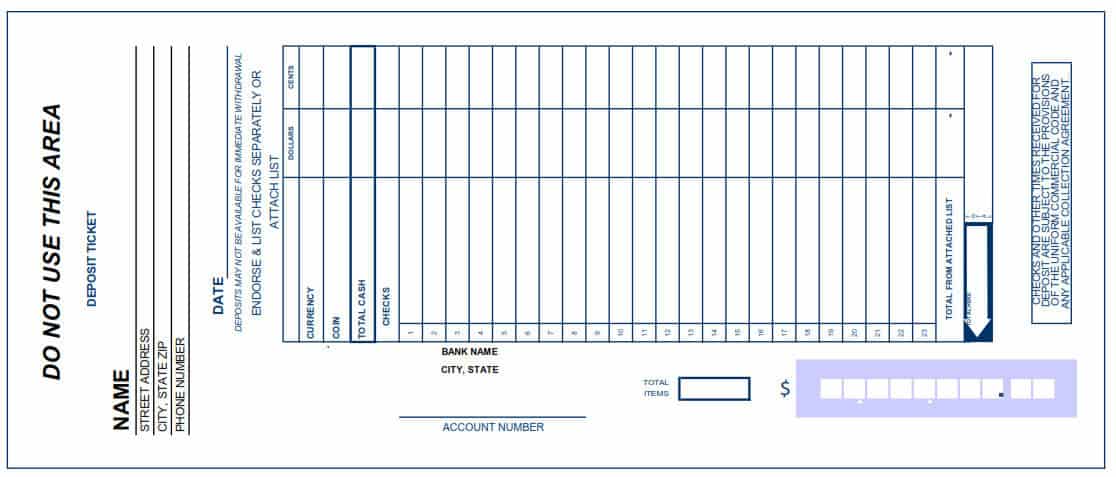

Printable Bank Deposit Slip
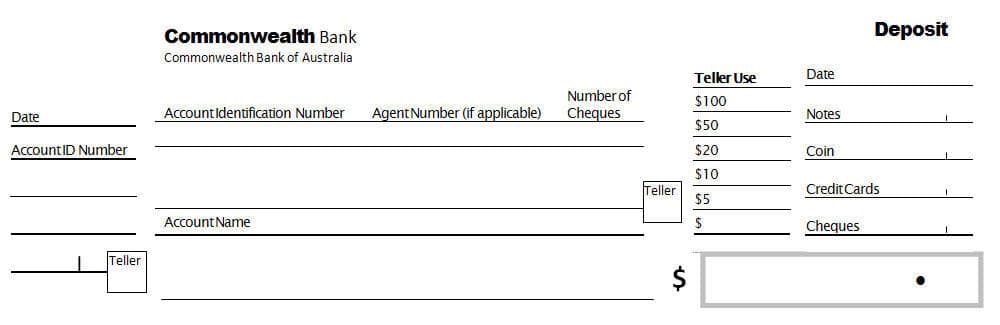
Bank Deposit Slip Format PDF
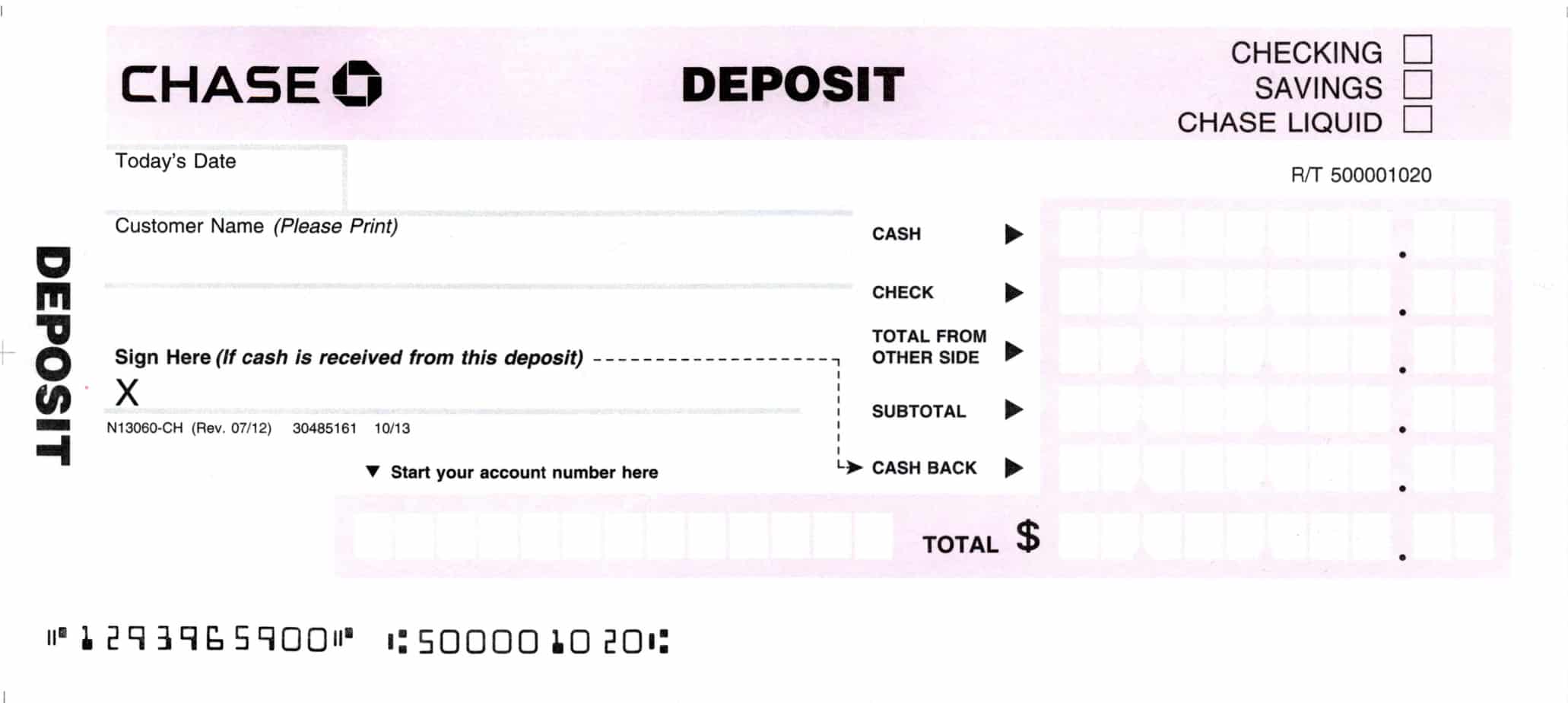
Frequently Asked Questions
Are these bank deposit slip templates free to download?
Yes, all 3 bank deposit slip templates on this page are free to download and use.
Can I customize the fields on these templates?
Yes, since the templates are fully editable, you can adjust the fields to match your bank’s specific deposit slip layout.
Do I need to use my bank’s exact deposit slip format?
Most banks accept any clearly filled-out deposit slip, but it’s a good idea to compare your bank’s standard format against these templates before regular use.
Can these templates be used for business deposits?
Yes, these templates work well for both personal and business deposits, including cash and check transactions.
What information is required on a bank deposit slip?
A complete deposit slip should include the account holder’s name, account number, deposit date, and the amount and type of deposit.
Should I keep a copy of my completed deposit slip?
Yes, keeping a copy helps with your own bookkeeping and makes it easier to reconcile deposits against your bank statement.

You must be logged in to post a comment.