
A bill of lading should identify shipper, consignee, carrier, goods, package count, weight, origin, destination and relevant transport instructions. It can also serve contractual or title-related functions depending on the shipment and document type.
Record shipment details consistently on a bill of lading
Worked example: For a shipment of 20 cartons, record the package count and gross weight precisely, identify the receiving party and reference the carrier and delivery destination so handling can be checked at each stage.
Check before use: Use the carrier’s required form for real shipments and verify hazardous-material or customs obligations. A downloadable sample alone may not be sufficient for legal carriage.
- Saves drafting time: A ready-made layout means you can focus on entering shipment details instead of designing a document from scratch.
- Reduces errors: Clearly labeled fields for shipment details help ensure nothing important is left out of the document.
- Serves as proof of shipment: A completed bill of lading acts as a written acknowledgment that goods were shipped.
- Establishes legal title: The document serves as a title that permits the holder to claim ownership or possession of the shipment.
- Speeds up processing: A complete, properly formatted bill of lading helps carriers and recipients process shipments faster.
- Free and reusable: Download once and reuse the same template structure for every future shipment.
For related resources, see 2 Requisition Form Templates and 11+ Free Vendor List Templates.
What’s Included in the Bill of Lading Template
- Shipper and consignee details: Fields for the names and addresses of the sender and the recipient.
- Carrier information: Space to record the name of the transportation company handling the shipment.
- Description of goods: A field detailing the type and quantity of products included in the shipment.
- Shipment terms: Space to note delivery terms and any special handling instructions.
- Shipping charges: A field for recording the cost of the freight services.
- Signature line: Space for the carrier or representative to sign, confirming the shipment details.
Who Should Use These Templates?
- Shipping and freight companies documenting the transportation of goods for clients.
- Manufacturers and distributors shipping products to retailers or customers.
- Import and export businesses tracking international shipments.
- Warehouse and logistics staff processing outgoing and incoming shipments.
- Small business owners shipping products directly to customers.
- Freight brokers coordinating shipments between shippers and carriers.
How to Start Using the Template in 3 Simple Steps
- Step 1 — Choose a template style: Browse the 4 options below and select the format that best fits your needs.
- Step 2 — Enter your shipment details: Fill in the shipper, carrier, consignee, and goods information.
- Step 3 — Sign and distribute: Have the appropriate party sign the document and provide copies to all involved parties.
Bill of Lading vs. Packing Slip
While both documents relate to shipments, a bill of lading and a packing slip serve different purposes. A bill of lading is a legal document that serves as a contract between the shipper and carrier, establishing terms of transport and acting as a receipt and title document. A packing slip, by contrast, is a simpler document listing the contents of a specific package, typically included inside the shipment for the recipient’s reference. Many shipments include both: a bill of lading for the carrier’s records and legal purposes, and a packing slip for the recipient to verify contents upon arrival.
Customizing the Template for Your Business
These templates are designed to be a flexible starting point rather than a fixed format. You can add your company logo, adjust the fields to match your specific shipping requirements, or include additional notes about handling instructions or insurance details. Since the templates are provided in editable formats, most adjustments take only a few minutes and let you tailor the document to fit your business’s specific shipping process.
Choosing the Right Format
With 4 different templates available, choosing the right one depends on the type of shipment and level of detail you need to document. Simpler templates work well for straightforward shipments, while more detailed templates are better suited for shipments involving multiple items or special handling terms. Reviewing each option before committing to one can help you find the layout that’s easiest for your team to complete consistently.
Common Mistakes to Avoid
- Missing shipment details: Always include a complete description of the goods to avoid delays or disputes.
- Incorrect addresses: Double-check shipper and consignee addresses to ensure accurate delivery.
- Forgetting a signature: An unsigned bill of lading may not be considered valid by carriers or recipients.
- Inconsistent terminology: Use consistent product descriptions between the bill of lading and other shipping documents.
- Skipping copies: Always keep a copy for your records before the shipment departs.
Tips to Get the Most Out of Your Bill of Lading Template
- Keep copies of every bill of lading for your records and for resolving any future shipment disputes.
- Double-check quantities and descriptions before finalizing the document to avoid processing delays.
- Use consistent formatting across shipments to make your records easier to review and audit.
- Coordinate with your carrier to confirm any specific requirements they have for the document.
- Digitize completed documents for easier searching and long-term record-keeping.
Understanding the Legal Role of a Bill of Lading
Beyond serving as a simple shipping record, a bill of lading carries significant legal weight as a contract of carriage between the shipper and the transportation company. It establishes the terms under which the carrier agrees to transport the goods and can be used as evidence in the event of a dispute over loss, damage, or delayed delivery. Businesses that understand this legal function tend to be more careful about completing the document accurately, since errors can complicate claims or disputes down the line, and some businesses even consult legal counsel when drafting standard terms for particularly high-value or complex shipments.
Bills of Lading for Domestic vs. International Shipments
While the basic structure of a bill of lading remains similar, domestic and international shipments often require different levels of detail and additional documentation. International shipments frequently need extra information such as customs declarations, country of origin, and specific regulatory compliance details that domestic shipments typically don’t require. Businesses that regularly ship internationally often benefit from using a template specifically designed to accommodate these additional requirements to avoid delays at customs, and staying current on any changes to international shipping regulations helps prevent unexpected holdups at border crossings or ports.
Tracking Shipments With Bill of Lading Records
Maintaining organized records of completed bills of lading allows businesses to track shipment history, verify delivery terms, and quickly reference past transactions if questions arise later. Many businesses find it helpful to organize these records by date, carrier, or customer, making it easier to locate a specific document when needed for auditing or dispute resolution. Keeping both digital and physical copies, where appropriate, provides an extra layer of protection against lost or damaged records.
Resolving Disputes With an Accurate Bill of Lading
When a shipment arrives damaged, incomplete, or delayed, a properly completed bill of lading becomes an essential piece of evidence for resolving disputes between shippers, carriers, and recipients. Comparing the original document against the condition and contents of the delivered shipment helps determine where along the transportation process an issue may have occurred. Businesses that keep detailed, accurate bills of lading are generally in a stronger position to file claims for lost or damaged goods and to hold the responsible party accountable, which can make a meaningful difference when negotiating compensation for a costly shipment gone wrong.
Digital Bills of Lading and Modern Shipping Practices
Many shipping companies and businesses have moved toward digital bills of lading, which can be completed, signed, and shared electronically to speed up the shipping process and reduce paperwork. Saving a completed bill of lading as a PDF preserves its formatting and prevents accidental changes once all parties have reviewed and signed the document. Businesses transitioning to digital shipping documentation often find it easier to search, organize, and share records compared to managing large volumes of paper copies.
Training Staff to Complete Bills of Lading Correctly
Because a bill of lading carries legal and financial significance, training staff to complete the document accurately and consistently is an important part of any shipping or logistics operation. Providing clear guidelines on required fields, common errors to avoid, and who is responsible for signing off on each shipment helps reduce mistakes that could delay a shipment or complicate a future dispute. Businesses that invest time in properly training new employees on bill of lading procedures often experience fewer shipping errors and smoother operations overall, and a well-documented internal process makes it easier to maintain consistency even as staff turnover occurs.
Get Bill of Lading Templates Here
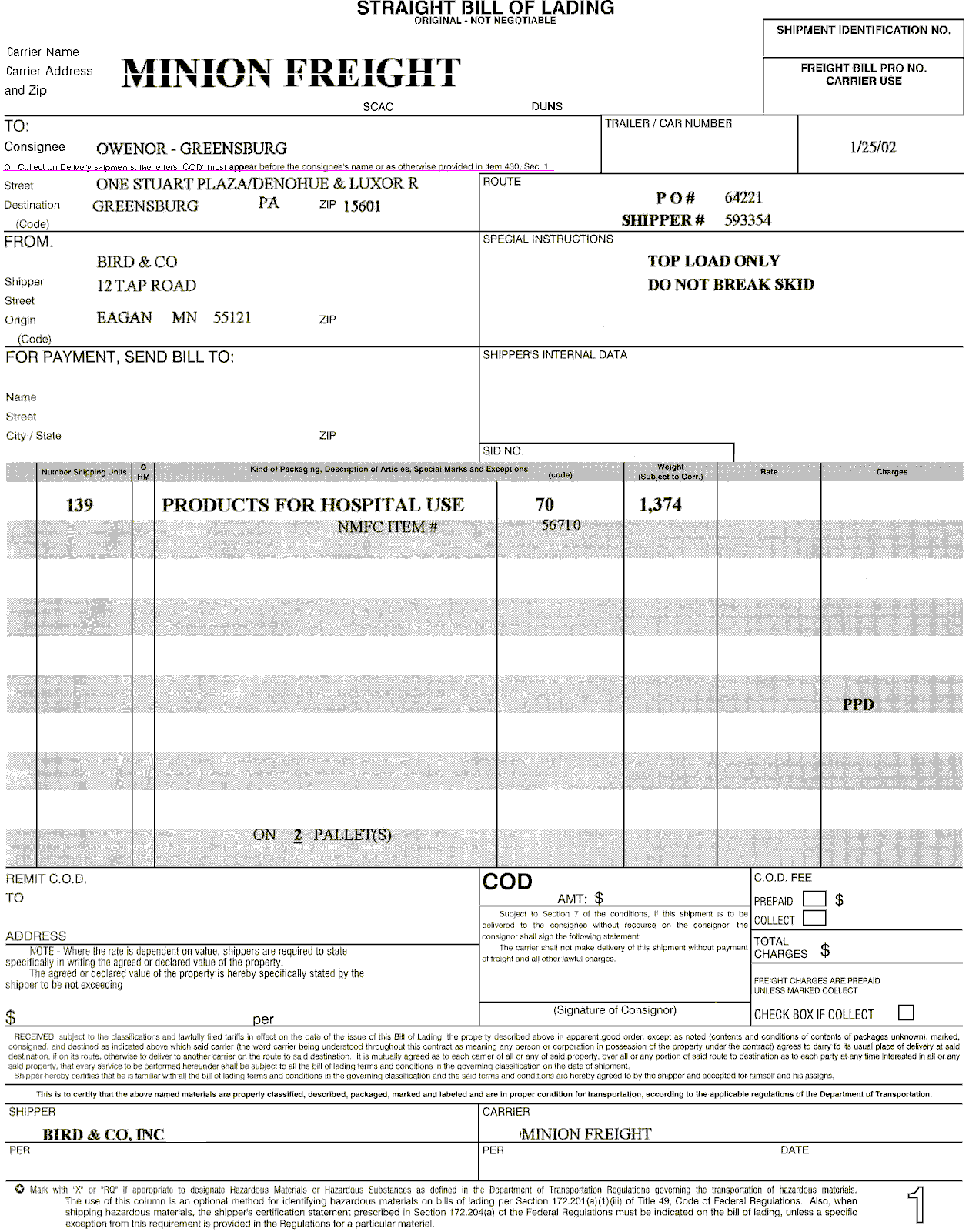
Printable Bill of Lading


Bill of Lading Form Sample

Bill of Lading Example

Cmopany Bill of Lading
Frequently Asked Questions
Are these bill of lading templates free to download?
Yes, all 4 bill of lading templates on this page are free to download and use.
Can I customize the fields on these templates?
Yes, since the templates are fully editable, you can add your logo and adjust fields to match your specific shipping needs.
Is a bill of lading the same as a packing slip?
No, a bill of lading is a legal contract of carriage, while a packing slip simply lists the contents of a package for the recipient.
Do these templates work for international shipments?
These templates can be adapted for international shipments, though additional customs documentation may also be required.
Who is responsible for signing a bill of lading?
Typically the carrier or their representative signs the bill of lading to confirm the shipment details are accurate.
Can a bill of lading be used to resolve shipping disputes?
Yes, an accurately completed bill of lading serves as important evidence when resolving disputes over damaged or lost shipments.

You must be logged in to post a comment.