
A set of financial statements usually answers distinct questions: income performance over time, assets and obligations at a date, and cash inflows and outflows. A single template cannot automatically answer all three.
Use the right financial statement for the question
Worked example: A profitable business may still have limited cash if customers have not paid invoices. Review the income statement alongside the balance sheet and cash-flow statement to understand the difference.
Check before use: Use consistent period ends, account classifications and accounting policies across worksheets, and reconcile figures with the underlying ledger.
- Saves preparation time: A ready-made structure means you can focus on entering figures instead of designing a report from scratch.
- Maintains accuracy: A structured template with built-in formulas reduces the calculation errors common in manual preparation.
- Improves professionalism: A well-formatted financial statement presents your business favorably to investors and lenders.
- Ensures consistency: Using the same template each period makes it easier to compare financial performance over time.
- Easy to customize: Editable fields let you quickly adapt the template to your specific business and accounting needs.
- Free and reusable: Download once and reuse the same structure for every reporting period.
For related resources, see 5 Balance Sheet Formats In Excel and Sample 11+ FREE Cash Flow Excel Templates.
What’s Included in the Financial Statement Template
- Income fields: Space to record revenue generated during the reporting period.
- Expense fields: Columns for recording operating costs, overhead, and other expenditures.
- Asset and liability fields: Areas to document what the business owns and owes.
- Net income calculation: A section that calculates profit or loss based on the entered figures.
- Reporting period fields: Space to specify the quarter, month, or year the statement covers.
- Summary or notes section: An area for additional context or explanations about specific figures.
Who Should Use These Templates?
- Small business owners preparing periodic financial reports for their own records.
- Accountants and bookkeepers producing statements on behalf of client businesses.
- Finance teams reporting company performance to management or the board.
- Business owners seeking financing who need to present financial statements to lenders.
- Startup founders tracking financial performance from the earliest stages of the business.
- Nonprofit administrators preparing statements for board review or grant compliance.
How to Start Using the Template in 3 Simple Steps
- Step 1 — Choose a template style: Browse the 3 options below and select the layout that fits your reporting needs.
- Step 2 — Enter your financial data: Fill in income, expenses, assets, and liabilities for the reporting period.
- Step 3 — Review and finalize: Check the calculations and ensure all figures accurately reflect your business’s performance.
Financial Statement vs. Financial Report
While the two terms are sometimes used interchangeably, a financial statement and a broader financial report serve slightly different purposes. A financial statement typically refers to one of the standard formal documents, such as an income statement, balance sheet, or cash flow statement, that follows established accounting conventions. A financial report is often a broader document that may include one or more financial statements alongside narrative analysis, charts, and management commentary explaining the numbers. Many businesses prepare both, formal financial statements for compliance and a broader report for internal or stakeholder communication.
Customizing the Template for Your Business
These templates are designed to be a flexible starting point rather than a fixed format. You can adjust the income and expense categories to match your industry, add sections for specific asset types, or include additional notes explaining unusual transactions. Since the templates are provided in editable format, most adjustments take only a few minutes and let you tailor the statement to fit your business’s specific accounting practices.
Choosing the Right Format
With 3 different templates available, choosing the right one depends on your business’s specific reporting needs and the level of detail required. A simple layout works well for a small business with straightforward finances, while a more detailed template suits businesses needing to report to investors or comply with formal accounting standards. Reviewing each option before committing to one can help you find the format that best fits your financial reporting needs.
Common Mistakes to Avoid
- Mixing personal and business finances: Combining the two makes it difficult to produce an accurate financial statement.
- Overlooking small transactions: Minor expenses or income items can add up and should still be recorded.
- Inconsistent categorization: Changing how transactions are classified between periods makes comparisons unreliable.
- Skipping regular reconciliation: Failing to check the statement against bank records can let errors go unnoticed.
- Not keeping supporting documentation: Financial statements should be backed by receipts and records in case of an audit.
Tips to Get the Most Out of Your Financial Statement Template
- Prepare statements on a consistent schedule to maintain accurate, comparable records over time.
- Reconcile figures against bank statements to catch discrepancies before finalizing the document.
- Keep supporting documentation organized alongside each period’s financial statement.
- Review statements with an accountant periodically to catch errors and ensure compliance.
- Back up completed statements securely to protect important financial records.
Understanding the Three Core Financial Statements
Most formal financial reporting relies on three core statements that work together to tell the complete financial story of a business. The income statement shows revenue and expenses over a period, revealing whether the business turned a profit or a loss. The balance sheet provides a snapshot of assets, liabilities, and equity at a specific point in time, showing what the business owns versus what it owes. The cash flow statement tracks the actual movement of cash in and out of the business, which can differ significantly from reported profit due to timing differences in when revenue and expenses are recognized versus when cash actually changes hands.
Using Financial Statements to Communicate with Stakeholders
Beyond internal record keeping, financial statements often serve as the primary way a business communicates its financial health to outside parties, including investors, lenders, and potential business partners. A clear, well-organized financial statement builds credibility and trust, while a disorganized or inconsistent one can raise doubts about the business’s overall management, even if the underlying numbers are sound. Taking the time to present financial statements professionally, with consistent formatting and clear labeling, often pays off in how seriously outside stakeholders take the business.
Preparing Financial Statements for Tax and Compliance Purposes
Beyond internal management and stakeholder communication, financial statements frequently serve compliance purposes, supporting tax filings, loan covenants, or regulatory reporting requirements depending on the business’s structure and industry. Keeping financial statements accurate and up to date throughout the year, rather than scrambling to reconstruct them at tax time, significantly reduces stress and the risk of errors when these documents are needed for compliance purposes. Many businesses find it helpful to prepare financial statements on a monthly or quarterly basis even when formal annual statements are the only strict requirement, since this habit catches problems early and keeps the year-end process much smoother.
Comparing Financial Statements Across Multiple Periods
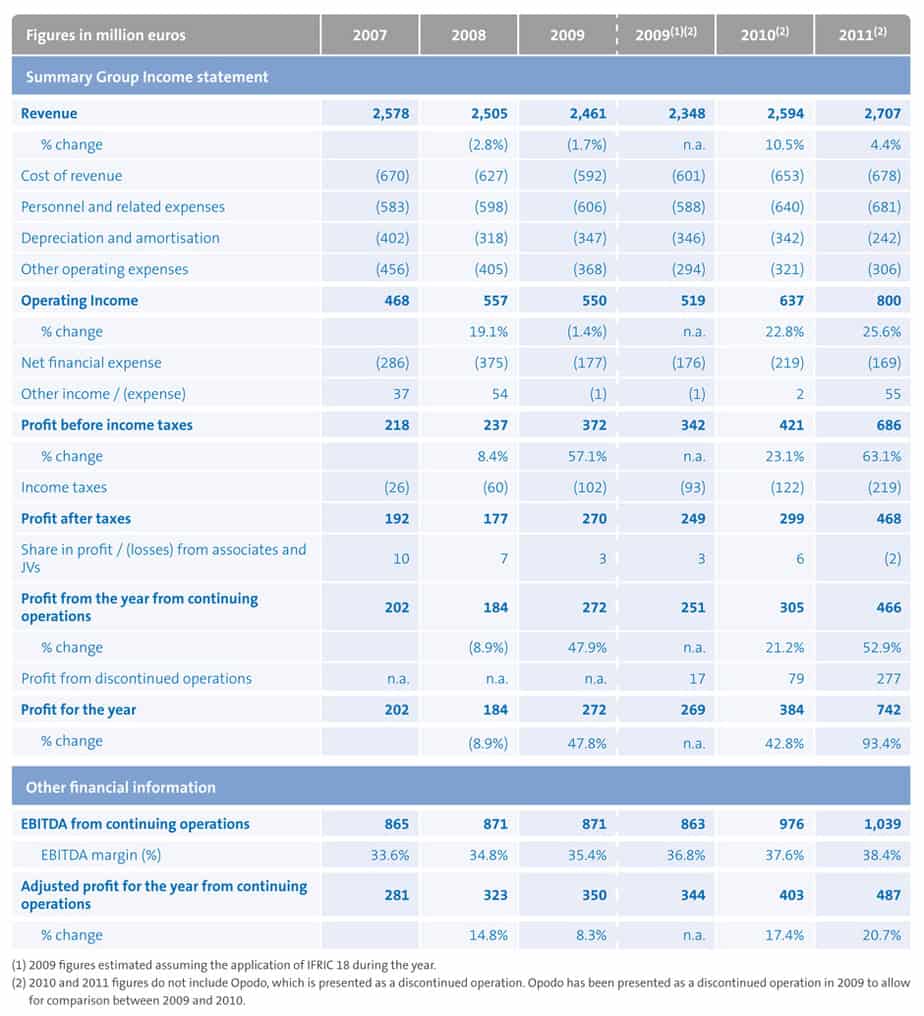
A single financial statement provides a useful snapshot, but the real analytical value often comes from comparing statements across multiple periods to identify trends in revenue, expenses, and profitability. Laying prior period figures alongside current ones, sometimes called a comparative financial statement, makes it much easier to spot whether a business is genuinely growing, holding steady, or facing emerging problems that a single period’s numbers might not reveal on their own. This kind of period-over-period comparison is particularly valuable when presenting financial statements to investors or lenders, since it demonstrates a track record rather than just a single point-in-time result.
Common Formatting Conventions for Financial Statements
While the specific layout can vary somewhat between industries and individual businesses, certain formatting conventions are widely recognized and help financial statements feel familiar and trustworthy to anyone reviewing them. Negative figures are typically shown in parentheses rather than with a minus sign, subtotals and totals are usually bolded or underlined to stand out from individual line items, and figures are generally rounded consistently, whether to the nearest dollar or the nearest thousand, throughout the entire document. Following these conventions, even in a relatively simple financial statement, signals attention to detail and makes the document easier for experienced readers to quickly parse.
When to Bring in a Professional Accountant
A template can take a business a long way toward accurate, professional financial statements, but there are points at which bringing in a qualified accountant becomes worthwhile rather than optional. Businesses approaching a formal audit, applying for significant financing, dealing with complex transactions such as mergers or equity investments, or simply growing to a size where the owner no longer has time to manage the books personally often benefit from professional review, even if a template continues to handle the routine, month-to-month preparation. Treating a template and professional accounting support as complementary tools, rather than an either-or choice, tends to give small businesses the best combination of cost efficiency and accuracy as they grow.
Download Free Financial Statement Templates Below
Company Income Statement
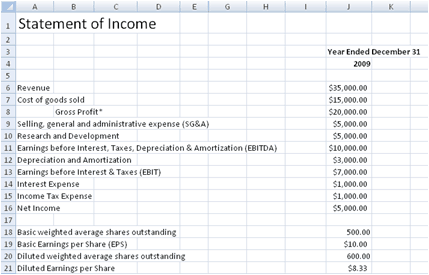

Financial Statement For Business Use
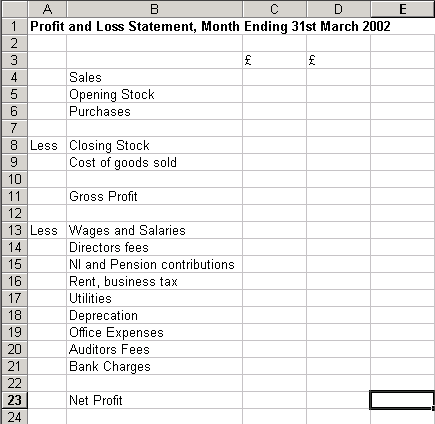
Profit and Loss Statement Sample
Frequently Asked Questions
Are these financial statement templates free to download?
Yes, all 3 financial statement templates on this page are free to download and use.
Can I customize the fields on these templates?
Yes, since the templates are editable, you can adjust categories, formulas, and layout to fit your business.
What’s the difference between a financial statement and a financial report?
A financial statement follows standard accounting formats, while a financial report often includes statements plus narrative analysis.
What are the three core financial statements?
The income statement, balance sheet, and cash flow statement are the three core financial statements most businesses prepare.
How often should I prepare a financial statement?
Many businesses prepare statements monthly or quarterly, in addition to a required annual statement.
Do I need an accountant to use these templates?
Not necessarily for routine preparation, though a professional accountant is helpful for audits, financing, or complex transactions.

You must be logged in to post a comment.