
Keeping an accurate, printable record of who showed up and who didn’t becomes far easier with a ready-made attendance register template that you can fill in with names and dates in minutes. Instead of building a tracking sheet from scratch, a pre-formatted document gives you an organized layout for recording attendance for classes, staff, or any group you need to track. Below you’ll find 5 free, downloadable attendance register templates suitable for schools, offices, and organizations of any size.
What Is an Attendance Register Template?
An attendance register template is a pre-formatted document used to track whether students, employees, or other individuals are present or absent over a specific period. Rather than building a tracking sheet from scratch, a ready-made template gives you a structured layout already set up with fields for names, dates, and attendance status. These templates are used by schools, businesses, and organizations that need a clear, consistent way to monitor attendance on a daily, weekly, or monthly basis.
Why You Need an Attendance Register Template: Key Benefits
A ready-made layout means you can focus on recording attendance instead of designing a tracking sheet from scratch, which saves setup time whenever a new register is needed. A structured template also reduces the chance of errors compared to tracking attendance manually on paper, since the rows and columns are already laid out consistently. Reliable attendance records make it easier to calculate wages and hours correctly, and a clear record makes it easier to spot chronic absenteeism or lateness early. Editable fields let you quickly adapt the template to your organization’s needs, and since it’s free and reusable, you can download it once and reuse the same structure for every attendance period.
What’s Included in the Attendance Register Template
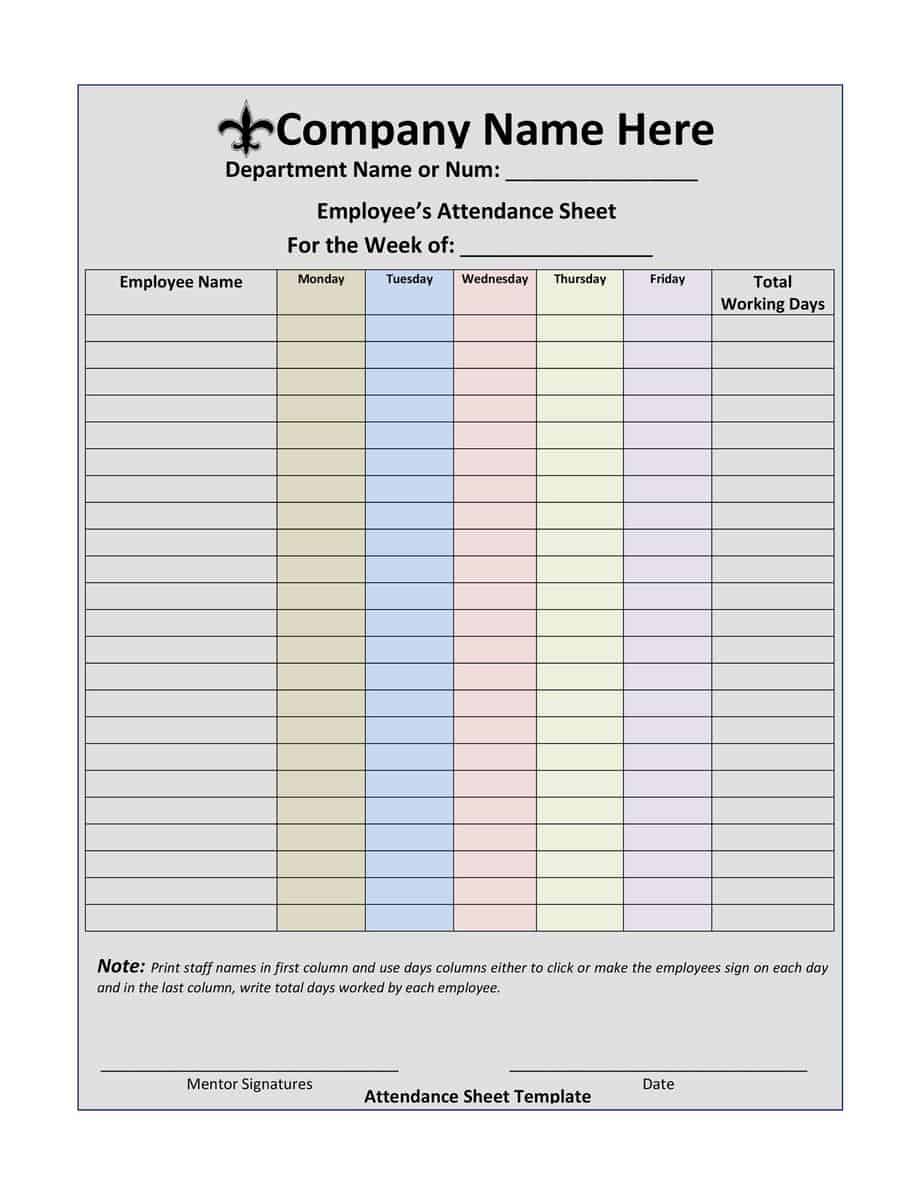
Each template includes space to list each employee, student, or member being tracked, along with columns or rows for recording attendance across a day, week, or month. There’s space to mark each person as present, absent, late, or excused, plus areas to calculate total days present or absent over the period. Most templates also include space to note the name of the organization and a notes section for additional comments about specific attendance entries.
Who Should Use These Templates?
Human resources professionals use these templates to track employee attendance for payroll purposes, while teachers and school administrators rely on them to monitor student attendance in classrooms. Training center coordinators use them to track participation in courses or sessions, and club and organization leaders keep records of member attendance at meetings. Church administrators track attendance at services or programs with these templates, and small business owners find them useful for managing attendance without dedicated HR software.
How to Start Using the Template in 3 Simple Steps
Step 1 is to browse the 5 options below and select the layout that fits your organization. Step 2 is to fill in the names of everyone being tracked and the relevant date range. Step 3 is to update attendance status daily or weekly to keep the record current and accurate.
Attendance Register vs. Digital Attendance Systems
While the two options can achieve similar goals, a printable attendance register and a digital attendance system serve different scales of operation. A register works well for smaller groups or settings where a printed record is preferred, offering a free, straightforward, and easy-to-understand solution. Digital attendance systems, on the other hand, typically offer automated tracking, biometric or card-based check-in, and real-time reporting, but come with setup costs and technical requirements. Many schools and small organizations continue to rely on a printable register precisely because of its simplicity and low cost.
Customizing the Template for Your Organization
These templates are designed to be a flexible starting point rather than a fixed format. You can adjust the date range to match your reporting period, add columns for different types of leave, or include a section for tracking tardiness separately from absences. Since the templates are provided in editable Excel format, most adjustments take only a few minutes and let you tailor the sheet to fit your particular organization.
Choosing the Right Format
With 5 different templates available, choosing the right one depends on your organization’s specific needs and how detailed your tracking needs to be. A blank register works well for classroom or office settings, while a more detailed layout offers additional structure for larger groups. Reviewing each option before committing to one can help you find the layout that best fits your attendance tracking needs.
Common Mistakes to Avoid
Forgetting to update the register daily increases the risk of forgetting or misremembering attendance details, so it’s best to record attendance as soon as possible after it’s taken. Not distinguishing between absence types can make it harder to identify patterns like excessive unexcused absences, while skipping regular totals makes it easy to lose track of overall attendance trends. Using inconsistent formats across periods can make historical comparisons difficult, and not backing up completed registers risks losing records that may be important for compliance or payroll purposes.
Tips to Get the Most Out of Your Attendance Register Template
Update the register at the same time each day to build a consistent habit and avoid missed entries, and review attendance trends periodically to catch patterns before they become larger issues. Keeping the template consistent across reporting periods makes comparisons easier over time, and backing up your attendance records regularly helps avoid losing important data. Communicating attendance policies clearly to everyone involved helps ensure absences are tracked and reported consistently.
Using Attendance Registers for Compliance and Reporting
Many schools and businesses are required to maintain accurate attendance records for compliance reasons, whether for labor law requirements, school district reporting, or grant funding conditions tied to program participation. Keeping attendance data organized and easily accessible makes it far simpler to respond to audits or reporting requests without scrambling to reconstruct historical records after the fact. Establishing a consistent retention policy for attendance registers, and storing completed sheets in an organized system rather than scattered files, helps ensure the organization stays prepared for whatever compliance requirements apply to its specific situation.
Combining Printed and Digital Attendance Tracking
While a printable attendance register offers a convenient, low-cost way to track attendance, some organizations find value in transferring completed registers into a digital spreadsheet or database periodically for easier long-term storage and analysis. A physical register collected at the start of each day or session can later be scanned or transcribed into a digital format, giving the best of both approaches: an easy, low-friction way for people to mark themselves present, paired with the searchability and reporting advantages of a digital record. Deciding which method, or combination of methods, works best often comes down to the size of the group and the resources available for maintaining the records.
Setting Clear Attendance Policies Before Tracking Begins
An attendance register works best when it’s paired with a clearly communicated policy explaining what counts as present, late, or excused, since inconsistent definitions can make the resulting data unreliable or unfair. Deciding in advance how tardiness is handled, whether a grace period applies, and what documentation is needed for an excused absence removes ambiguity for everyone involved and makes enforcement more consistent. Sharing this policy alongside the attendance register, rather than leaving it as an unwritten understanding, also gives employees or students a clear reference point if questions or disputes arise about how their attendance was recorded.
Using Attendance Data to Identify Patterns Early
One of the most valuable uses of a consistently maintained attendance register is the ability to spot patterns before they become serious problems, whether that’s a student whose attendance is gradually declining or an employee who is frequently late on specific days of the week. Reviewing attendance totals on a regular schedule, rather than only when a problem is already obvious, makes it possible to intervene early with a supportive conversation rather than waiting until the pattern has become entrenched. This kind of proactive review is one of the clearest advantages of maintaining a thorough, well-organized attendance register rather than treating it as a purely administrative formality.
Attendance Registers for Events and One-Time Gatherings
While ongoing daily attendance tracking is the most common use for these templates, attendance registers are equally useful for one-time events such as seminars, workshops, business meetings, or community gatherings. Recording who attended a specific event provides a useful record for follow-up communication, certificates of participation, or simply confirming turnout for future planning purposes. A simplified version of the register, with a single date column rather than a full weekly or monthly grid, works well for these one-off situations and can be set up in just a few minutes using the same basic template structure.
Protecting the Privacy of Attendance Records
Attendance registers often contain personal information, including names and, in some cases, reasons for absence, which means they should be handled with a reasonable degree of care and discretion. Storing completed registers in a secure location, whether physical or digital, and limiting access to only those who genuinely need it helps protect the privacy of the individuals listed. Organizations that operate under formal data protection requirements, such as schools handling student records, should also make sure their attendance record retention and disposal practices align with any applicable regulations governing personal information.
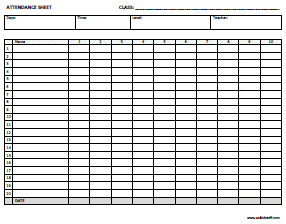
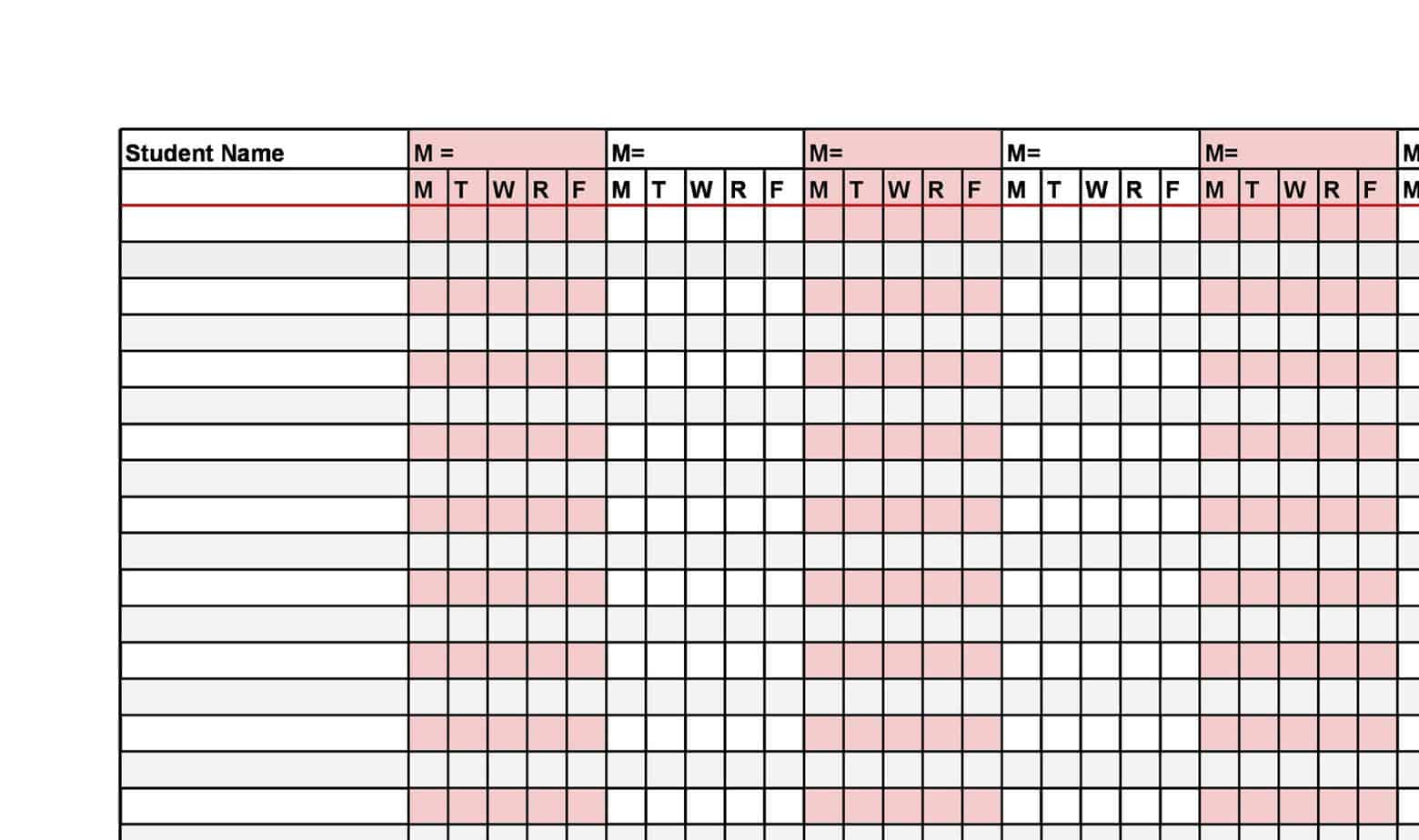
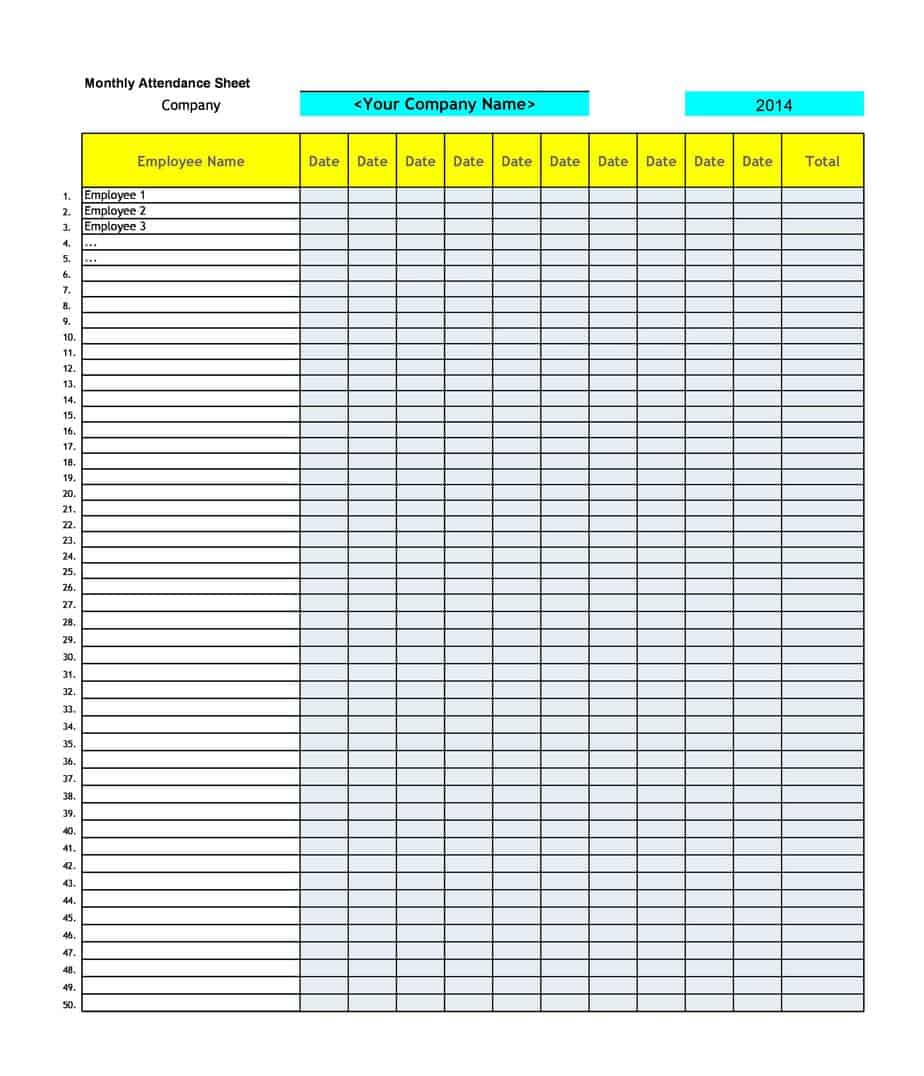
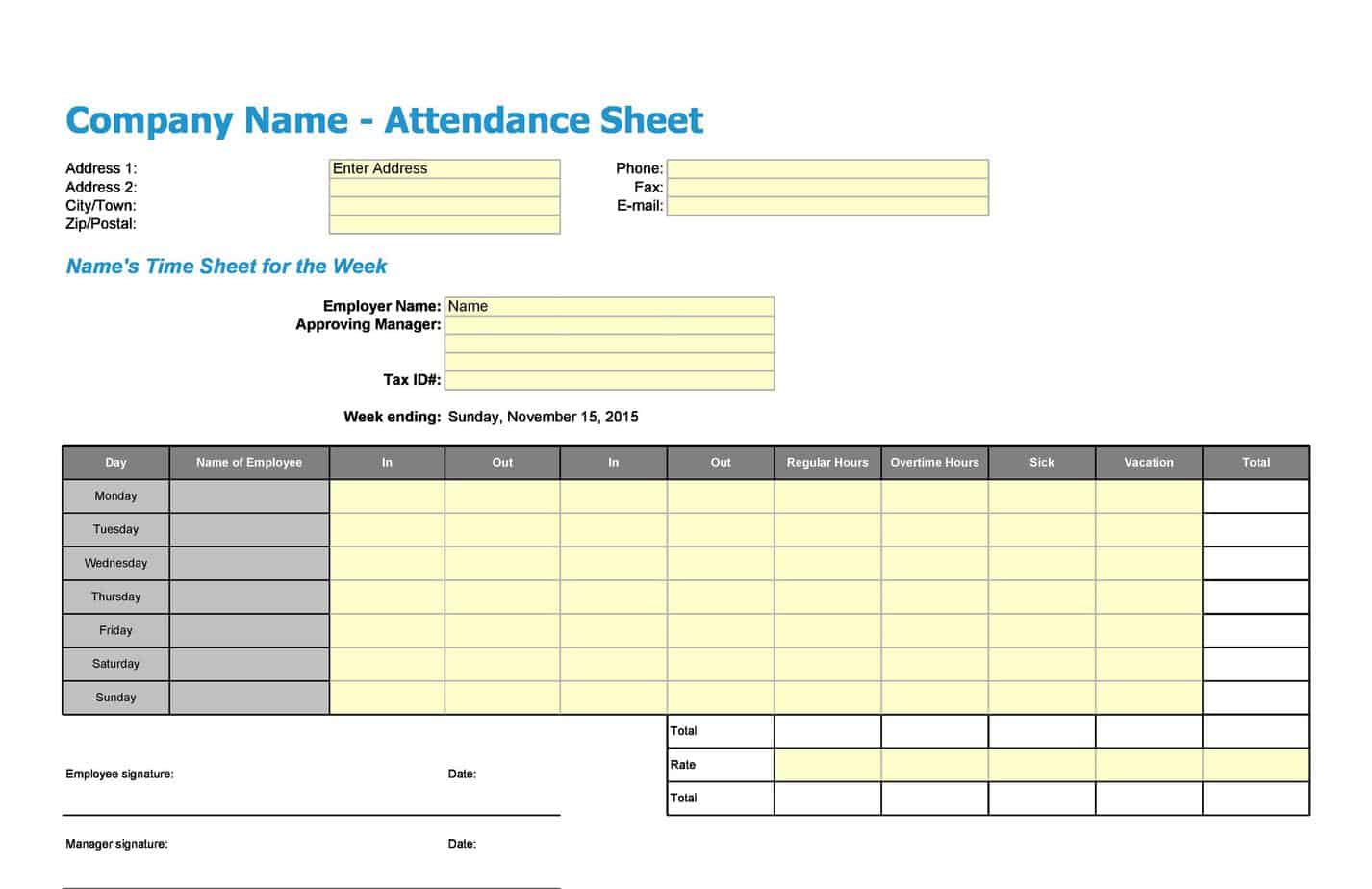
Download attendance register templates:
Blank Attendance Register Sample

Frequently Asked Questions
Are these attendance register templates free to download?
Yes, all 5 attendance register templates on this page are free to download and use.
Can I customize the fields on these templates?
Yes, since the templates are editable in Excel, you can add your own date ranges and status categories.
What’s the difference between an attendance register and a timesheet?
An attendance register tracks presence or absence, while a timesheet records specific hours worked.
Are these templates suitable for schools?
Yes, several of these templates are well suited to tracking student attendance in a classroom setting.
Can these templates be used for one-time events?
Yes, a simplified version with a single date column works well for tracking attendance at a single event.
How often should I update my attendance register?
It’s best to update the register daily or at each session to keep the record accurate and current.

You must be logged in to post a comment.