
A cash-flow spreadsheet should distinguish opening balance, incoming cash, outgoing cash and closing balance over the selected period. Positive profit does not guarantee enough cash to pay bills on time.
Separate cash inflows and outflows by period
Worked example: If a business begins with $2,000, receives $5,000 and pays $6,200 during the month, it ends with $800 in cash, assuming no other movements. A projected payment due next month should be shown in the proper period.
Check before use: Reconcile cash totals with bank statements, separate actual from forecast transactions and confirm the workbook’s time period and sign conventions.
- Saves preparation time: A ready-made layout means you can focus on entering figures instead of designing a statement from scratch.
- Reduces calculation errors: Built-in formulas automatically total inflows and outflows, minimizing manual math mistakes.
- Improves financial visibility: A clear cash flow statement helps you see exactly where money is coming from and going to.
- Supports better decisions: Understanding cash position helps guide decisions about purchases, hiring, and investments.
- Professional presentation: A well-formatted statement is easier to share with investors, lenders, or accountants.
- Free and reusable: Download once and reuse the same template structure for every reporting period.
For related resources, see 14+ Sample Profit And Loss Statement Excel Templates and 5 Balance Sheet Formats In Excel.
What’s Included in the Cash Flow Excel Template
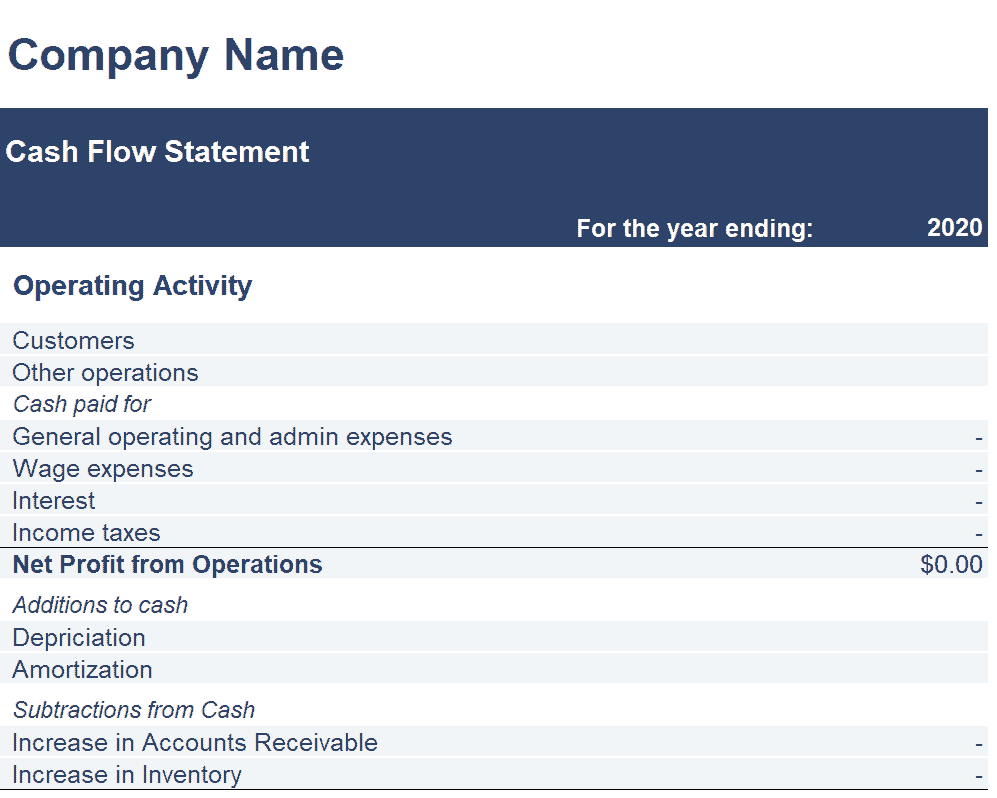
- Operating activities section: Space to record cash from core business operations, such as sales and expenses.
- Investing activities section: Fields for cash used in or generated from investments, such as equipment purchases.
- Financing activities section: Space to track cash from loans, owner contributions, or debt repayments.
- Opening and closing balances: Fields showing the cash position at the start and end of the period.
- Built-in formulas: Automatic calculations that total each category and the overall net cash flow.
- Period labels: Space to define the reporting period, whether monthly, quarterly, or annual.
Who Should Use These Templates?
- Small business owners tracking monthly or quarterly cash position.
- Accountants and bookkeepers preparing financial statements for clients.
- Nonprofit organizations monitoring cash flow projections for grant reporting.
- Startup founders presenting cash flow data to investors.
- Financial analysts building discounted cash flow models.
- Individuals tracking personal cash flow and household budgets.
How to Start Using the Template in 3 Simple Steps
- Step 1 — Choose a template style: Browse the 12 options below and select the format that best fits your needs.
- Step 2 — Enter your cash figures: Fill in your operating, investing, and financing activity amounts.
- Step 3 — Review the totals: Let the built-in formulas calculate your net cash flow and closing balance.
Cash Flow Statement vs. Income Statement
While both documents are core financial statements, a cash flow statement and an income statement serve different purposes. An income statement reports revenue and expenses to show overall profitability over a period, including non-cash items like depreciation. A cash flow statement, by contrast, focuses specifically on actual cash movement, showing whether a business has enough liquidity to cover its obligations. Many businesses find it useful to review both together, since a company can be profitable on paper while still facing cash flow challenges.
Customizing the Template for Your Business
These templates are designed to be a flexible starting point rather than a fixed format. You can add your company name and logo, adjust the categories to match your specific business activities, or extend the formulas to cover additional reporting periods. Since the templates are provided in editable Excel format, most adjustments take only a few minutes and let you tailor the statement to fit your particular financial reporting needs.
Choosing the Right Format
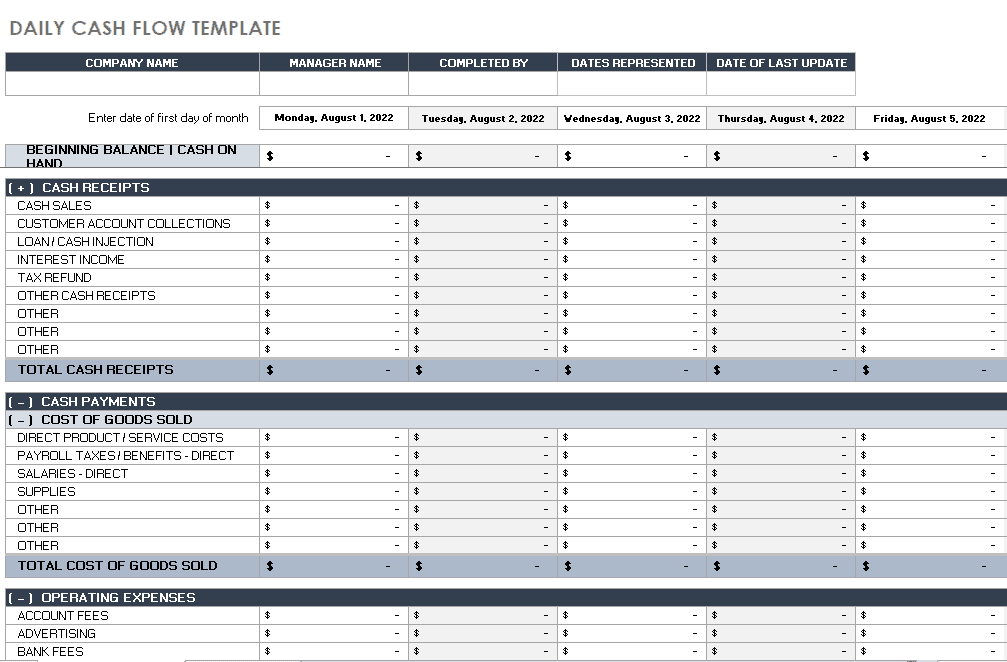
With 12 different templates available, choosing the right one depends on your reporting period and the level of detail you need. Some templates are designed for monthly or daily tracking, while others cover quarterly projections or multi-year comparisons. Reviewing each option before committing to one can help you find the layout that’s easiest for your business or personal use to maintain consistently.
Common Mistakes to Avoid
- Mixing up cash and accrual figures: A cash flow statement should reflect actual cash movement, not accrued revenue or expenses.
- Miscategorizing transactions: Keep operating, investing, and financing activities clearly separated for accuracy.
- Forgetting non-cash adjustments: Remember to account for items like depreciation when reconciling with net income.
- Inconsistent reporting periods: Use the same period length consistently to make comparisons meaningful.
- Not reviewing regularly: A cash flow statement is most useful when updated and reviewed on a consistent schedule.
Tips to Get the Most Out of Your Cash Flow Excel Template
- Update your figures regularly to maintain an accurate, current picture of your cash position.
- Compare actual figures to projections to identify trends and improve future forecasting.
- Keep backup documentation for each transaction recorded in the statement.
- Review with your accountant periodically to ensure accuracy and proper categorization.
- Save a copy for each reporting period to build a historical record for comparison.
Understanding the Three Categories of Cash Flow
Breaking cash flow into operating, investing, and financing categories gives a much clearer picture of where a business’s cash is actually coming from and going. Operating activities reflect the core, day-to-day business, such as cash from sales and payments for expenses. Investing activities capture cash used for or generated from long-term assets, such as buying equipment or selling property, while financing activities track cash related to debt, equity, and owner distributions. Understanding these distinctions helps identify whether a business is generating cash from its core operations or relying on financing to stay afloat.
Using Cash Flow Statements for Business Planning
Beyond simply reporting past performance, a cash flow statement plays an important role in forward-looking business planning, helping owners anticipate periods of tight liquidity before they become a problem. Reviewing historical cash flow patterns can reveal seasonal trends, such as slower months that require careful cash management or busier periods that generate surplus cash for reinvestment. Many businesses use cash flow projections alongside historical statements to plan major purchases, hiring decisions, or loan applications with greater confidence.
Cash Flow Statements for Investors and Lenders
When seeking outside financing or investment, a well-prepared cash flow statement is often one of the first documents investors and lenders review, since it reveals a business’s ability to generate and manage cash. Unlike an income statement, which can be affected by accounting choices around non-cash items, a cash flow statement provides a more direct view of liquidity and financial health. Businesses that maintain clean, consistent cash flow records tend to build stronger credibility with potential investors and lenders during due diligence.
Personal Cash Flow Tracking With These Templates
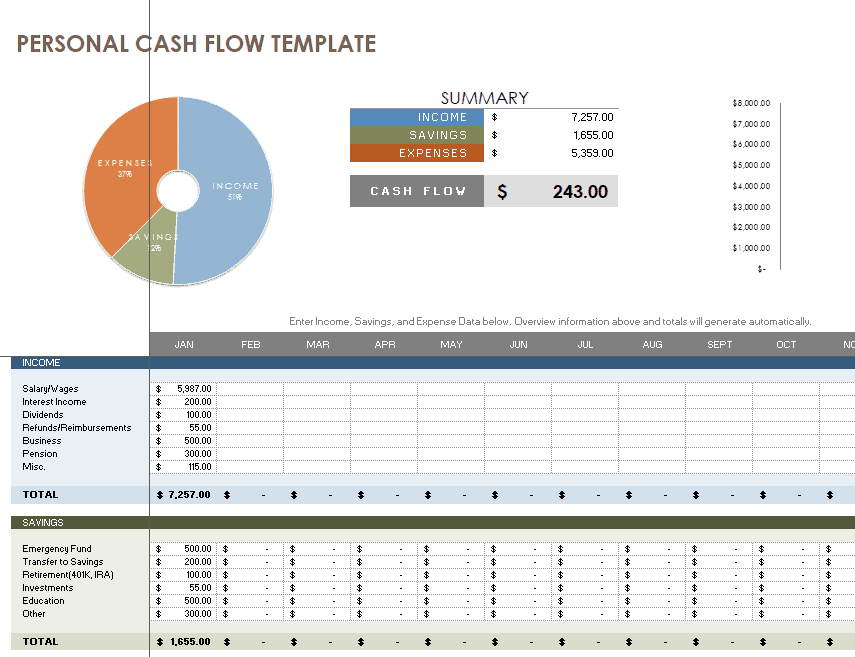
While cash flow statements are typically associated with businesses, the same principles apply well to personal finance, helping individuals track income against expenses over time. A personal cash flow template can reveal spending patterns, highlight months where expenses exceed income, and support better budgeting decisions. Many people find that reviewing their personal cash flow monthly, much like a business would, helps them build savings more consistently and avoid relying on credit for regular expenses.
Forecasting Future Cash Flow
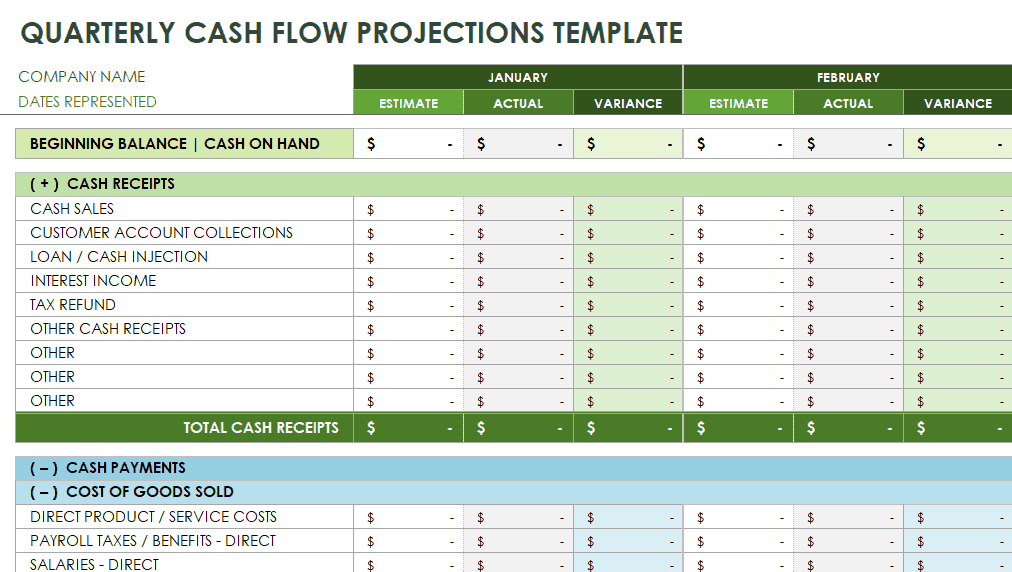
In addition to reporting historical cash movement, many businesses use cash flow templates to build forward-looking projections that estimate future inflows and outflows based on expected sales, expenses, and financing activity. These forecasts are especially valuable for identifying potential cash shortfalls in advance, giving a business time to arrange financing or adjust spending before a crisis develops. Comparing actual results against earlier forecasts each period also helps refine the accuracy of future projections over time.
Using a Discounted Cash Flow Template for Valuation
Beyond routine reporting, a discounted cash flow template serves a more specialized purpose, helping analysts and business owners estimate the present value of expected future cash flows. This approach is commonly used when valuing a business, evaluating an investment opportunity, or deciding whether a major project is likely to generate sufficient returns. Because the calculation depends heavily on assumptions about growth rates and discount rates, small changes in these inputs can meaningfully shift the resulting valuation, making it worthwhile to test a few different scenarios before relying on a single number.
Comparing Cash Flow Across Multiple Years
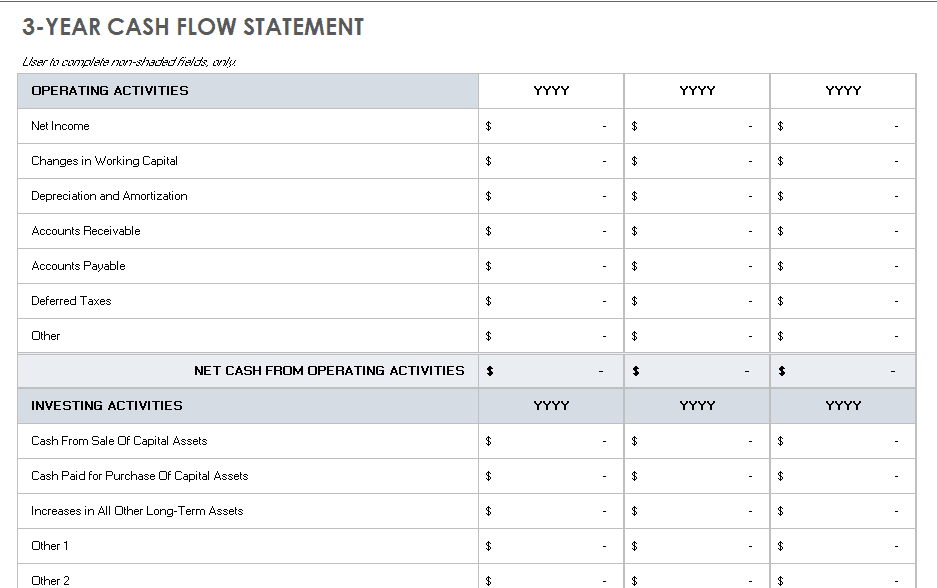
Looking at a single period’s cash flow statement provides a useful snapshot, but comparing multiple years side by side often reveals trends that a single statement can’t show on its own. A multi-year comparative template can highlight whether operating cash flow is steadily growing, whether financing activity is increasing in a way that signals rising debt, or whether investing patterns have shifted over time. Businesses that regularly review multi-year cash flow trends are often better positioned to spot developing issues early and adjust strategy before a small concern becomes a larger financial problem.
Get Cash Flow Excel Templates Here
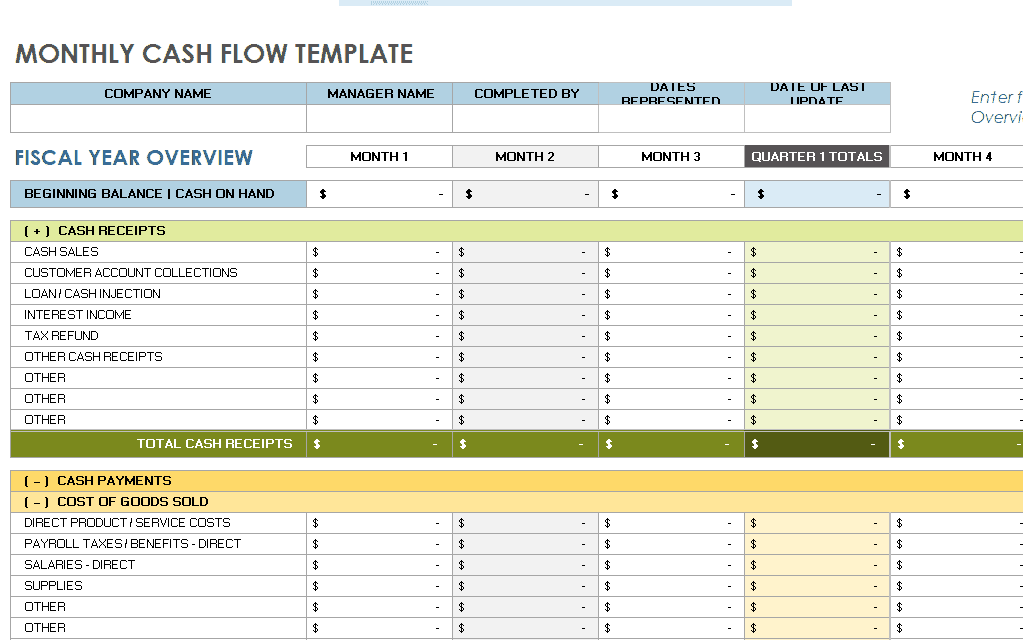
Monthly Cash Flow Template
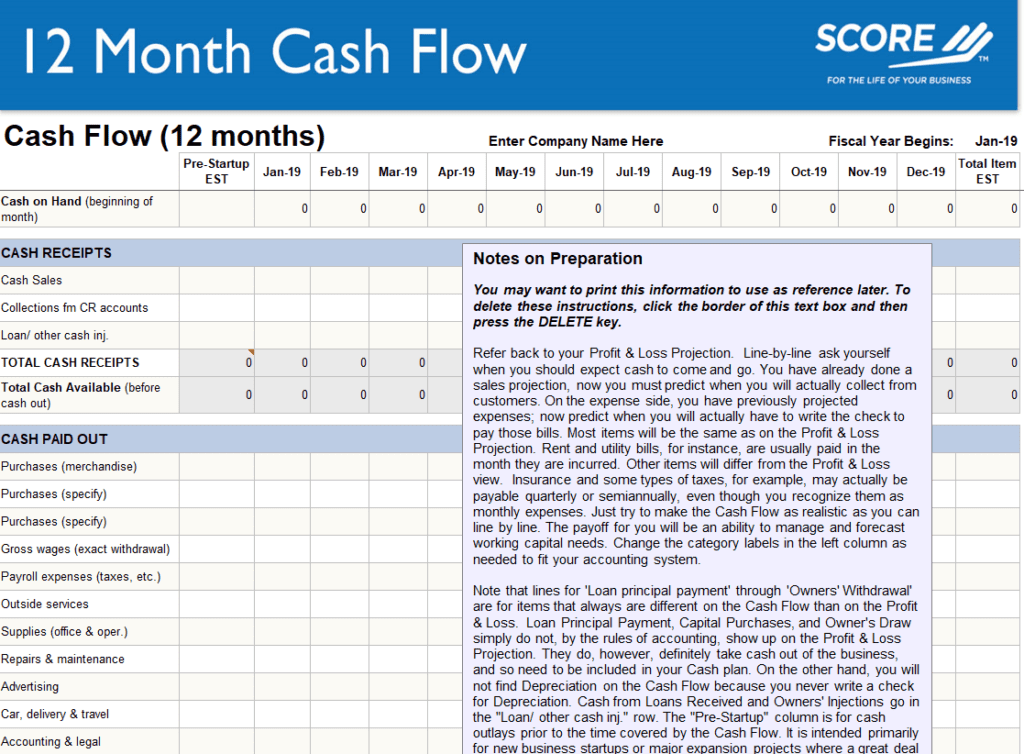
12 Month Cash Flow Template
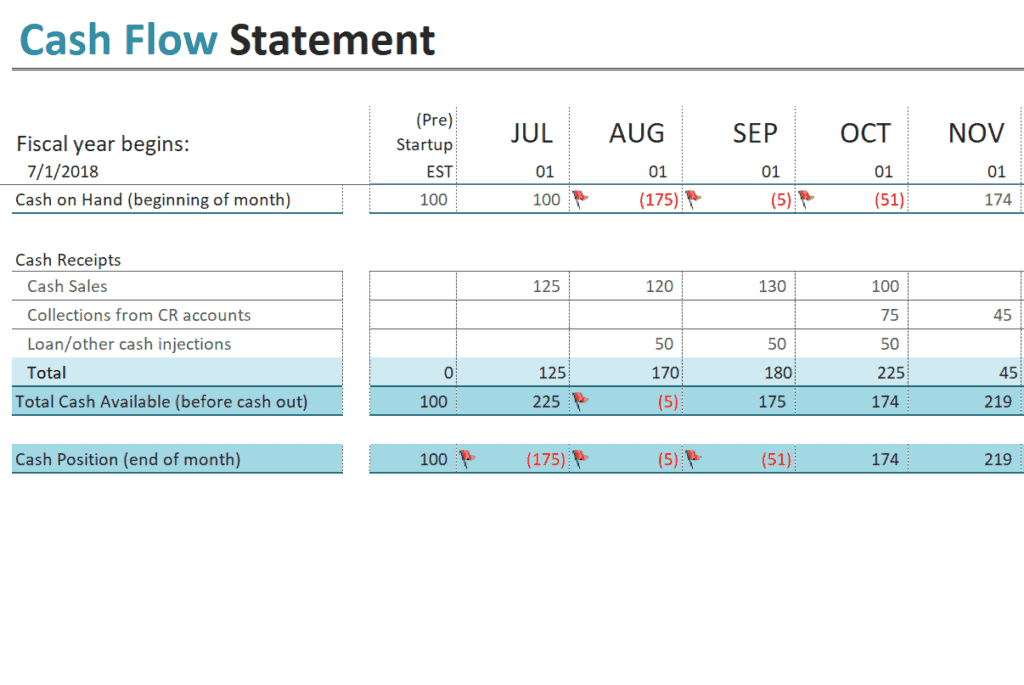
Detailed Cash Flow Statement Template
Discounted Cash Flow Template

Personal Cash Flow Template
Company’s Cash Flow Template
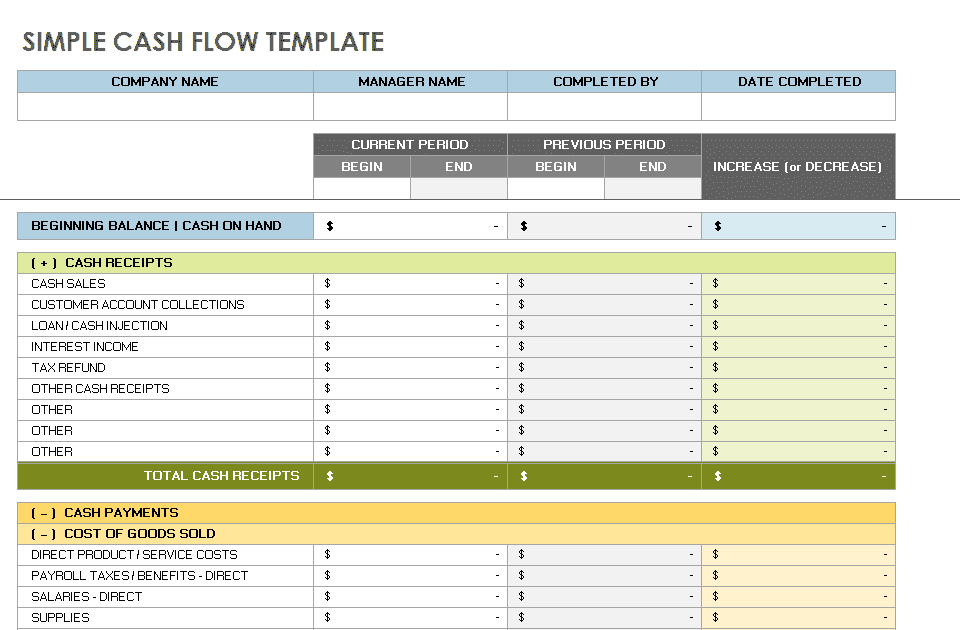
Simple Cash Flow Template
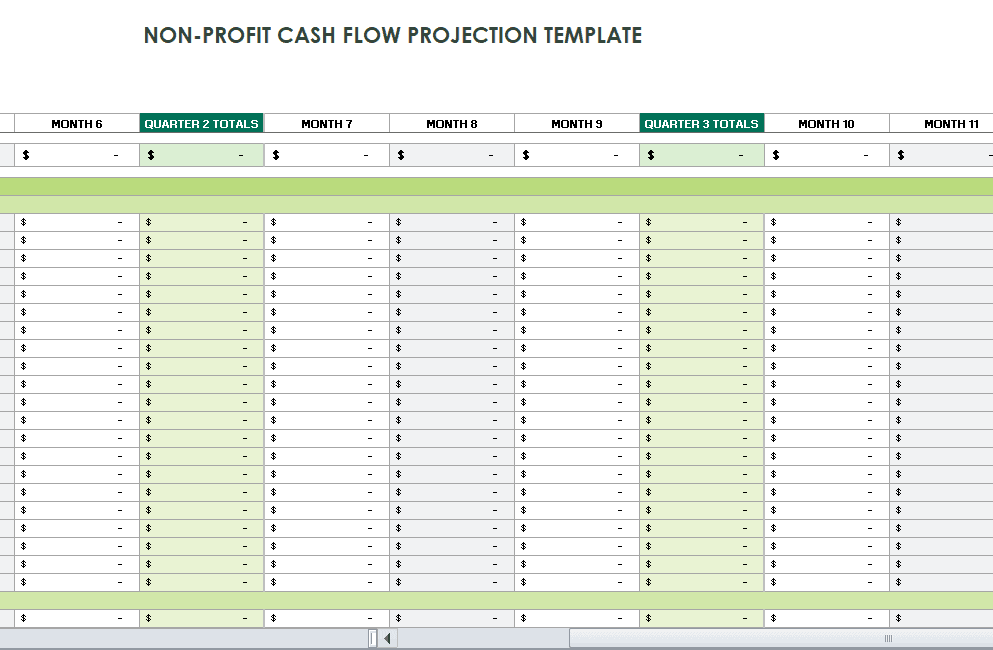
Non-Profit Organization Cash Flow Projection Template
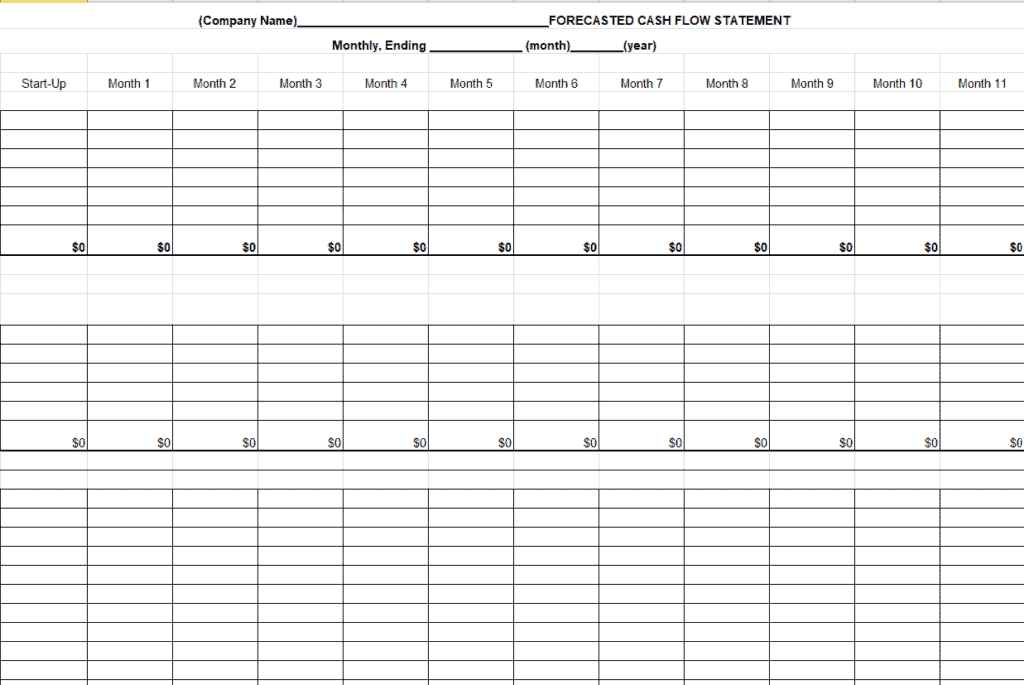
Company’s Forecasted Cash Flow Template
Sample Daily Cash Flow Template
Quarterly Cash Flow Projections Template
3-Year Comparative Cash Flow Statement Template
Frequently Asked Questions
Are these cash flow Excel templates free to download?
Yes, all 12 cash flow Excel templates on this page are free to download and use.
Can I customize the fields on these templates?
Yes, since the templates are fully editable in Excel, you can adjust categories and formulas to match your specific reporting needs.
Do these templates include built-in formulas?
Yes, the templates include formulas that automatically calculate totals for each cash flow category and the overall net cash flow.
What’s the difference between a cash flow statement and an income statement?
A cash flow statement tracks actual cash movement, while an income statement reports overall profitability, including non-cash items.
Can these templates be used for personal finance?
Yes, several templates, including the personal cash flow template, work well for tracking individual income and expenses.
How often should I update my cash flow statement?
Most businesses update their cash flow statement monthly or quarterly, though some prefer weekly or daily tracking for tighter control.

You must be logged in to post a comment.