
Understanding exactly what your diners think about their experience becomes much easier with a ready-made restaurant comment card template that you can customize and print in minutes. Instead of designing a feedback form from scratch, a professionally formatted template gives you a clean, printable layout guests can quickly fill out at the end of their meal. Below you’ll find 5 free, downloadable restaurant comment card templates and examples suitable for restaurants, cafes, and hospitality businesses of any size.
Ask restaurant guests questions that lead to improvements
A restaurant comment card should collect feedback about specific parts of the visit, such as food quality, service, cleanliness and waiting time. Keep response scales consistent and leave space for useful comments.
Worked example: A guest could rate service as 3 out of 5 and describe a 25-minute delay after ordering. That is more actionable than a single overall ‘good’ or ‘bad’ box.
Check before use: Avoid leading questions and mandatory identifying details. Explain how contact information will be used if the guest requests follow-up, and review feedback trends rather than focusing on isolated ratings.
- Saves design time: A ready-made layout means you can focus on gathering feedback instead of designing a card from scratch.
- Improves customer satisfaction: Direct feedback helps you identify what’s working well and what needs improvement.
- Looks professional: A well-designed comment card reflects positively on your restaurant’s brand.
- Easy to personalize: Editable fields let you quickly add your restaurant’s name, logo, and specific questions.
- Builds customer relationships: Asking for feedback shows customers that their opinions matter.
- Free and reusable: Download once and print as many copies as you need for ongoing use.
For related resources, see 3 Restaurant Reservation Log Templates and Download 18+ FREE Survey Templates Word.
What’s Included in the Restaurant Comment Card Template
- Customer name field: Space to optionally record who is providing the feedback.
- Contact details field: Areas for a phone number or email if follow-up is welcome.
- Rating fields: Space to rate specific aspects like food quality, service, and cleanliness.
- Open comment section: A larger area for customers to write detailed feedback in their own words.
- Visit date field: Space to note when the customer visited the restaurant.
- Restaurant branding space: Room to add your restaurant’s logo and name.
Who Should Use These Templates?
- Restaurant owners wanting direct, structured feedback from diners.
- Restaurant managers monitoring service quality and staff performance.
- Cafe and coffee shop owners gathering feedback on menu items and atmosphere.
- Hotel restaurants collecting guest feedback alongside their dining experience.
- Catering businesses understanding client satisfaction after events.
- Food truck operators gathering quick feedback from customers.
How to Start Using the Template in 3 Simple Steps
- Step 1 — Choose a template style: Browse the 5 options below and select the design that fits your restaurant’s brand.
- Step 2 — Customize with your details: Add your restaurant’s name, logo, and any specific questions you want to ask.
- Step 3 — Print and distribute: Print copies and place them at tables or hand them out at the end of a meal.
Comment Cards vs. Online Reviews
While both serve to gather customer feedback, comment cards and online reviews have important differences. A comment card is collected privately at the point of service, giving customers a low-pressure way to share honest feedback, including complaints, that might not otherwise be voiced publicly. Online reviews, on the other hand, are posted publicly and can influence potential customers browsing platforms before they’ve even visited. Using comment cards alongside encouraging positive online reviews gives restaurants a fuller picture of customer sentiment, both private and public.
Customizing the Template for Your Restaurant
These templates are designed to be a flexible starting point rather than a fixed format. You can add your restaurant’s logo and colors, adjust the questions to focus on specific areas like a new menu item, or include a section asking whether the customer would recommend the restaurant to others. Since the templates are provided in editable, printable formats, most adjustments take only a few minutes and let you tailor the card to fit your particular restaurant.
Choosing the Right Format
With 5 different templates and examples available, choosing the right one depends on your restaurant’s style and how detailed you want the feedback to be. A simple sample card works well for quick, casual feedback, while a more detailed guest comment card suits establishments that want structured ratings across multiple categories. Reviewing each option before committing to one can help you find the design that best matches your restaurant’s brand and needs.
Common Mistakes to Avoid
- Making the card too long: A lengthy card can discourage customers from filling it out at all.
- Only asking closed-ended questions: Leaving room for open comments captures details a rating scale alone might miss.
- Not acting on the feedback: Collecting comments without following up on recurring issues wastes the opportunity.
- Forgetting to place cards where customers will see them: A card left unnoticed on a counter won’t get filled out.
- Not training staff to encourage feedback: Staff can play a key role in reminding customers the card is available.
Tips to Get the Most Out of Your Restaurant Comment Card Template
- Keep the card short and easy to complete so customers are more likely to fill it out.
- Place cards where they’re easy to find such as on tables or near the register.
- Review feedback regularly rather than letting completed cards pile up unread.
- Respond to negative feedback promptly when contact information is provided.
- Share positive feedback with your team to boost morale and reinforce good practices.
Turning Comment Card Feedback Into Action
Collecting comment cards is only useful if the feedback actually leads to meaningful changes in how the restaurant operates. Setting aside regular time, whether weekly or monthly, to review all collected cards together helps identify patterns that might not be obvious from a single comment, such as multiple customers mentioning slow service during the same time slot. Sharing this feedback with staff during team meetings, both the praise and the constructive criticism, helps everyone understand how their work is being perceived and creates a shared sense of ownership over improving the customer experience.
Balancing Paper Cards With Digital Feedback Options
While printed comment cards remain a reliable, low-tech way to gather feedback, many restaurants now supplement them with digital options like a QR code linking to an online survey. Offering both formats accommodates different customer preferences, since some diners find it quicker to jot down a quick note on paper while others prefer using their phone. Digital feedback also has the advantage of being easier to compile and analyze over time, since responses are automatically organized rather than requiring someone to manually enter data from paper cards.
Encouraging Honest and Constructive Feedback
Getting genuinely useful feedback from a comment card depends heavily on how comfortable customers feel being honest, particularly when it comes to negative experiences. Framing the card as a genuine request for input, rather than simply a formality, along with reassuring customers that their comments will actually be read and considered, tends to produce more thoughtful and constructive responses. Avoiding any appearance that only positive comments are welcome, such as removing cards that mention complaints, is also important for maintaining trust that the feedback process is genuine rather than just for show.
Timing When You Offer the Comment Card
When a comment card is presented can meaningfully affect both the response rate and the quality of feedback received from customers. Offering the card too early, before the meal is finished, means customers haven’t yet formed a complete impression of their visit, while waiting until customers are already rushing to leave can result in a card being skipped entirely or filled out hastily. Many restaurants find that presenting the card alongside the check, when customers are naturally pausing to settle their bill, strikes the right balance between giving diners time to reflect and catching them while they’re still engaged.
Using Comment Card Data to Track Trends Over Time
Beyond addressing individual pieces of feedback, collecting comment cards consistently over months or years allows a restaurant to track broader satisfaction trends rather than reacting only to isolated comments. Noticing that overall ratings dip during particularly busy periods, for example, might point to a need for additional staffing or a revised workflow during peak hours. Keeping a simple log of ratings and common themes from each batch of cards, even a basic spreadsheet, turns scattered individual feedback into a valuable long-term record of how the restaurant’s customer experience is evolving.
Training Staff to Support the Feedback Process
The success of a comment card program often depends as much on how staff present it as on the design of the card itself. Servers who genuinely encourage guests to share their thoughts, rather than treating the card as an afterthought tossed onto the table with the check, tend to see noticeably higher response rates. Briefing staff on why the feedback matters, and occasionally sharing highlights from collected comments during team meetings, helps everyone see the comment card program as a shared tool for improvement rather than just another task added to their workload.
Download restaurant comment card templates here
Sample Restaurant Comment Card


Printable Guest Comment Card
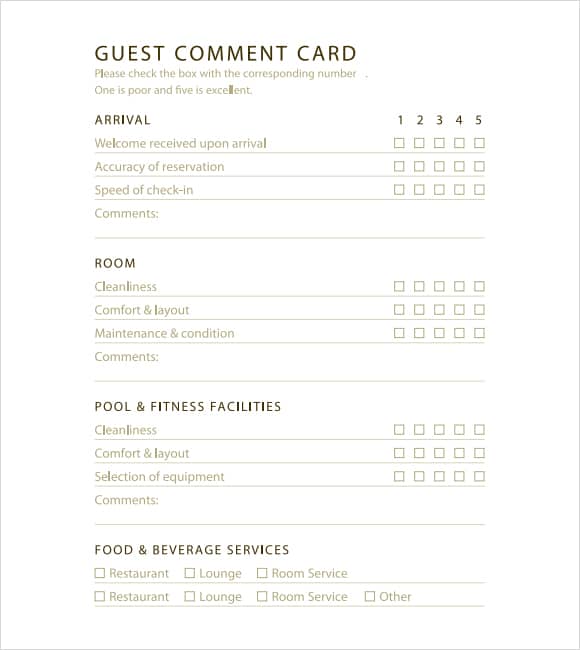
Restaurant Guest Comment Card
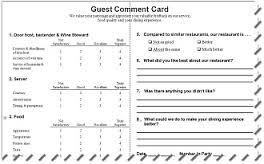
Blank Restaurant Comment Card Template

Beautiful Restaurant Comment Card

Frequently Asked Questions
Are these restaurant comment card templates free to download?
Yes, all 5 restaurant comment card templates and examples on this page are free to download and use.
Can I customize the fields on these templates?
Yes, since the templates are editable, you can add your restaurant’s logo, name, and specific questions.
What’s the difference between a comment card and an online review?
A comment card is collected privately in-person, while an online review is posted publicly for others to see.
Are these templates suitable for cafes and food trucks?
Yes, these templates can be adapted for cafes, food trucks, and other hospitality businesses.
Should the comment card be anonymous?
You can offer an optional name and contact field so customers can choose whether to remain anonymous.
When is the best time to offer a comment card?
Presenting the card alongside the check tends to work well, since customers are already pausing to settle the bill.

You must be logged in to post a comment.