
Keeping accurate records during a baseball season or tournament is what separates a well-run league from a chaotic one, and a baseball individual stat sheet template makes that job far easier. Instead of tallying hits, at-bats, and batting averages by hand on scrap paper, a ready-made Excel stat sheet gives coaches, scorekeepers, and tournament organizers a structured, professional way to record every player’s performance and calculate the key numbers automatically. Below you’ll find eight free, downloadable baseball stat sheet templates, from simple individual sheets to more detailed scoresheets, so you can pick the format that fits your team, league, or event.
Choose baseball statistics before filling in the sheet
An individual baseball stat sheet should match the position and level of play. Batters need plate appearances, hits, walks and strikeouts; pitchers need innings, hits allowed, walks and earned runs, with innings recorded in baseball notation.
- Saves time during games: A pre-formatted sheet lets scorekeepers record stats quickly without designing a tracking system on the fly.
- Reduces calculation errors: Built-in formulas calculate batting averages and totals automatically, removing the risk of manual math mistakes.
- Keeps records consistent: Using the same template across every game makes it easy to compare performance over a season or tournament.
- Helps with player evaluation: Coaches can quickly identify strengths and weaknesses by reviewing a player’s stat history.
- Supports award and MVP decisions: Accurate, organized stats make it easier to fairly determine standout performers at the end of a tournament.
- Works for any skill level: The same simple structure works for youth leagues, high school teams, and adult recreational leagues alike.
Worked example: If a batter has 3 hits in 10 at-bats, the batting average is .300; walks contribute to on-base percentage but not at-bats. Avoid treating every plate appearance as an at-bat.
Check before use: Define scoring rules consistently, distinguish team totals from player totals, and calculate rate statistics using the proper denominators. Confirm any spreadsheet formulas before sharing season rankings.
For related resources, see Printable 13+FREE Baseball Score Sheet Templates and 7+ Free Printable Baseball Scorecard Sheet Templates.
What’s Included in the Stat Sheet Template
- Player and game information: Fields for the player’s name, team, opponent, and date of the game.
- At-bat and hit tracking: Columns for singles, doubles, triples, home runs, and total hits.
- Walks and strikeouts: Dedicated fields to track plate discipline alongside offensive output.
- Automatic batting average: A built-in formula that calculates batting average as stats are entered.
- Runs and RBIs: Space to log runs scored and runs batted in for a fuller picture of offensive contribution.
- Print-ready layout: A clean, organized format designed to look professional whether viewed on screen or printed out for the dugout.
Who Should Use These Templates?
- Tournament organizers who need a consistent way to track and compare player stats across many games.
- Team coaches and managers monitoring individual player development over a season.
- Scorekeepers looking for a reliable, easy-to-use sheet during live games.
- Youth and recreational leagues that need a simple system without expensive scoring software.
- Parents and volunteers helping track stats for a child’s team.
- Statisticians and league administrators compiling season-end reports and standings.
How to Start Using the Template in 3 Simple Steps
- Step 1 — Download a template: Choose from the eight stat sheet formats below and save the one that fits your needs.
- Step 2 — Enter player and game details: Fill in the player’s name, opponent, and date before the game begins.
- Step 3 — Track stats as the game progresses: Record hits, walks, and other stats inning by inning, and let the built-in formulas calculate totals and averages automatically.
Individual Stat Sheets vs. Team Scoresheets
These two types of records serve different purposes, and many of the templates on this page cover both. An individual stat sheet focuses on a single player’s performance, making it useful for tracking development, comparing players, and supporting award decisions. A team scoresheet, on the other hand, records the full game inning by inning across the entire lineup, giving a complete picture of how the game unfolded. Using both together gives coaches and organizers the most complete record: the scoresheet documents what happened in the game, while the individual stat sheets make it easy to see how each player contributed over time.
Customizing the Template for Your League
While these templates work well as they are, they’re meant to be a starting point you can adjust to your league’s specific needs. You might add columns for stolen bases or sacrifice flies if your league tracks them, adjust the layout to fit your team’s branding, or extend the sheet to cover a full tournament bracket rather than a single game. Since the templates are built in standard Excel and Word formats, these changes are simple to make even without advanced spreadsheet experience.
Common Mistakes to Avoid
- Entering stats after the game from memory: Recording stats live, inning by inning, is far more accurate than trying to reconstruct them afterward.
- Mixing up players with similar names: Double-check player identification, especially in larger tournaments with multiple teams.
- Skipping walks and strikeouts: These numbers matter for a complete performance picture and for accurate batting average calculations.
- Not backing up completed sheets: Save a copy of every game’s stat sheet so season totals can be compiled accurately later.
- Inconsistent formats across games: Using the same template for every game makes it much easier to compare and compile stats at season’s end.
Tips to Get the Most Out of Your Stat Sheet Template
- Assign a dedicated scorekeeper for each game to keep the stat sheet accurate and consistent.
- Double-check totals against the scoreboard at the end of each game.
- Print extra copies before tournament days in case a sheet gets damaged or lost.
- Keep a season-long spreadsheet that compiles data from each individual game sheet for easy season totals.
- Share stats with players and parents regularly to keep everyone informed of progress.
Tracking Stats for Tournaments with Multiple Teams
Larger tournaments bring an added layer of complexity, since organizers often need to track and compare stats across dozens of players from many different teams. Using a consistent stat sheet template for every team involved makes this process far more manageable, since every scorekeeper is recording the same categories in the same format. At the end of the tournament, this consistency makes it much easier to compile leaderboards, determine an MVP, or simply give every participating family a clear record of how their player performed throughout the event.
Digital vs. Printed Stat Sheets
Some teams prefer to fill out a stat sheet directly on a laptop or tablet during the game, while others still print a physical copy to keep in the dugout. Both approaches work well with the templates on this page, since the Excel-based sheets can be filled in digitally with formulas calculating totals in real time, while the same layout also prints cleanly for scorekeepers who prefer pen and paper during the game and then transfer the numbers to a spreadsheet afterward. Many organizations use a hybrid approach: a printed sheet is filled out during the game for reliability in case of a dead phone battery or spotty wifi at the field, and the numbers are then entered into the digital template afterward to keep a searchable season-long record.
Using Stat Sheets to Track Player Development Over a Season
Beyond a single game or tournament, consistently using the same stat sheet template game after game creates a valuable record of how a player develops over an entire season. Coaches can look back at batting average trends, spot improvements in plate discipline through fewer strikeouts and more walks, and have concrete data to share with players and parents during progress conversations. This kind of season-long tracking also helps with fair playing time and lineup decisions later in the season, since decisions can be grounded in actual performance data rather than general impressions from memory.
Choosing the Right Stat Sheet for Your Event
With eight different templates available on this page, it helps to think about what your specific event needs before picking one. A single-day pickup game or scrimmage might only need one of the simpler individual stat sheets, while a multi-day tournament with bracket play benefits from the more detailed scoresheet templates that track a full lineup inning by inning. If your league also compiles season standings, look for a template that separates clearly labeled columns for each stat category, since that makes it far easier to copy totals into a master spreadsheet later. Trying a couple of the different formats early in the season is a good way to find which one your scorekeepers find fastest and most comfortable to use under the pressure of a live game.
Involving Players in Their Own Stat Tracking
Many coaches find that sharing stat sheets directly with players, rather than keeping them purely for internal use, adds an extra layer of motivation and accountability. Seeing a batting average tick up over the course of a season, or noticing a personal best in hits during a single game, can be genuinely encouraging for younger players in particular. Some coaches go a step further and post updated team stat summaries in a shared folder or team chat after each game, which players and parents often check with real enthusiasm. Used this way, a simple stat sheet template becomes more than a record-keeping tool; it becomes part of how the team celebrates progress throughout the season.
Get Baseball Individual Stat Sheet Templates Here
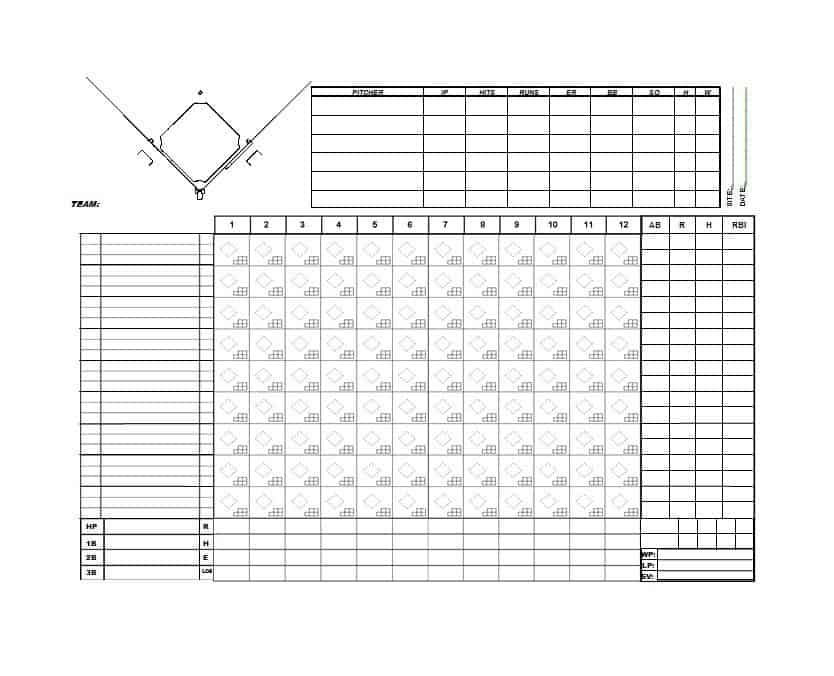
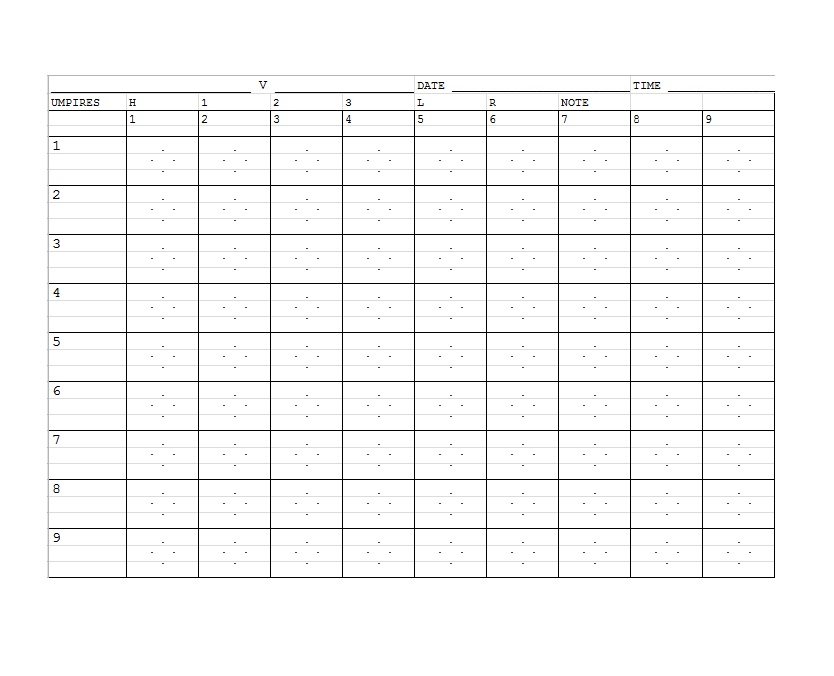
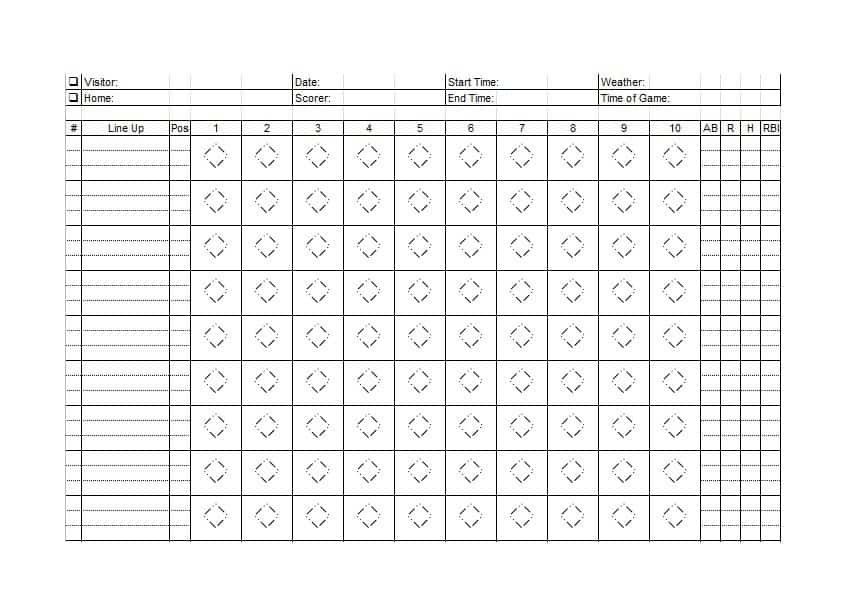
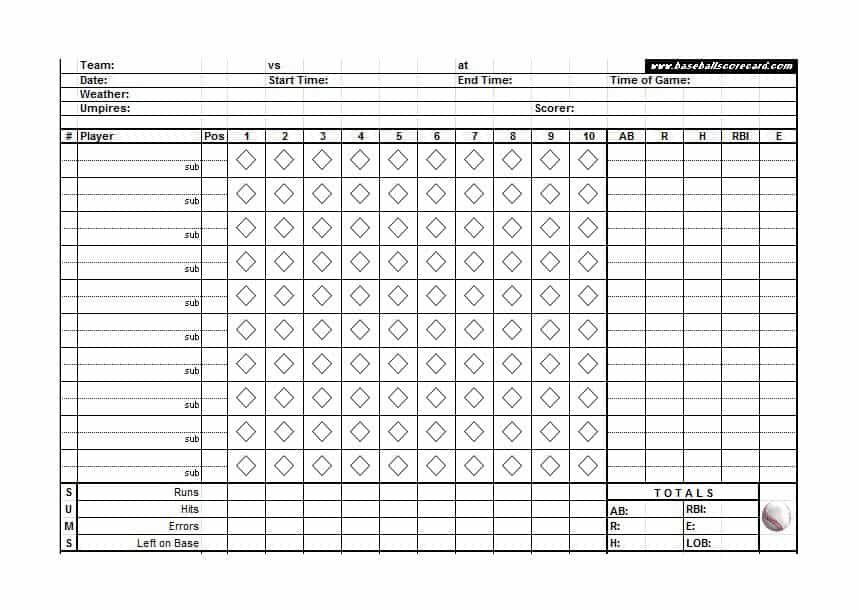
Baseball Individual Stat Sheet Sample
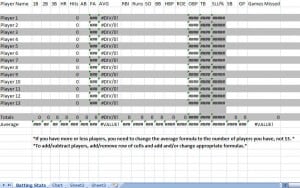

Baseball Individual Stat Sheet Excel
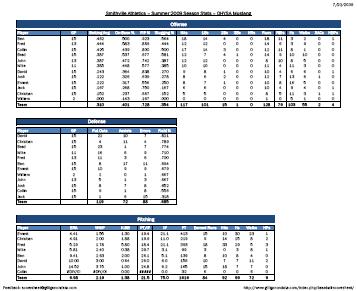
Printable Baseball Individual Stat Sheet Example
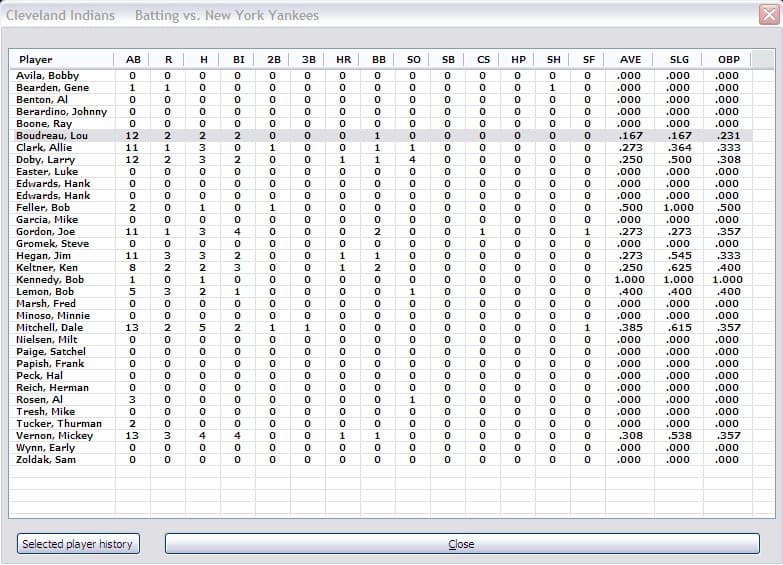
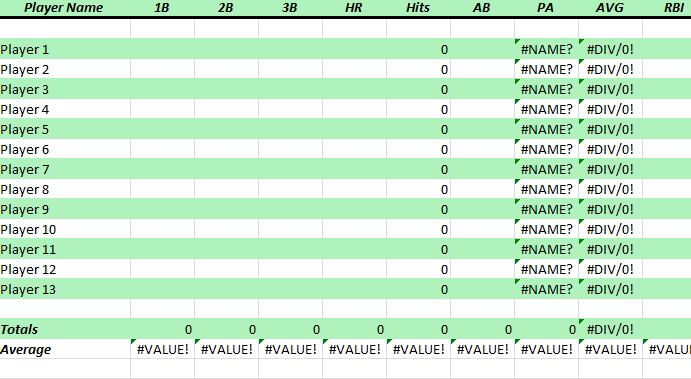
Frequently Asked Questions
Are these baseball stat sheet templates free to download?
Yes, all eight templates on this page are free to download and use for your team, league, or tournament.
Do these templates calculate batting average automatically?
Yes, the Excel-based templates include built-in formulas that calculate batting average and other totals automatically as you enter stats.
Can I edit the template to add more stat categories?
Yes, all templates are fully editable, so you can add columns for stolen bases, sacrifice flies, or any other stat your league tracks.
Do I need Microsoft Excel to use these templates?
Most templates are built for Excel but also open in free alternatives such as Google Sheets or LibreOffice Calc, with only minor formatting differences.
Are these templates suitable for youth leagues?
Yes, the simpler individual stat sheets work well for youth and recreational leagues, while the more detailed scoresheets suit tournaments and higher-level play.
Can I print these templates instead of filling them out digitally?
Yes, all templates are designed to print cleanly, so scorekeepers can use a physical copy in the dugout if preferred.
Can I use these sheets to track stats across an entire season?
Yes, using the same template for every game makes it easy to compile a full season’s worth of stats for standings, awards, or player development tracking.

You must be logged in to post a comment.