
A financial plan should show expected income, essential expenses, savings or investment goals, major obligations and a review timetable. Separate forecasts from amounts already earned or spent.
Tie financial planning assumptions to cash needs
Worked example: A household receiving $4,500 monthly may allocate $2,500 to essential spending, $600 to debt payments and $500 to savings, leaving $900 to cover discretionary spending and other goals.
Check before use: Use realistic after-tax income and account for irregular expenses. Review actual results each month rather than relying on an optimistic spreadsheet scenario.
- Saves preparation time: A ready-made layout means you can focus on entering your numbers instead of designing a plan from scratch.
- Clarifies financial goals: Writing down specific goals and timelines makes it easier to stay focused and track progress.
- Improves spending awareness: Organizing income and expenses side by side highlights where money is actually going.
- Supports better decision-making: A clear plan makes it easier to evaluate major purchases, investments, or business decisions.
- Reduces financial stress: Planning ahead of time helps avoid the panic that comes with unexpected shortfalls.
- Free and reusable: Download once and reuse the same structure every time you revisit your financial plan.
For related resources, see 7+ Practical Debt Calculator Excel Templates and Top 22+ Excel Expense Templates.
What’s Included in the Financial Plan Template
- Income section: Space to record salary, business revenue, or other sources of income.
- Expense categories: Fields for fixed and variable costs such as housing, utilities, and discretionary spending.
- Savings and investment goals: Space to set targets for emergency funds, retirement, or other investments.
- Debt tracking fields: Areas to record outstanding loans, credit balances, and repayment schedules.
- Timeline fields: Space to set short-term, medium-term, and long-term financial goals.
- Summary or projection section: A place to track overall financial position and progress toward goals.
Who Should Use These Templates?
- Individuals who want a clear view of their personal income, expenses, and savings goals.
- Families planning a shared household budget and long-term financial goals together.
- Small business owners mapping out how to fund operations and growth.
- Startup founders preparing financial projections for investors or lenders.
- Students learning the basics of personal financial planning and budgeting.
- Financial advisors who want a starting framework to share with clients.
How to Start Using the Template in 3 Simple Steps
- Step 1 — Choose a template style: Browse the 5 options below and select the one that fits your personal or business needs.
- Step 2 — Enter your financial data: Fill in your income, expenses, savings goals, and any outstanding debts.
- Step 3 — Review and adjust regularly: Revisit the plan periodically to track progress and make adjustments as circumstances change.
Financial Plan vs. Budget
While the two terms are sometimes used interchangeably, a financial plan and a budget serve different purposes. A budget is typically a short-term tool that tracks income against expenses over a specific period, such as a month, to make sure spending stays within limits. A financial plan takes a broader, longer-term view, covering goals such as retirement savings, debt payoff, major purchases, or business growth over months or years. A budget is often one component within a larger financial plan, helping to keep day-to-day spending aligned with the bigger financial picture.
Customizing the Template for Your Needs
These templates are designed to be a flexible starting point rather than a fixed format. You can add your own income categories, adjust expense line items to match your actual spending habits, or insert additional sections for specific goals such as a home purchase or business expansion. Since the templates are provided in editable Excel format, most adjustments take only a few minutes and let you tailor the plan to fit your particular financial situation.
Choosing the Right Format
With 5 different templates and examples available, choosing the right one depends on whether you’re planning for yourself, your family, or your business. A personal or family budget plan template works well for everyday household financial planning, while a company financial plan template is better suited for tracking business revenue, expenses, and growth targets. Reviewing each option before committing to one can help you find the layout that best matches your specific financial planning needs.
Common Mistakes to Avoid
- Setting vague goals: Specific, measurable goals are far easier to track than general intentions to “save more” or “spend less.”
- Forgetting irregular expenses: Annual costs like insurance premiums or holiday spending are often overlooked in monthly plans.
- Ignoring an emergency fund: Without a buffer for unexpected costs, a financial plan can be derailed by a single surprise expense.
- Not revisiting the plan: A financial plan created once and never updated quickly becomes outdated as circumstances change.
- Overestimating income: Building a plan around optimistic income projections can lead to shortfalls when reality falls short.
Tips to Get the Most Out of Your Financial Plan Template
- Update your plan regularly rather than only reviewing it once a year, so you can catch issues early.
- Set realistic, specific goals with target dates to make progress easier to measure.
- Track actual spending against your plan to see where adjustments are needed.
- Involve family members or business partners in the planning process so everyone stays aligned.
- Keep supporting documents organized such as bank statements and bills alongside your plan.
Building an Emergency Fund Into Your Plan
One of the most important elements a financial plan can include is a dedicated emergency fund, set aside specifically to cover unexpected expenses like medical bills, car repairs, or a sudden loss of income. Financial professionals often recommend building up three to six months of essential living expenses in an easily accessible account, though the right target depends on individual circumstances such as job stability and household size. Treating contributions to this fund as a non-negotiable line item within the plan, rather than an afterthought, makes it far more likely that the fund will actually be built up and available when it’s needed most.
Planning for Long-Term Goals Like Retirement
Beyond short-term budgeting, a financial plan should also account for long-term goals such as retirement savings, which require consistent contributions over many years to grow meaningfully. Starting early, even with modest contributions, takes advantage of compounding growth over time, making a significant difference compared to waiting until later in one’s career to begin saving. Reviewing retirement contributions annually as part of the broader financial plan helps ensure the target stays on track as income, expenses, and life circumstances evolve.
Adjusting Your Financial Plan After Major Life Changes
Major life events such as a new job, marriage, the birth of a child, or a significant move often require a meaningful update to an existing financial plan rather than a minor tweak. Income levels, expense categories, and financial priorities can all shift substantially after such events, so setting aside time to fully revisit the plan, rather than just adjusting a single line item, helps ensure it still reflects current reality. Treating a financial plan as a living document that evolves alongside these changes, instead of a one-time exercise, keeps it useful and relevant over the long run.
Using a Financial Plan to Manage Debt
A financial plan is also a useful tool for organizing and paying down existing debt in a structured way, rather than making minimum payments without a clear strategy. Listing every debt alongside its interest rate and balance makes it easier to decide whether to focus extra payments on the highest-interest debt first or tackle smaller balances first for quicker wins, both common and effective approaches. Building a realistic debt payoff timeline into the broader financial plan helps keep progress visible and provides motivation to stick with the strategy even when it takes many months or years to become debt-free.
Reviewing Your Financial Plan on a Set Schedule
A financial plan is most effective when it’s reviewed on a consistent schedule rather than left untouched for long stretches of time. Setting aside time monthly or quarterly to compare actual income and expenses against the plan makes it far easier to catch small problems before they grow into larger financial setbacks. This regular review also creates a natural opportunity to celebrate progress toward savings or debt goals, which can help maintain motivation to stick with the plan over the months and years it takes to reach longer-term financial objectives.
Financial Planning for Small Businesses
For small business owners, a financial plan serves a slightly different purpose than a personal one, focusing on forecasting revenue, managing cash flow, and planning for growth or seasonal fluctuations. Mapping out expected income against fixed costs like rent and payroll, along with variable costs such as inventory or marketing spend, helps identify months where cash flow might run tight well before they arrive. A solid financial plan also becomes an essential document when seeking a business loan or outside investment, since lenders and investors want to see a clear, realistic picture of how the business intends to manage its finances going forward.
Get Our Financial Plan Template Excel Here
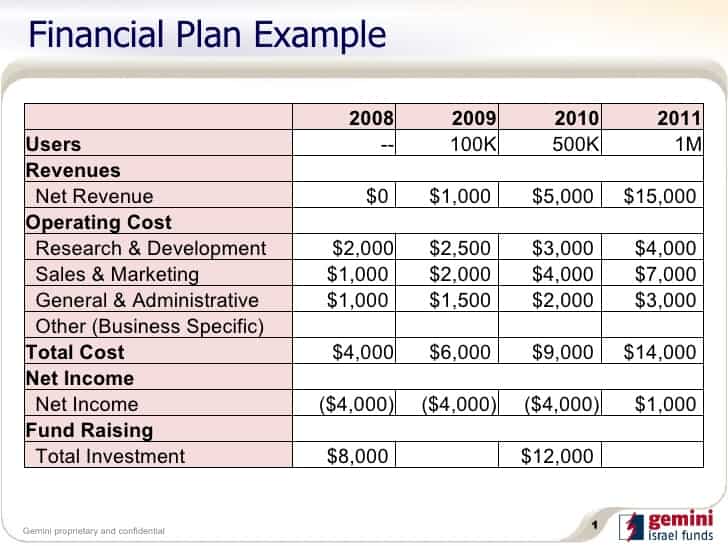
Sample Financial Plan Template Excel


Company Financial Plan Template
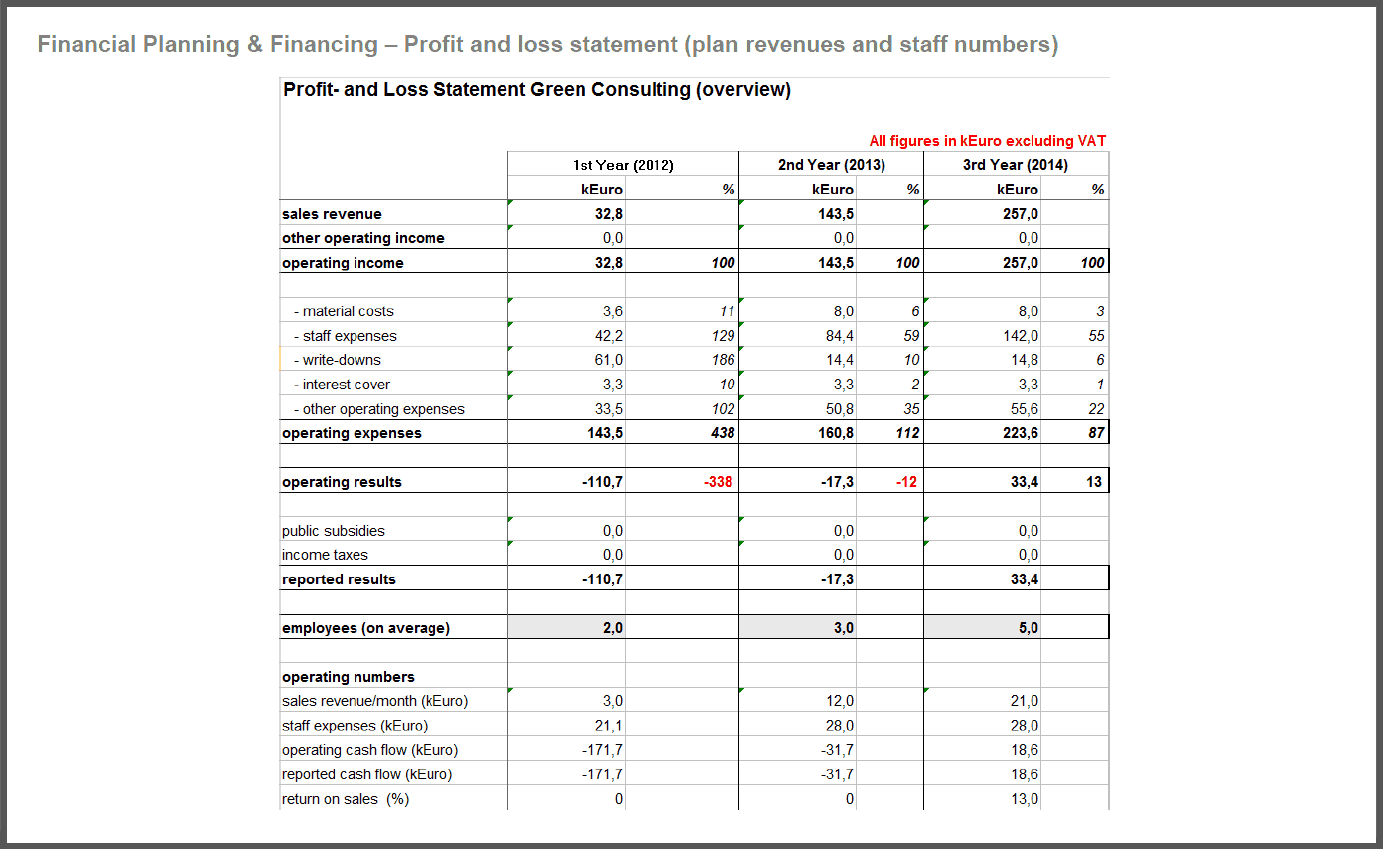
Financial Plan Template Example
Family Financial/Budget Plan Template Excel

Personal Financial/Budget Plan Template

Frequently Asked Questions
Are these financial plan templates free to download?
Yes, all 5 financial plan templates and examples on this page are free to download and use.
Can I customize the fields on these templates?
Yes, since the templates are editable in Excel, you can add your own income, expense, and goal categories.
What’s the difference between a financial plan and a budget?
A budget tracks short-term income and expenses, while a financial plan covers broader, longer-term goals like savings and debt payoff.
Are these templates suitable for business use?
Yes, several of these templates, including the company financial plan template, are designed for business financial planning.
How often should I update my financial plan?
It’s best to review your financial plan monthly or quarterly, and update it fully after any major life or income change.
Can families use these templates together?
Yes, the family financial and budget plan template is designed to help households plan finances and goals together.

You must be logged in to post a comment.