
A two-weeks’ notice letter should clearly communicate the intention to resign, the proposed final working date and a professional offer to support handover. Avoid including accusations or unnecessary details.
State an exact resignation date and transition plan
- Saves time and reduces stress: A ready-made structure means you don’t have to agonize over wording during an already stressful transition.
- Maintains professionalism: A well-written notice letter leaves a positive final impression with your employer and colleagues.
- Protects future references: Resigning gracefully helps preserve the professional relationships you may need for references later.
- Meets contractual obligations: Many employment contracts require written notice, and a template helps ensure you meet that requirement correctly.
- Reduces the risk of omissions: A structured template ensures you include your last working day and other key details employers expect.
- Free and reusable: Download once and adapt the same template structure for any future job transition.
Worked example: If notice is delivered on Monday 5 October and the employer counts 14 calendar days, the proposed end date may be 19 October; check the contract rather than assuming every workplace calculates notice the same way.
Check before use: Verify the employer’s notice rules, unused leave arrangements and recipient details. Keep a copy of the delivered message and avoid promising handover tasks you cannot realistically complete.
For related resources, see 13+ Editable Professional Email Templates and 18+ Sample Employment Certificate Templates WORD.
What’s Included in the Two Weeks’ Notice Letter Template
- Formal resignation statement: A clear, direct statement announcing your intent to resign from your position.
- Last day of employment: A specific date confirming when your two-week notice period will end.
- Expression of gratitude: A brief section thanking your employer for the opportunity and experience gained.
- Offer to assist with transition: Optional language offering to help train a replacement or document your responsibilities.
- Contact information: Space for your name, position, and the date the letter was written.
- Professional closing: A polite sign-off that keeps the tone respectful and positive throughout.
Who Should Use These Templates?
- Employees resigning from full-time positions who want to leave on good terms with their employer.
- Contract or hourly workers whose agreements require a formal written notice period.
- First-time job changers who aren’t sure how to structure a professional resignation letter.
- Managers or supervisors resigning from leadership roles who need to address transition planning.
- Remote or hybrid employees submitting notice electronically rather than in person.
- HR professionals who want a reference format to share with departing staff.
How to Start Using the Template in 3 Simple Steps
- Step 1 — Choose a template style: Browse the 3 options below and select the format that best matches your tone and workplace culture.
- Step 2 — Fill in your details: Add your name, position, last working day, and a short note of thanks to your employer.
- Step 3 — Review and submit: Proofread the letter, then deliver it to your manager or HR department, either in person or by email.
Two Weeks’ Notice Letter vs. Immediate Resignation Letter
While both documents communicate a decision to leave a job, a two weeks’ notice letter and an immediate resignation letter serve very different purposes. A two weeks’ notice letter follows standard professional etiquette, giving your employer time to plan for your departure, find coverage for your responsibilities, and begin the hiring process for your replacement. An immediate resignation letter, by contrast, is typically reserved for situations involving workplace safety concerns, hostile environments, or personal emergencies, and it generally does not include a standard notice period. Choosing the right format depends entirely on your specific circumstances and the nature of your departure.
Customizing the Template for Your Situation
These templates are designed to be a flexible starting point rather than a rigid format. You can adjust the tone to be more formal or more personal depending on your relationship with your manager, add specific details about ongoing projects you’re willing to help transition, or shorten the letter if your workplace prefers brevity. Since the templates are provided in easily editable formats, most adjustments take only a few minutes and let you tailor the letter to fit your specific job, industry, and relationship with your employer.
Choosing the Right Format
With 3 different templates available, choosing the right one depends on your specific resignation situation and workplace culture. A more formal template works well for corporate environments or when resigning from a senior position, while a simpler, shorter template may be better suited for casual workplaces or entry-level roles. Reviewing each template’s tone and structure before downloading can help you find one that requires minimal editing for your specific resignation letter.
Common Mistakes to Avoid
- Being overly negative: Avoid criticizing your employer, coworkers, or company, even if your experience wasn’t entirely positive.
- Forgetting the exact last day: Always state a specific date rather than a vague timeframe like “in two weeks.”
- Skipping the thank-you note: A brief expression of gratitude helps preserve the relationship, even in a short letter.
- Over-explaining your reasons: Keep your reasons for leaving brief and professional rather than going into excessive detail.
- Submitting it too late: Deliver your notice with enough lead time to genuinely provide two full weeks before your departure.
Tips to Get the Most Out of Your Two Weeks’ Notice Letter Template
- Deliver it in person first when possible, followed by a written copy for the employee file.
- Keep a copy for your own records in case questions arise about your resignation date later.
- Time your resignation carefully, considering project deadlines and team workload where reasonable.
- Prepare a transition document outlining your responsibilities to make handoff easier for your replacement.
- Stay professional through your last day, since how you leave is often remembered as much as how you performed.
What to Expect After Submitting Your Notice
Once you submit your two weeks’ notice letter, most employers will schedule a brief conversation to discuss your departure, transition responsibilities, and any final logistics such as returning company property or completing exit paperwork. Some companies may ask you to complete an exit interview, which offers a chance to share constructive feedback about your role and the organization. Understanding what typically happens after submitting your notice can help you feel more prepared and less anxious about the process, allowing you to focus on wrapping up your work professionally during your final two weeks.
Handling a Counteroffer Gracefully
It’s not uncommon for an employer to respond to a resignation letter with a counteroffer, whether that means a raise, a promotion, or improved working conditions. Before accepting, it’s worth taking time to reflect honestly on whether the original reasons for wanting to leave will truly be resolved by the counteroffer, since research suggests that many employees who accept counteroffers end up leaving within a year regardless. If you decide to decline the counteroffer and proceed with your resignation, doing so politely and without becoming defensive helps preserve the relationship you worked to build during your notice period.
Notifying Coworkers and Clients of Your Departure
Beyond the formal notice letter to your employer, timing your announcement to coworkers and, if applicable, clients is an important part of a smooth transition. Many employees choose to let their direct manager share the news with the wider team first, since this avoids confusion or mixed messages about the timeline. If you work directly with external clients or vendors, a brief, professional email letting them know who to contact going forward helps maintain those business relationships even after you’ve moved on to a new role.
Preparing Your Final Two Weeks for a Smooth Exit
The two weeks between submitting your notice and your actual last day are an opportunity to leave your role in the best possible shape for whoever comes next. Prioritizing the completion of active projects, documenting recurring tasks and login credentials, and offering to train a replacement if one is hired in time all contribute to a smoother handoff. Employees who use this period productively, rather than mentally checking out early, are often remembered far more favorably by former managers and colleagues, which can matter for references and even future opportunities at the same company.
Resigning by Email vs. In Person
Whether to deliver a two weeks’ notice letter in person, over video call, or by email often depends on your working arrangement and your relationship with your manager. In-office employees generally benefit from requesting a private conversation with their manager first, treating the written letter as a formal follow-up rather than the sole method of communication. Remote employees, on the other hand, may have no realistic alternative to an email or a scheduled video call, in which case choosing a respectful subject line and attaching the letter as a clearly formatted document helps the resignation come across as professional rather than abrupt.
Two Weeks’ Notice When Leaving Under Difficult Circumstances
Even when a job hasn’t gone well, or the relationship with a manager has been strained, sticking to a professional two weeks’ notice letter is usually still the better choice over an abrupt or emotional exit. Keeping the letter neutral and forward-looking, even if you choose to address concerns separately through an exit interview or HR conversation, protects your professional reputation far more effectively than airing grievances in the resignation letter itself. Employers and colleagues tend to remember how someone handled a difficult departure long after the specific details of the job are forgotten, so a calm, respectful notice letter is worth the extra effort even in less-than-ideal circumstances.
Download Two Weeks’ Notice Letter Templates:
Two Weeks’ Notice Letter Template For Resignation


Sample Two Weeks’ Notice Letter Template
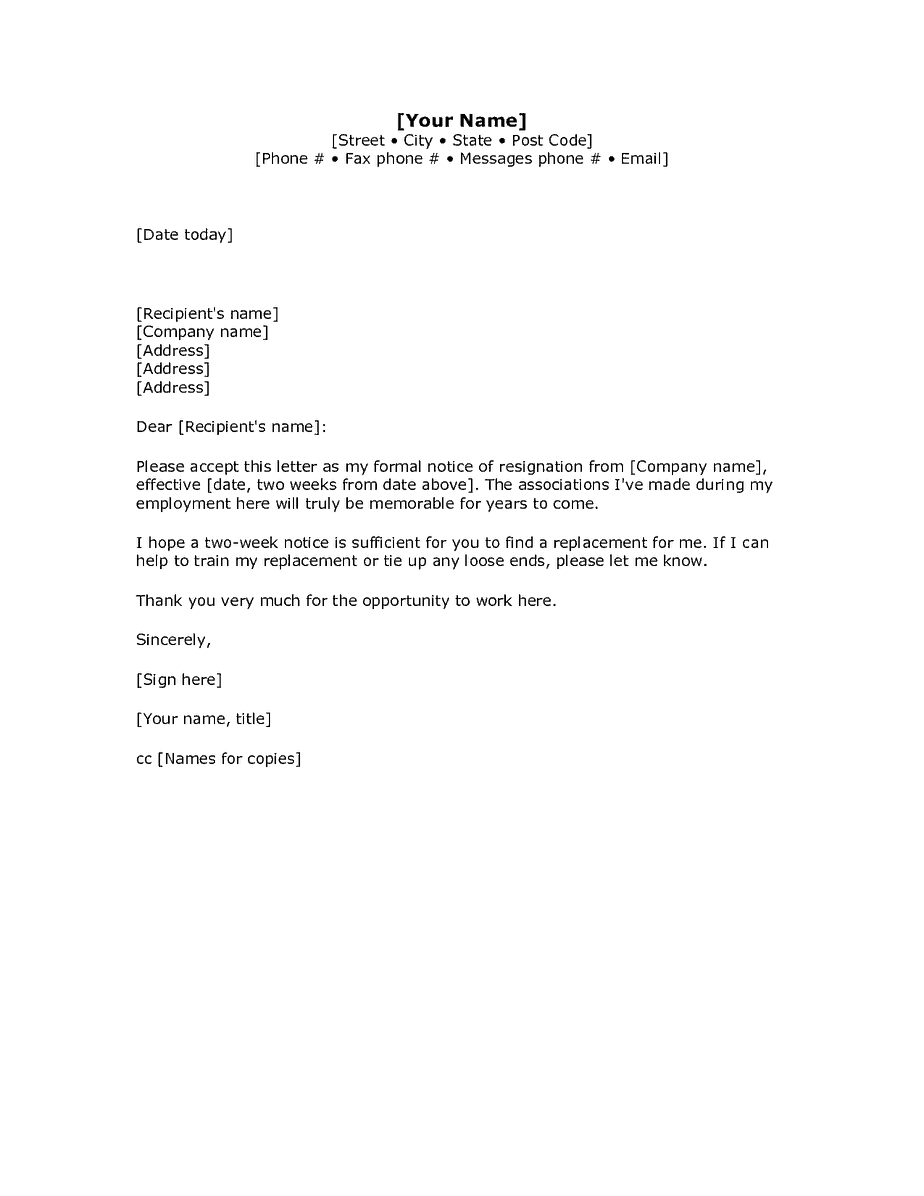
Editable Two Weeks’ Notice Letter Template

Frequently Asked Questions
Are these two weeks’ notice letter templates free to download?
Yes, all 3 two weeks’ notice letter templates on this page are free to download and use.
Do I have to give exactly two weeks of notice?
Two weeks is the standard professional courtesy, though the exact requirement may depend on your employment contract or company policy.
Can I customize these templates with my own details?
Yes, these templates are fully editable, letting you add your name, position, last working day, and personal message.
Should I explain why I’m resigning in the letter?
It’s not required and generally best to keep the letter brief, without going into detailed reasons for leaving.
Can I use these templates for remote or hybrid jobs?
Yes, these templates work well whether you’re delivering your notice in person, by email, or during a video call.
What should I do after submitting my notice letter?
Focus on wrapping up active projects, documenting your responsibilities, and maintaining professionalism through your last day.
Is it okay to resign by email instead of in person?
Yes, especially for remote employees, though requesting a brief conversation with your manager first is generally considered more courteous.

You must be logged in to post a comment.