
A baseball scorecard records plays by inning, batter order and base advancement. Use notation that lets someone follow the game from the record rather than relying only on the final score.
Keep a baseball scorecard internally consistent
Worked example: When a batter reaches on an error and later scores, identify the error in the scoring box and track the run; whether it counts as earned depends on the inning reconstruction.
Check before use: Agree on scoring symbols and resolve substitutions immediately. Ensure every completed inning has three outs recorded or an explicit reason it ended differently.
For related resources, see Printable 13+FREE Baseball Score Sheet Templates and 8 Baseball Individual Stat Sheet Templates.
What’s Included in the Baseball Scorecard Template
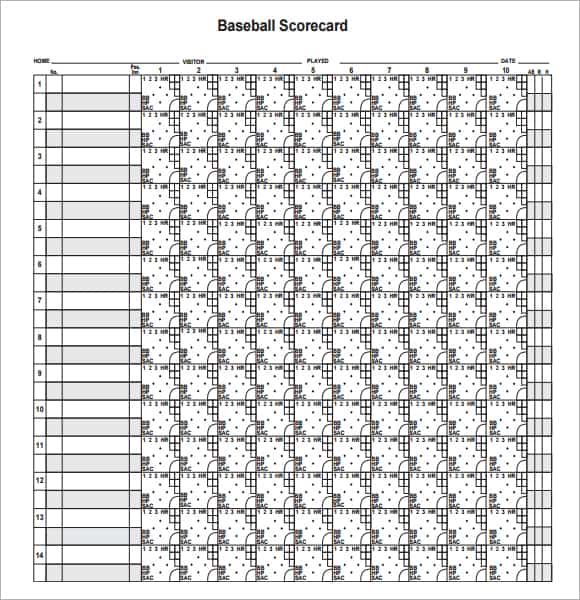
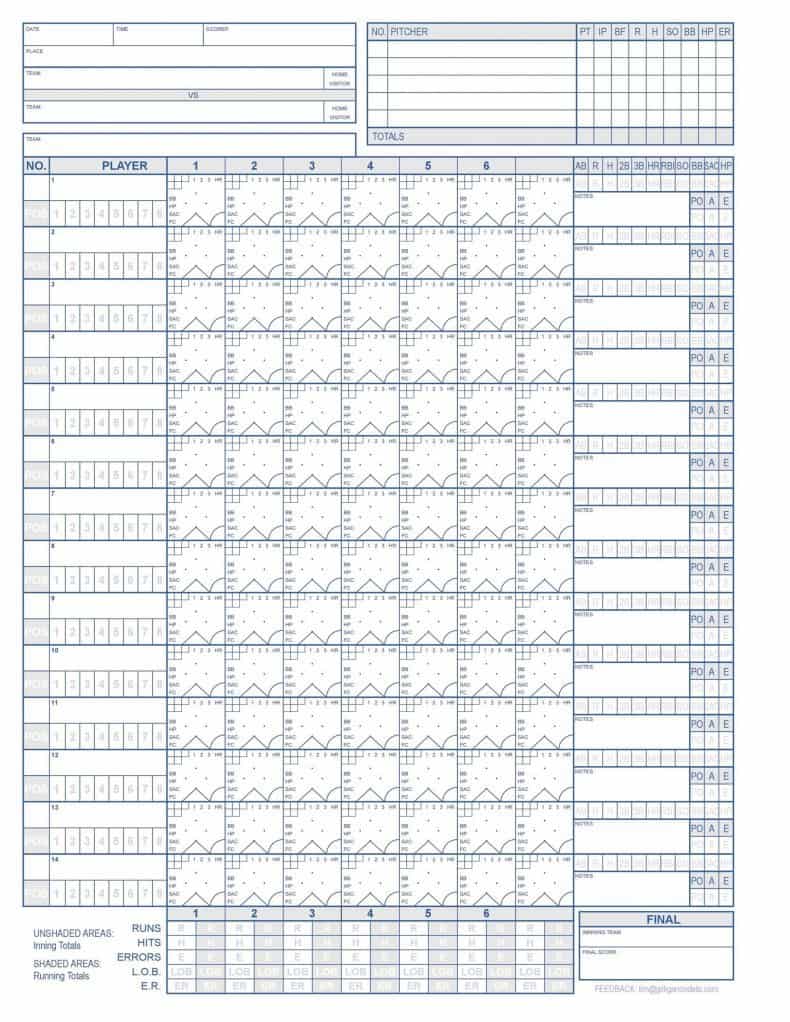
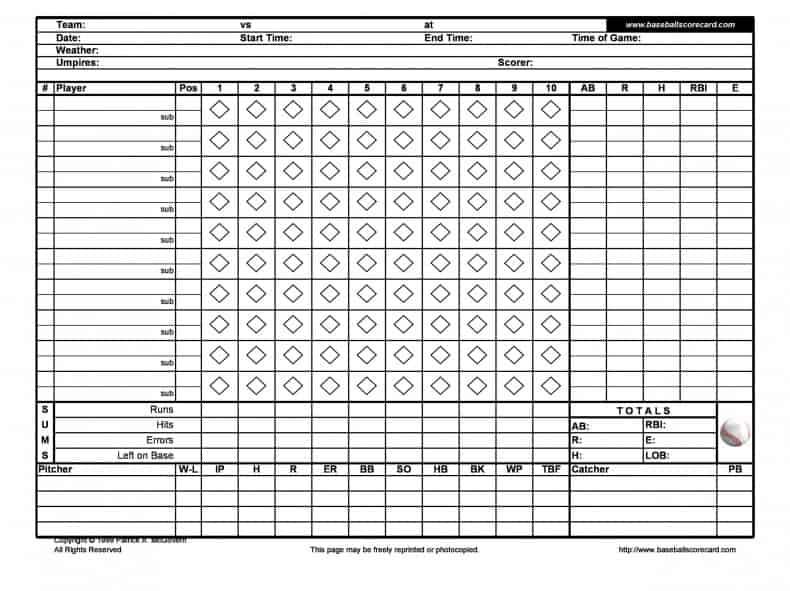
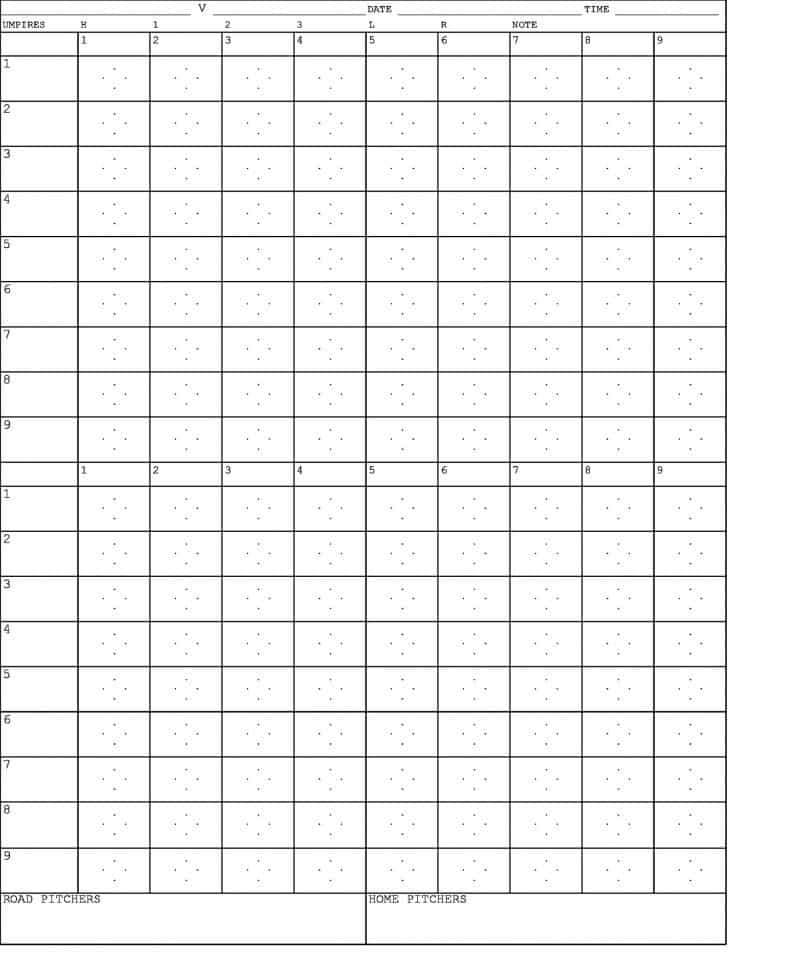
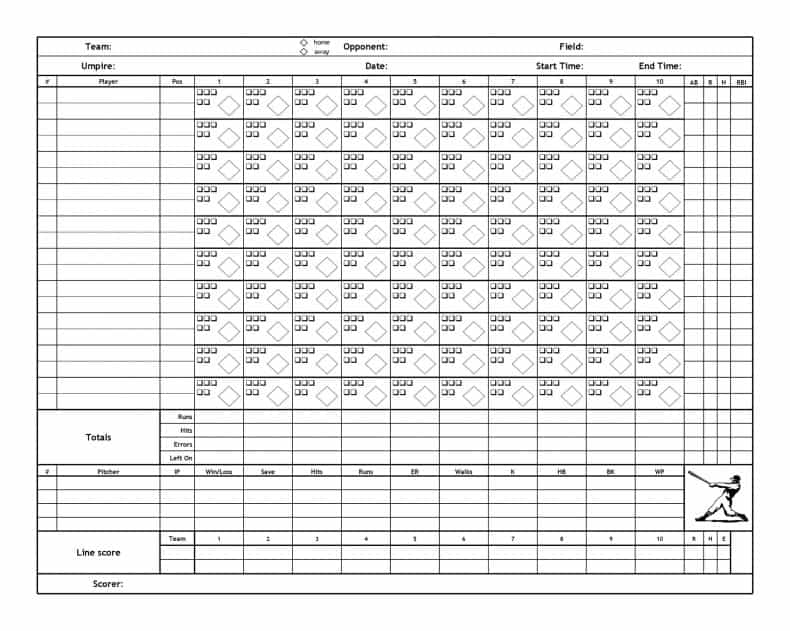
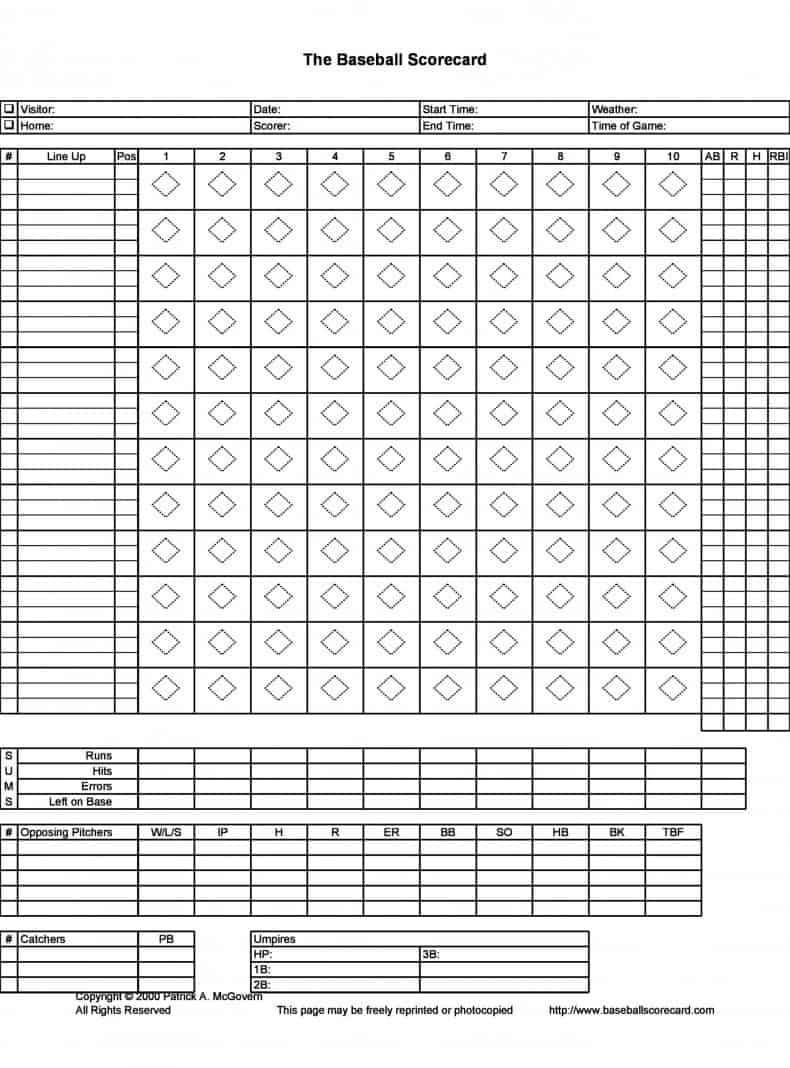
Each template includes space to list the batting lineup for both teams, along with a grid divided by inning where each at-bat can be recorded using standard baseball scoring notation. There’s space to track balls, strikes, outs, and substitutions, plus a section for recording the final score and any notes about the game. Most templates also include space for the date, opponent, and location of the game, making it easy to file and reference scorecards from an entire season.
Who Should Use These Templates?
Youth league coaches use these templates to keep an official record of each game and track player performance over a season. Team parents and volunteer scorekeepers rely on them to help out during games when an official scorer isn’t available, while school athletic departments use them to document results for league standings. Baseball fans who enjoy keeping score as a hobby use these templates to track professional or amateur games they attend, and youth players themselves use simplified versions to learn how baseball scoring works.
How to Start Using the Template in 3 Simple Steps
Step 1 is to browse the 7 options below and select the layout that fits your game or league. Step 2 is to print the template and fill in the team names, lineup, and game details before first pitch. Step 3 is to record each play as the game progresses, using standard scoring notation to track hits, outs, and runs inning by inning.
Baseball Scorecard vs. Digital Scoring Apps
While both options can accomplish the same basic goal, a printable baseball scorecard and a digital scoring app serve different needs depending on the setting. A printed scorecard works well for casual games, youth leagues, or situations without reliable phone or tablet access, offering a free, straightforward way to track a game without any setup. Digital scoring apps, on the other hand, typically offer automatic statistics, cloud backup, and easy sharing with the rest of the team, but require a device and sometimes a subscription. Many coaches and scorekeepers keep a printed scorecard on hand as a reliable backup even when they primarily use a digital app.
Customizing the Template for Your League
These templates are designed to be a flexible starting point rather than a fixed format. You can adjust the number of innings to match your league’s rules, add a section for pitch counts if your league tracks them, or include extra space for notes about substitutions or injuries. Since several of the templates are provided in editable formats, most adjustments take only a few minutes and let you tailor the scorecard to fit your particular league or tournament.
Choosing the Right Format
With 7 different templates available, choosing the right one depends on your specific needs and how detailed your scoring needs to be. A simple layout works well for casual games or younger age groups just learning to score, while a more detailed template suits competitive leagues that track additional statistics. Reviewing each option before committing to one can help you find the format that best fits your baseball scorekeeping needs, whether that’s a single game or an entire season.
Common Mistakes to Avoid
Forgetting to record the starting lineup before the first pitch can create confusion later when tracking substitutions, so it’s best to fill in player names and positions ahead of time. Using inconsistent scoring notation from game to game makes it harder to review statistics across a season, while failing to record substitutions clearly can make the scorecard difficult to interpret afterward. Waiting too long to record a play increases the risk of forgetting details, and not double-checking the final score against the scoreboard can lead to disputes about the game’s outcome.
Tips to Get the Most Out of Your Baseball Scorecard Template
Learn standard baseball scoring notation before the season starts so you can record plays quickly and accurately during fast-moving games. Keep a pencil with an eraser on hand rather than a pen, since scoring occasionally requires corrections. Review completed scorecards after each game to spot trends in hitting or defensive performance, and store them together in a binder or folder to build a full record of the season. Bringing a few extra printed copies to each game ensures you’re never caught without a scorecard if one gets damaged.
Learning to Read Standard Scoring Notation
Baseball scorekeeping relies on a widely recognized system of abbreviations and numbers assigned to each defensive position, with the pitcher as 1, the catcher as 2, and the rest of the infield and outfield numbered accordingly through 9. A ground out to the shortstop fielded and thrown to first, for example, is typically recorded as 6-3, while a strikeout is noted with a K. Learning this shorthand takes some practice, but once it becomes familiar it allows a scorekeeper to record even fast-paced innings without falling behind the action on the field.
Scoring Special Plays and Unusual Situations
Beyond routine hits and outs, a scorecard also needs to capture less common situations such as double plays, sacrifice bunts, wild pitches, and stolen bases, each of which has its own standard notation. Recording these plays accurately is what gives a completed scorecard its real value, since routine outs alone don’t tell the full story of how a game unfolded. Taking a moment to review unfamiliar notation before the season starts, rather than trying to figure it out mid-game, helps ensure even unusual plays get recorded correctly the first time.
Using Scorecards to Track Player Development Over a Season
Beyond documenting the outcome of a single game, a season’s worth of completed scorecards becomes a valuable tool for tracking how individual players are developing over time. Reviewing a player’s at-bats across several games can reveal patterns, such as a tendency to strike out against certain pitch types or steady improvement in making contact, that aren’t obvious from watching any single game alone. Coaches who keep organized scorecards throughout the season are better equipped to have specific, data-backed conversations with players about their progress rather than relying on general impressions.
Teaching Kids to Keep Score
Learning to keep a baseball scorecard is a great way for young players and fans to engage more deeply with the game, since it requires paying close attention to every pitch and play rather than just watching passively. Starting with a simplified version of the scorecard that only tracks basic outcomes, such as hits, walks, and outs, makes the learning process less overwhelming than jumping straight into full defensive numbering. As a young scorekeeper becomes more comfortable, gradually introducing standard notation for different types of outs and plays helps them build toward reading and keeping a full, detailed scorecard on their own.
Printing Tips for Clear, Usable Scorecards
Since these templates are meant to be printed and filled in by hand, a few printing choices can make a real difference in how usable the final scorecard is. Printing on slightly heavier paper than standard copy paper helps the sheet hold up better to being handled throughout a game, especially outdoors where wind or moisture can be a factor. Double-checking that the grid lines and text print clearly, rather than faded or cut off at the margins, before printing a full stack for the season also helps avoid a scramble to reprint sheets mid-game.
Free Printable Baseball Scorecard Templates
Free Baseball Scorecard
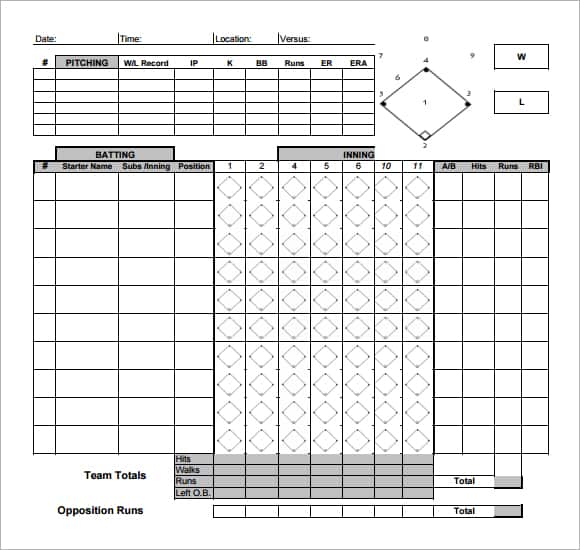

Baseball Scorecard Sample Template
Frequently Asked Questions
Are these baseball scorecard templates free to download?
Yes, all 7 baseball scorecard templates on this page are free to download and print.
Can I edit these templates before printing?
Several of the templates are provided in editable formats like Excel and Word, so you can customize the layout before printing.
What’s the difference between a printed scorecard and a digital scoring app?
A printed scorecard is a free, straightforward paper record, while a digital app offers automatic statistics and easy sharing but requires a device.
Are these templates suitable for youth leagues?
Yes, several of these templates work well for Little League and other youth baseball games.
Do I need to know baseball scoring notation to use these templates?
A basic understanding of standard notation helps, but the templates can also be used with simplified notes for beginners.
How many innings do these scorecards cover?
Most of the templates include space for a standard 9-inning game, though some can be adapted for shorter youth league games.
Can I reuse the same template for multiple games?
Yes, since the templates are free and printable, you can print a fresh copy for every game of the season.

You must be logged in to post a comment.