
Organizing a tournament where every team gets a second chance becomes far easier with a double elimination bracket generator already designed and ready to use. Instead of building a bracket structure from scratch, a ready-made template gives you a clear, organized layout you can fill in with team names and match results in minutes. Below you’ll find 12 free, downloadable double elimination bracket generators in PDF, Word, and Excel formats, suitable for sports leagues, schools, and community tournaments.
Track the winners’ and losers’ brackets correctly
In double elimination, a team or player generally exits after two losses. The bracket must consistently show who advances in the winners’ path and who moves into the losers’ path after the first defeat.
Worked example: With eight entrants, the undefeated finalist reaches the championship from the winners’ side, while an opponent may reach it through the losers’ side after one loss. Tournament rules must specify whether an additional final is required.
Check before use: Confirm the format for byes, seeding and the championship reset. Word or PDF brackets may require manual updates; do not assume a worksheet generates pairings automatically.
- Saves setup time: A ready-made structure means you can focus on running the tournament instead of designing a bracket from scratch.
- Fairer competition format: A single loss doesn’t eliminate a team, giving stronger participants a chance to recover from an early upset.
- Clear match tracking: A well-organized bracket makes it easy for players and spectators to follow tournament progress.
- Reduces scheduling confusion: A visual bracket structure helps organizers plan match times and court or field assignments.
- Easy to customize: Editable fields let you quickly adapt the bracket to a different number of teams or participants.
- Free and reusable: Download once and reuse the same structure for every tournament you organize.
For related resources, see 7+ Free Printable Baseball Scorecard Sheet Templates and Printable 13+FREE Baseball Score Sheet Templates.
What’s Included in the Double Elimination Bracket Generator
- Winners bracket section: Space to track teams that have not yet lost a match.
- Losers bracket section: A structure for teams that have lost one match and are competing to stay in the tournament.
- Team or player name fields: Space to enter the names of each participant or team.
- Match result fields: Fields for recording scores and advancing winners through the bracket.
- Grand finals section: A dedicated area for the final match between the winners and losers bracket champions.
- Date and time fields: Space for scheduling when each match will take place.
Who Should Use These Templates?
- Sports league organizers running tournaments for tennis, badminton, or table tennis.
- School and college coaches organizing intramural or interscholastic competitions.
- Esports tournament organizers managing competitive gaming brackets.
- Community recreation centers hosting local tournaments and leagues.
- Corporate event planners organizing team-building competitions.
- Youth sports coordinators running fair, engaging tournaments for young athletes.
How to Start Using the Template in 3 Simple Steps
- Step 1 — Choose a template style: Browse the 12 options below and select the bracket size that fits your number of teams.
- Step 2 — Enter team names: Fill in the participants or teams competing in the tournament.
- Step 3 — Track results as matches are played: Record scores and advance winners through the winners and losers brackets.
Double Elimination vs. Single Elimination Brackets
While both formats organize tournament competition, a double elimination bracket and a single elimination bracket handle losses very differently. In a single elimination bracket, one loss ends a team’s participation in the tournament immediately, which makes for a faster tournament but can feel unforgiving if a strong team has an off day. A double elimination bracket, by contrast, gives every team a second chance by moving them to a losers bracket after their first loss, only eliminating them after a second defeat. This format takes longer to complete but is generally considered fairer, since it reduces the chance that a single bad match knocks out one of the tournament’s strongest competitors.
Customizing the Template for Your Tournament
These templates are designed to be a flexible starting point rather than a fixed format. You can add your tournament’s specific branding, adjust the bracket size to match your number of participants, or include additional fields for tracking scores or statistics. Since the templates are provided in editable PDF, Word, and Excel formats, most adjustments take only a few minutes and let you tailor the bracket to fit your particular event.
Choosing the Right Format
With 12 different templates available in PDF, Word, and Excel formats and varying bracket sizes, choosing the right one depends on how many teams are competing and how you plan to use the document. A 4 or 8 team bracket works well for smaller local tournaments, while a 12 or 16 team bracket suits larger competitions with more participants. Reviewing each option before committing to one can help you find the layout that best fits your tournament size.
Common Mistakes to Avoid
- Choosing the wrong bracket size: Select a template that matches your actual number of participants to avoid confusing byes.
- Skipping the losers bracket: Make sure to track and update the losers bracket, not just the winners side.
- Unclear seeding: Establish a fair seeding method before the tournament begins to avoid disputes.
- Not planning for the grand finals: Remember that the losers bracket winner may need to beat the winners bracket champion twice.
- Poor scheduling: Build in enough time between matches, especially for participants who advance through the losers bracket.
Tips to Get the Most Out of Your Double Elimination Bracket Generator
- Fill in team names before the tournament starts to avoid delays on the day of competition.
- Post the bracket where participants and spectators can see it to keep everyone informed of progress.
- Update results promptly after each match so the bracket stays accurate throughout the event.
- Print extra copies in case of damage or the need for backup records.
- Review the bracket rules with participants beforehand so everyone understands how advancement works.
Understanding the Grand Finals in Double Elimination
The grand finals stage of a double elimination tournament works differently from other rounds, since it pits the winners bracket champion, who has not yet lost a match, against the losers bracket champion, who has already lost once. Because the losers bracket finalist has already suffered a loss, many double elimination formats require them to win two consecutive matches against the winners bracket champion to claim the overall title, while the winners bracket champion only needs to win once. This structure preserves the advantage of remaining undefeated throughout the tournament while still giving the losers bracket champion a genuine, if more difficult, path to victory.
Handling Byes in Uneven Brackets
Tournament organizers frequently face situations where the number of registered participants doesn’t match a standard bracket size, such as having 10 teams for a 16-team bracket. In these cases, byes, which automatically advance a team to the next round without playing a match, are used to fill the gaps and keep the bracket structure balanced. Assigning byes fairly, often based on seeding so that higher-ranked teams receive them first, helps maintain competitive integrity and avoids the appearance of favoritism toward lower-seeded participants.
Managing Tournament Time and Scheduling
Double elimination tournaments generally take longer to complete than single elimination formats, since every team plays at least two matches and some play considerably more before being eliminated. Organizers should plan for this extended timeline when scheduling venues, officials, and participant availability, building in buffer time between rounds to account for matches that run longer than expected. Communicating an estimated schedule to participants in advance, while noting that double elimination brackets can be somewhat unpredictable in exact timing, helps manage expectations and keeps the event running smoothly.
Using Digital Tools Alongside Printed Brackets
While a printed bracket remains a practical, low-cost way to run a tournament, many organizers now pair it with a digital version displayed on a screen or shared online for spectators and participants to follow remotely. Updating a digital bracket in real time as matches conclude keeps everyone informed without requiring people to gather around a single printed sheet, which is especially useful for larger tournaments spread across multiple courts or fields. Combining both formats, a printed bracket for on-site officials and a digital version for broader visibility, tends to offer the most reliable and accessible way to keep a tournament organized from start to finish.
Recruiting and Training Tournament Officials
A smoothly run double elimination tournament depends heavily on having enough officials or scorekeepers on hand to track match results and update the bracket promptly as the event progresses. Assigning a dedicated person to manage the bracket itself, separate from those officiating individual matches, helps prevent the kind of delays and confusion that can occur when everyone is focused on their own match and no one is watching the overall tournament flow. Briefing officials beforehand on exactly how the double elimination format works, including how losers bracket advancement and the grand finals rules function, reduces disputes and keeps the tournament moving efficiently from round to round.
Adapting Brackets for Different Sports and Games
Double elimination brackets work well across a wide range of competitive formats, from traditional sports like tennis and badminton to esports and tabletop game tournaments, though each may call for small adjustments to the standard template. A sport with lengthy individual matches might need a bracket built around fewer participants to keep the total tournament time reasonable, while quick-format games can accommodate larger brackets within the same event window. Considering the typical match length and available venue time when selecting a bracket size helps ensure the tournament format matches the practical realities of the specific sport or game being played.
Get FREE Double Elimination Bracket Generators Here
Double Elimination Bracket Generator for Generator
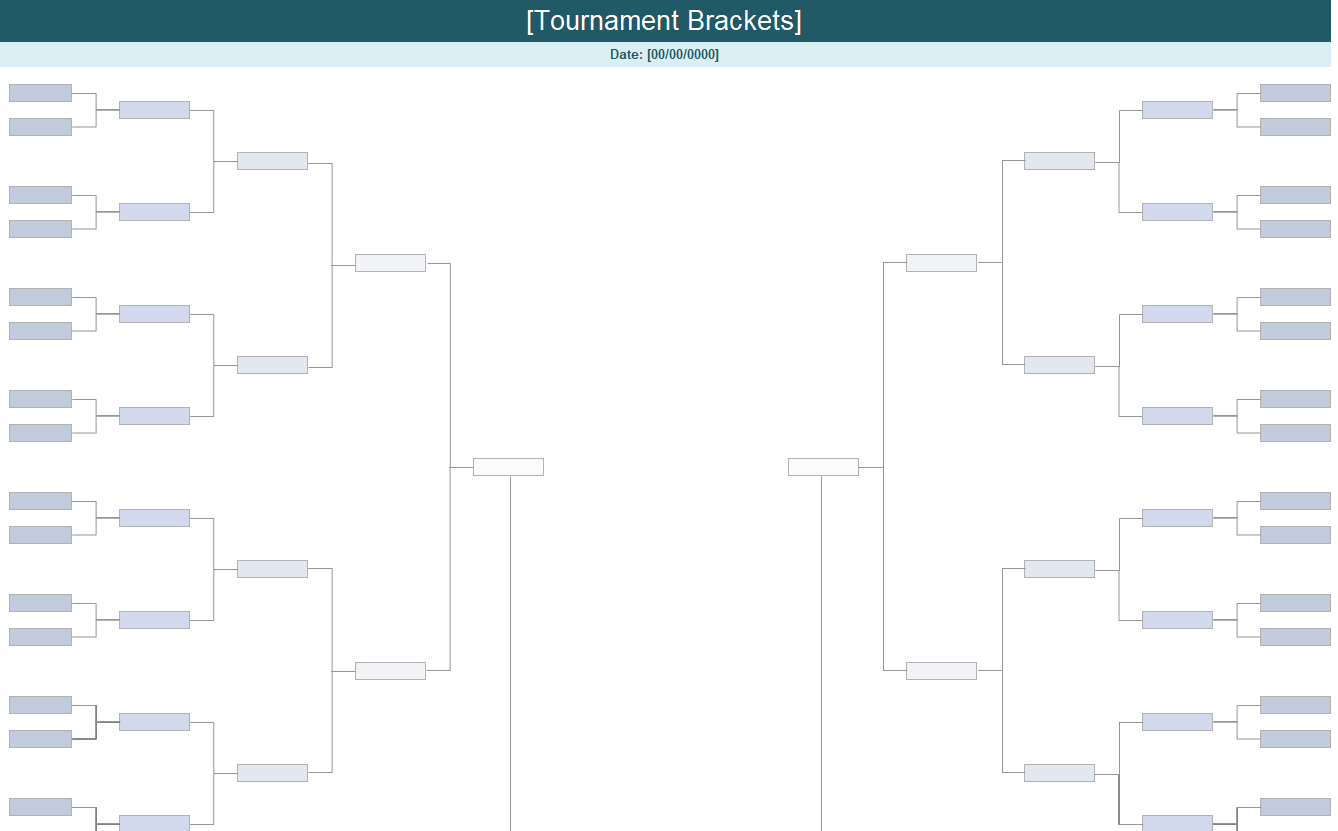
Sample Double Elimination Bracket Generator WORD
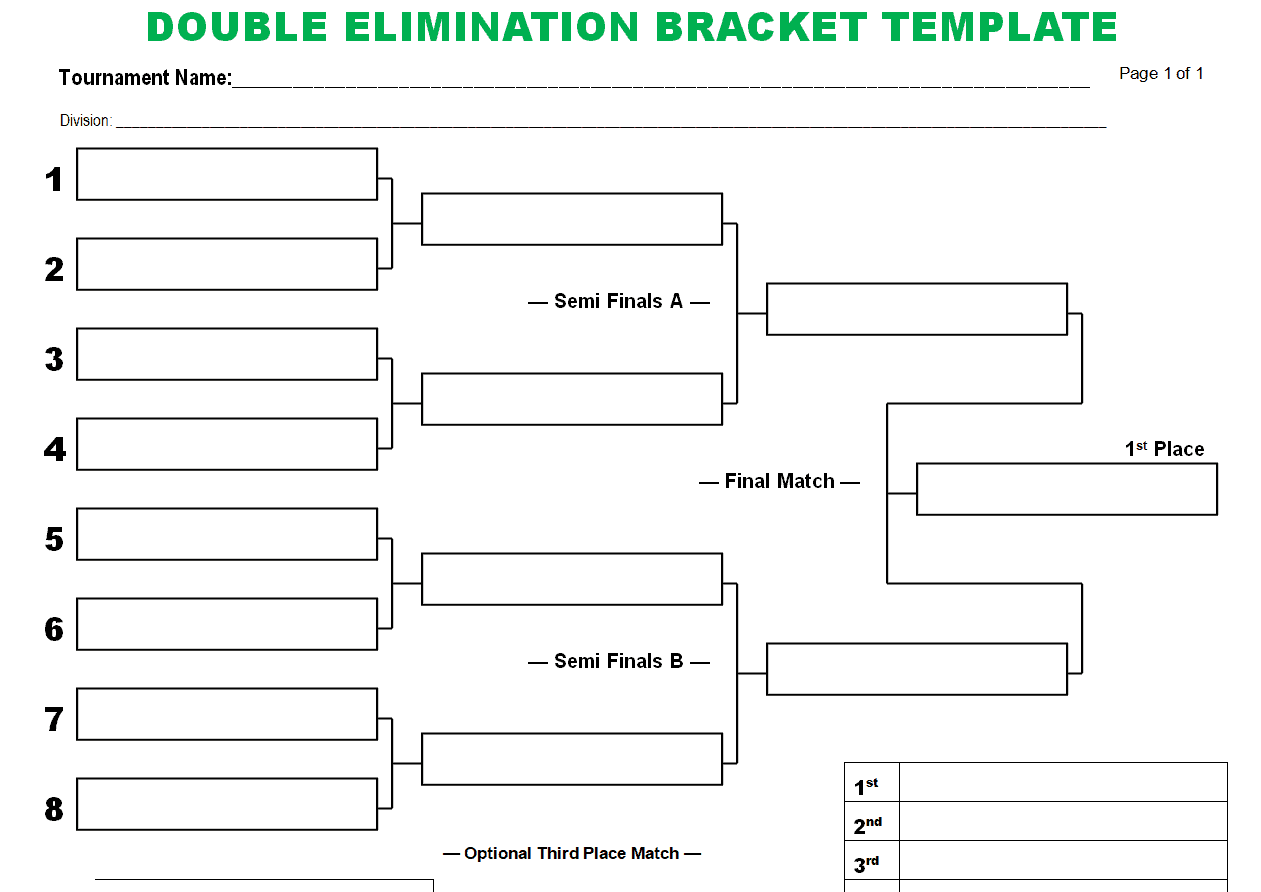
4 Team Double Elimination Bracket Generator EXCEL
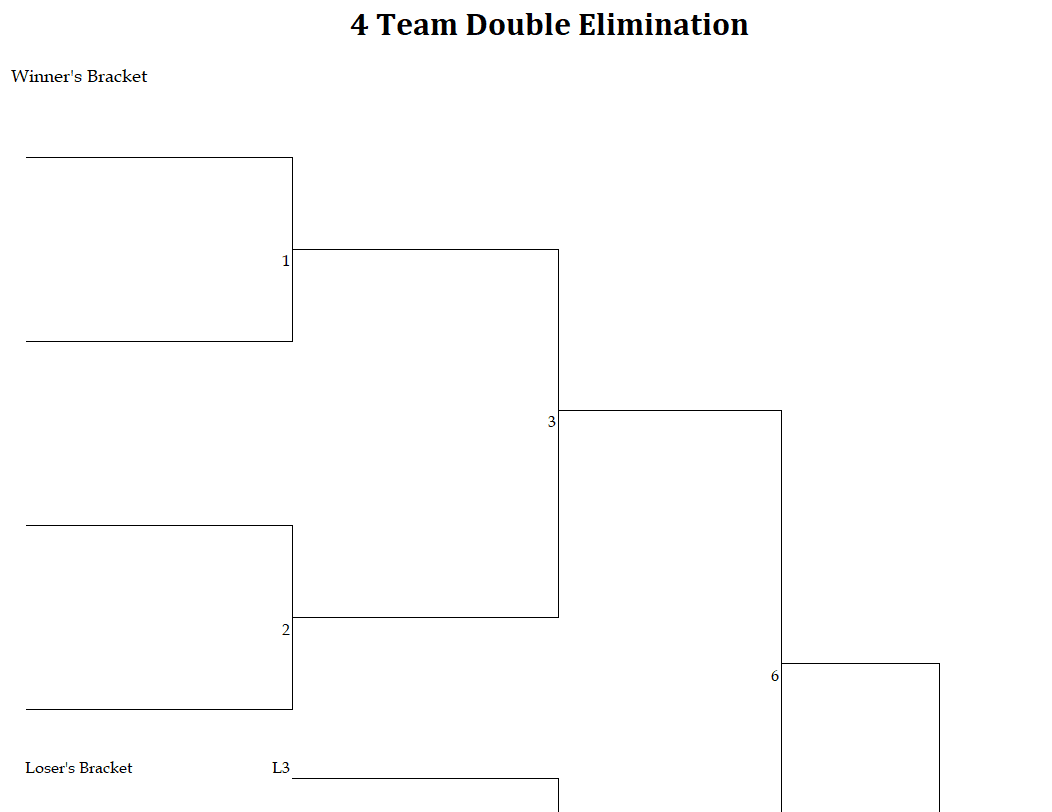
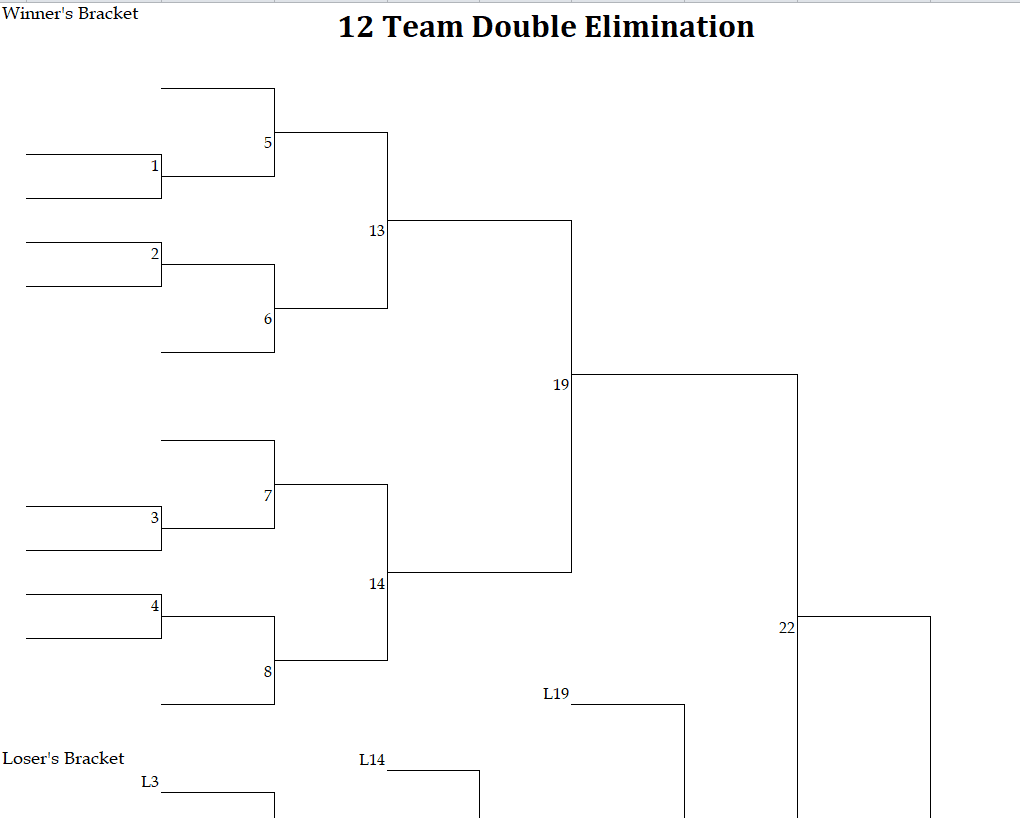
Sample 12 Team Double Elimination Bracket Generator
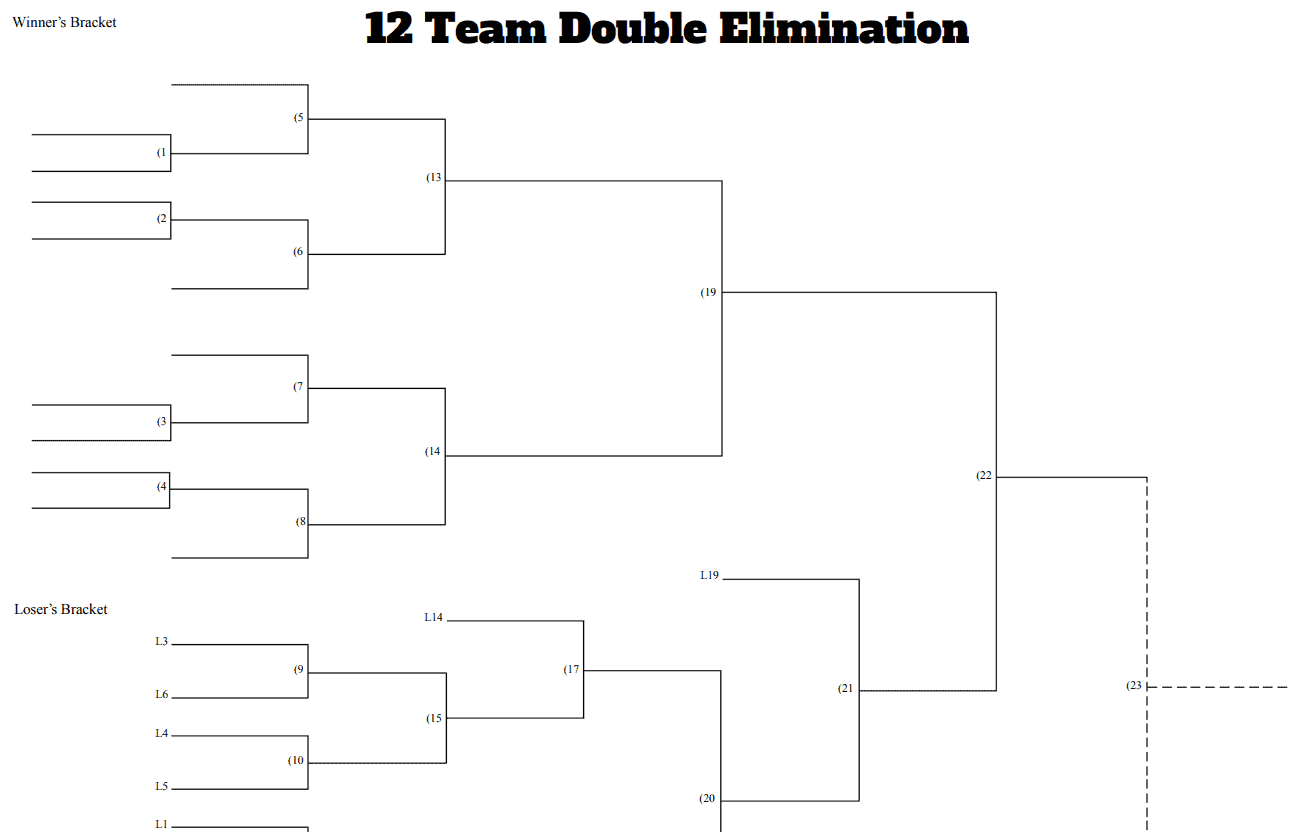
Blank Double Elimination Bracket Generator PDF
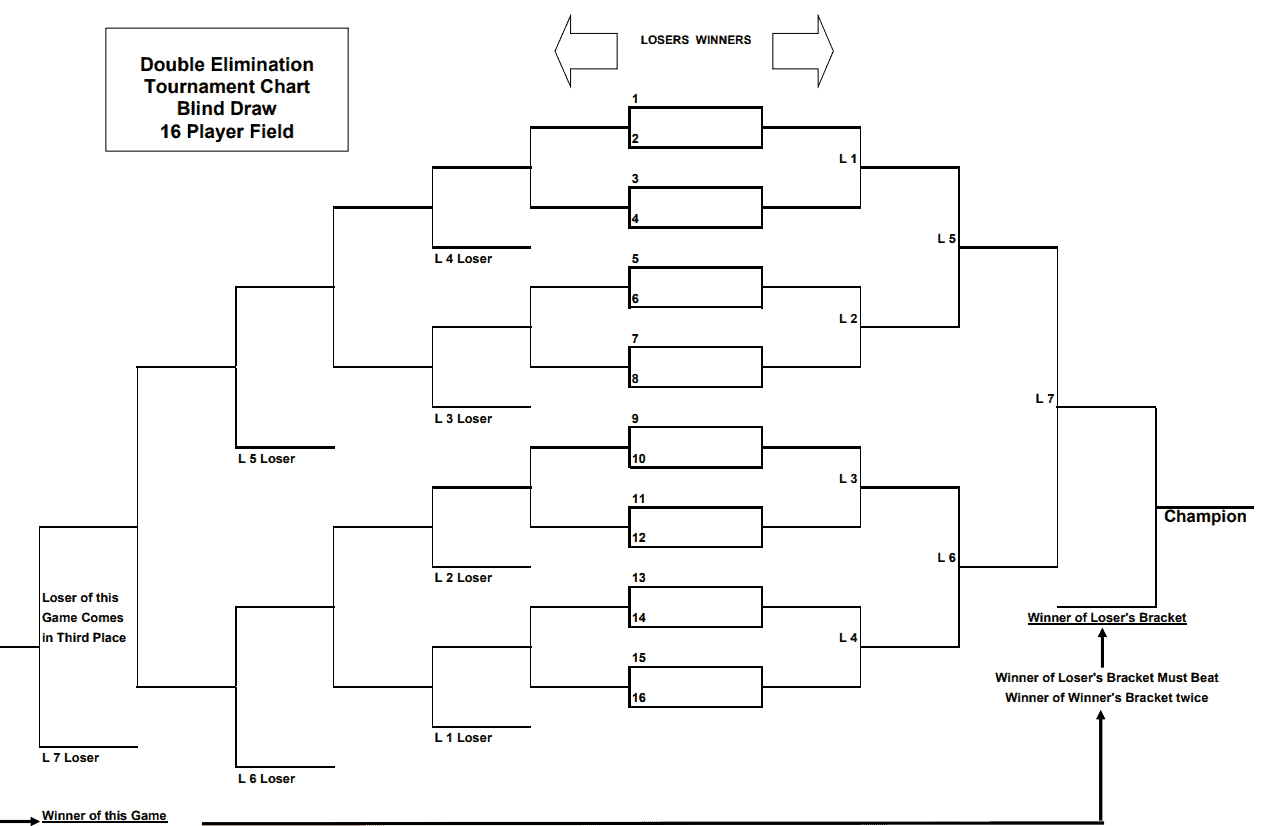
Special Tournament Double Elimination Bracket Generator
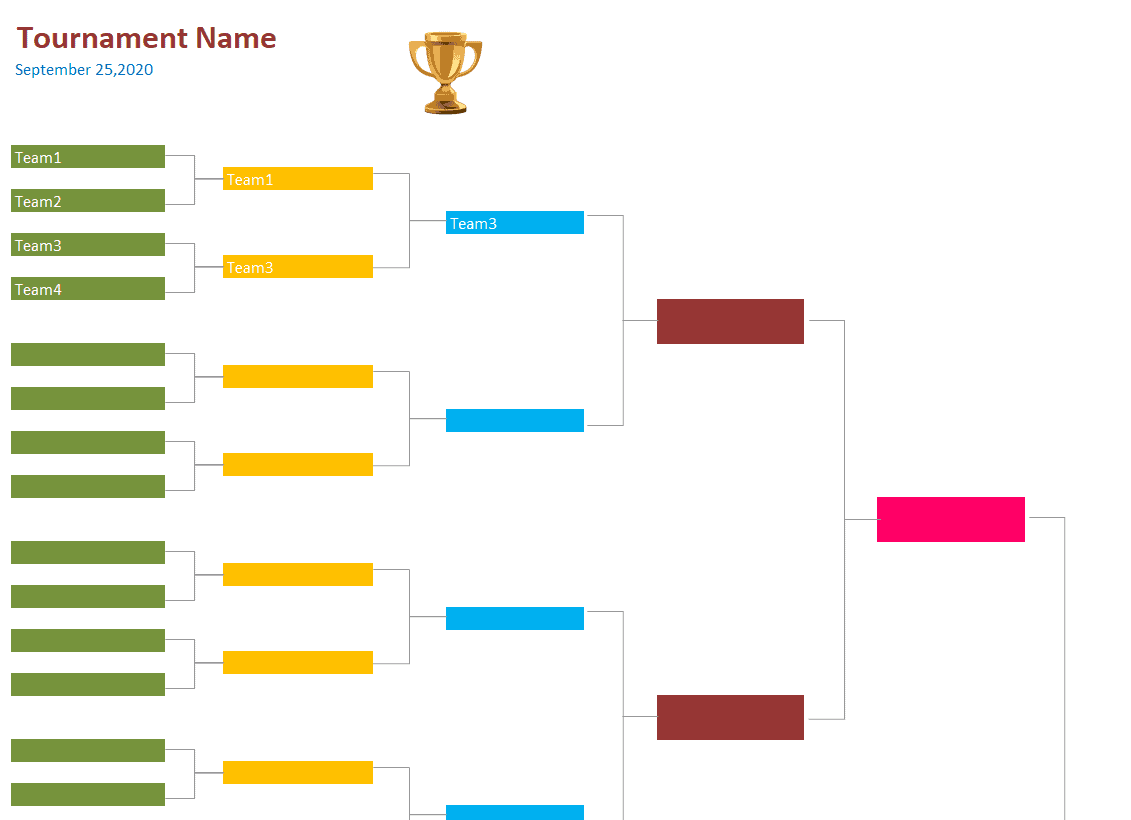
8 Team EXCEL Double Elimination Bracket Generator
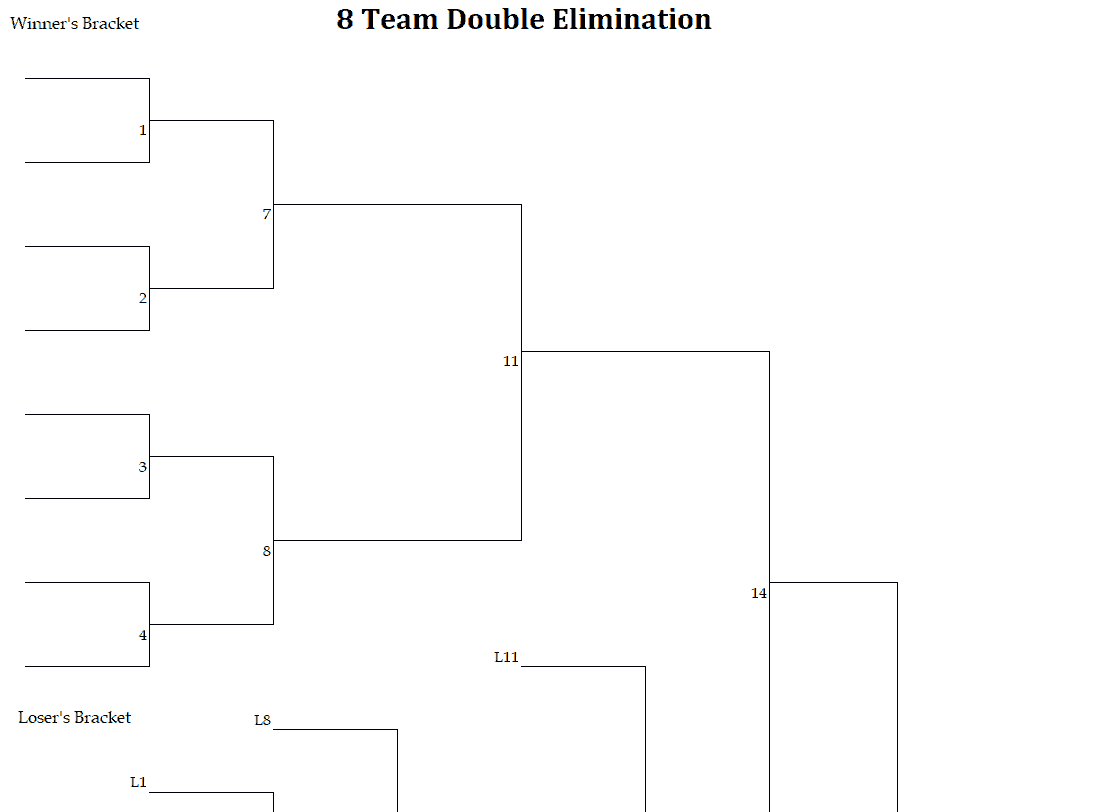
Practical Double Elimination Bracket Generator
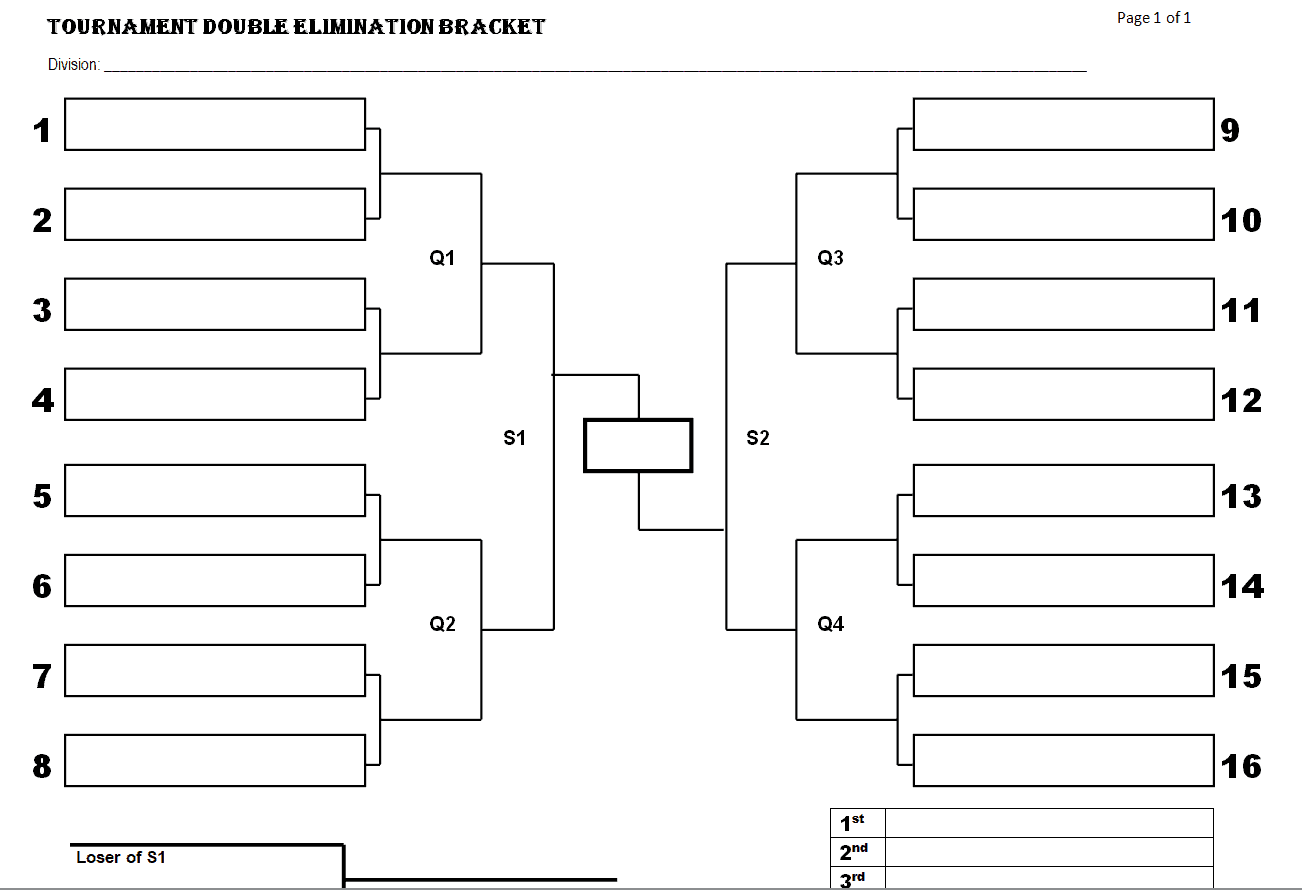
Printable Double Elimination Bracket Generator
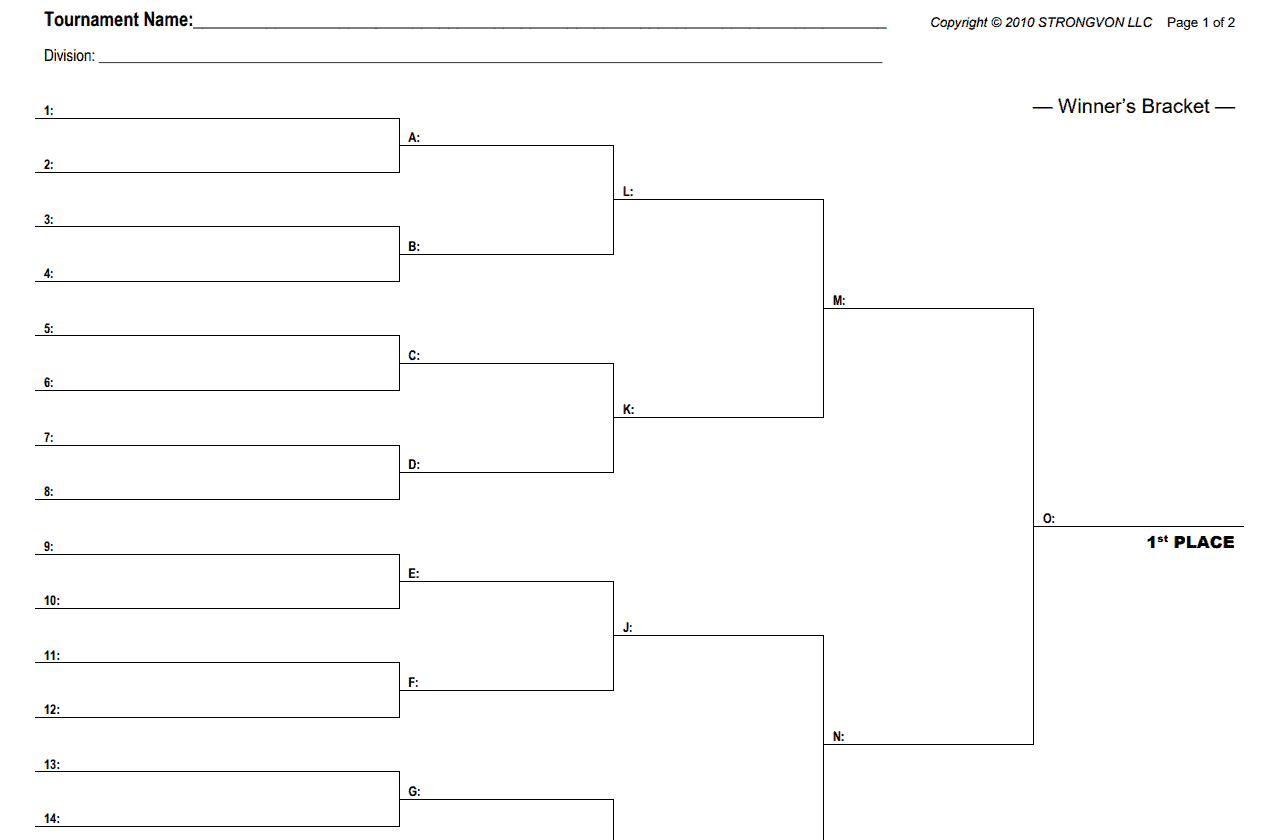
12 Team Double Elimination Bracket Generator
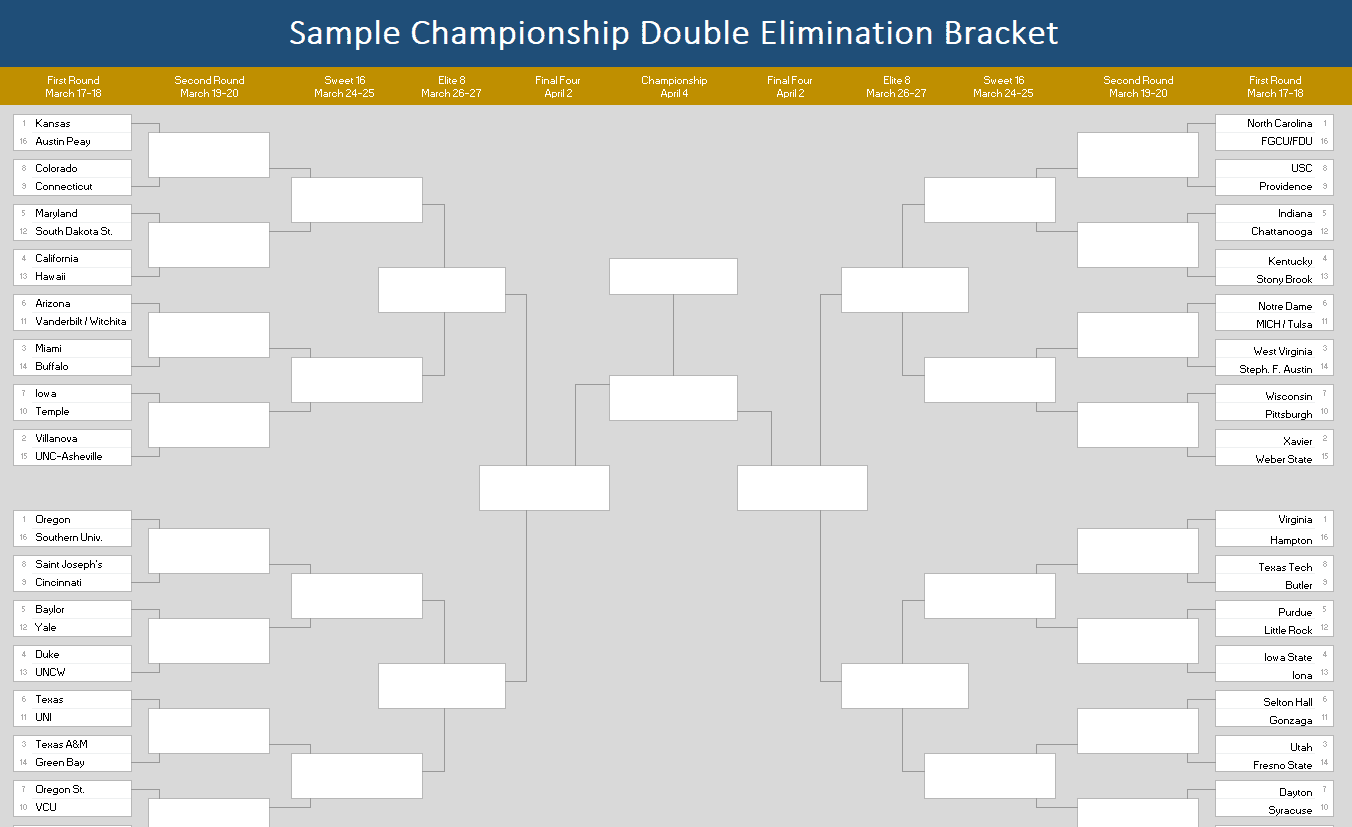
Example Championship Double Elimination Bracket Generator
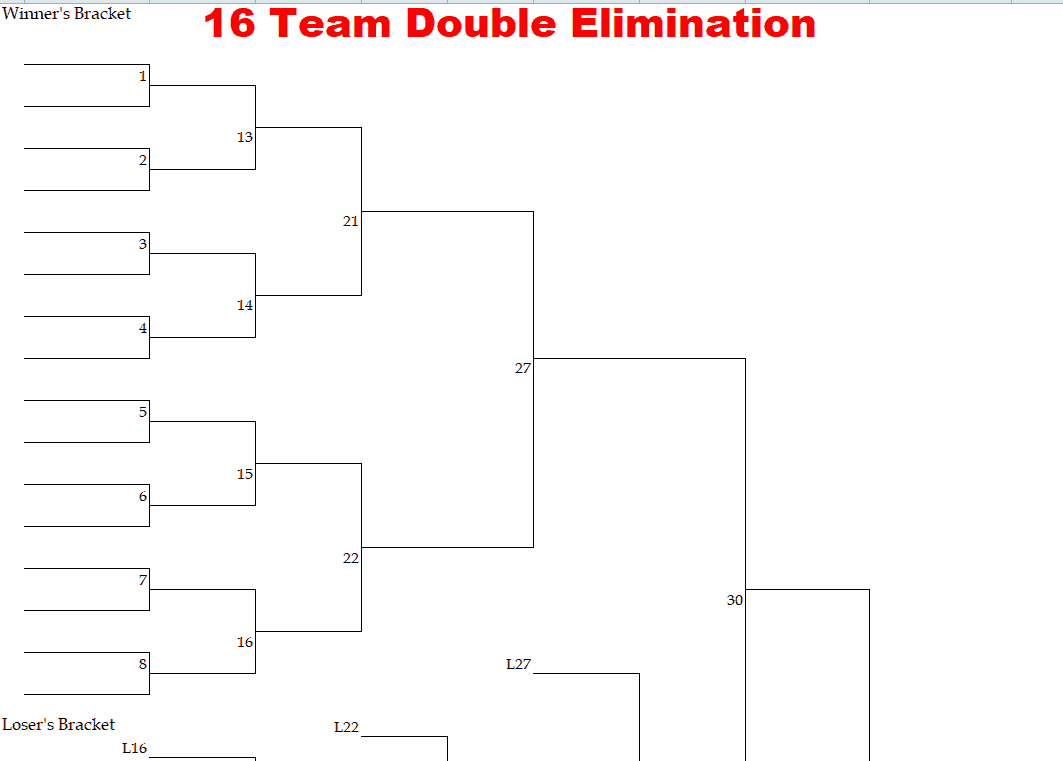
16 Team Double Elimination Bracket Generator in EXCEL Format
Frequently Asked Questions
Are these double elimination bracket generators free to download?
Yes, all 12 double elimination bracket generators on this page are free to download and use.
What file formats are these templates available in?
These templates are available in PDF, Word, and Excel formats, so you can choose whichever is easiest to edit.
Can I customize the fields on these templates?
Yes, since the templates are fully editable, you can add team names, scores, and adjust the bracket size as needed.
What’s the difference between double and single elimination?
Single elimination ends a team’s participation after one loss, while double elimination gives every team a second chance after a first loss.
How many teams can these brackets accommodate?
These templates range from smaller 4-team brackets up to larger 16-team brackets to fit different tournament sizes.
Can these templates be used for esports tournaments?
Yes, these bracket templates work well for esports and other competitive gaming tournaments in addition to traditional sports.

You must be logged in to post a comment.