
Use sales pipeline templates to manage individual opportunities with defined stages, next actions, owners, and realistic forecast assumptions. This page contains layout examples and links to original sources, rather than a hosted editable Word or Excel file.
Layout examples and source links
These are layout previews and links to original sources, rather than hosted editable downloads. Check each source’s current availability, format and terms.
Template previews and source links
Sales Pipeline Template Sample
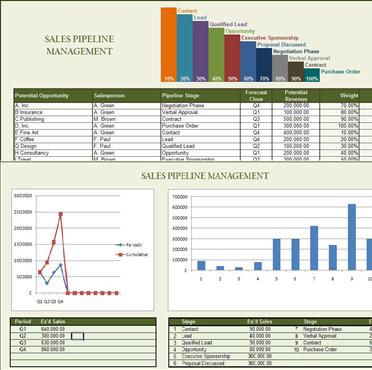 View original source for Sales Pipeline Template Sample
Sales Pipeline Chart Example
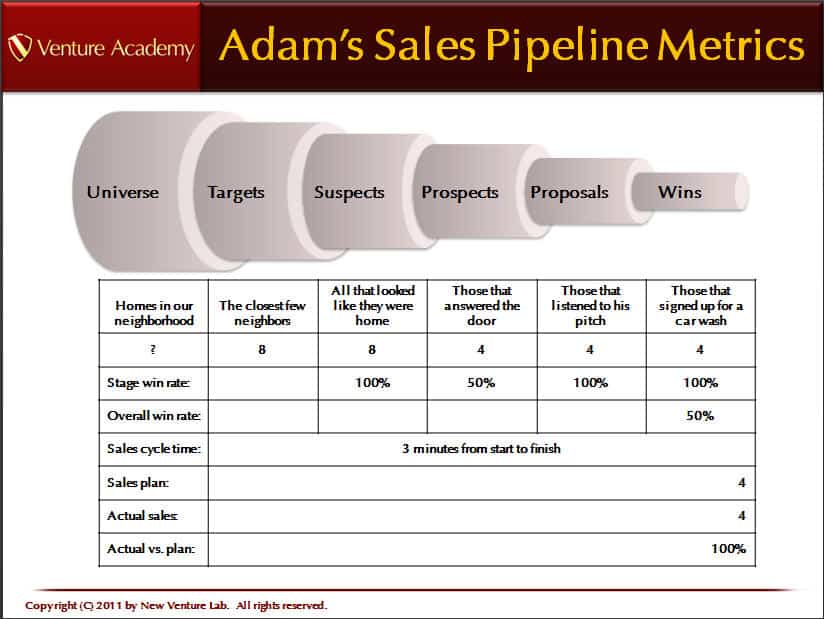 View original source for Sales Pipeline Chart Example
Lead Input and Sales Pipeline Template
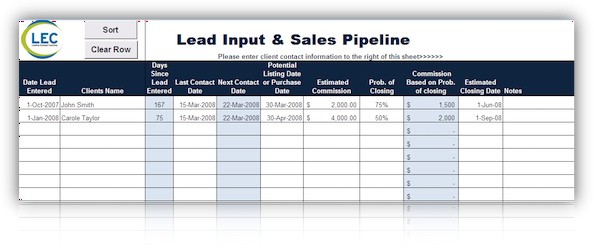
A sales pipeline is a working list of opportunities, not a guarantee of future revenue. Keep opportunity value separate from probability-weighted forecasts and distinguish expected close dates from customer commitments. A current next action is often more useful than a decorative stage color.
Choose a suitable template
Choose a sales worksheet by the management question it answers. A funnel measures conversion across defined groups, while a pipeline tracks individual opportunities and their next actions. Agree the definitions before collecting data. Avoid treating every contact as an equally qualified opportunity or presenting a planning forecast as contracted revenue.
Important details to prepare
Opportunity
Assign a unique reference and identify the customer and proposed offer. Avoid duplicate rows for the same commercial opportunity. Use a consistent unit and scope so that the entry can be compared with other records. Different contacts or orders should not be merged merely because they belong to the same company.
Owner
Name the person responsible for follow-up and keep relevant contacts current. Shared responsibility should not mean nobody owns the next action. Identify who is responsible for keeping the detail current. A shared worksheet still needs clear ownership if it is to support timely action.
Stage
Use evidence-based entry and exit rules. Do not advance an opportunity merely because time has passed. Base the entry on an observable customer event or an explained definition. Optimistic wording should not substitute for evidence of progress.
Value and probability
State currency, value basis, and forecast assumptions. Probabilities should have an explained basis and should not imply a promise. Label assumptions and calculations clearly. A planning estimate can be useful without being described as a committed sale or a guaranteed result.
Next action
Record a specific next step, owner, and due date. Replace vague follow up notes with an observable action. Connect the measure with a specific next action or question. The purpose is to improve decisions and follow-up rather than to produce a more elaborate report.
Close and review
Record won, lost, deferred, or open status and reasons where known. Review stale opportunities and retain history rather than repeatedly pushing dates forward. Review the history when updating status. Keeping meaningful changes visible helps explain delays and avoids a misleading picture created by repeatedly resetting dates.
How to complete the template
Establish a consistent unit of analysis, period, and ownership rule. Record source information and observable stage criteria, then update entries as customer evidence changes. Keep actual wins, open opportunities, and assumptions distinguishable. Use the same counting method when comparing teams or channels; otherwise an apparent improvement can come from a changed definition rather than stronger performance.
Worked example
A sales team has a 10,000 opportunity at a stage assigned a 40% planning probability, producing a weighted value of 4,000. That figure is a forecast assumption, not an accepted order. The next action is a customer review meeting on a named date. If the customer defers the project, the team updates status instead of quietly postponing the close date every week.
Check accuracy before use
Review duplicates, stale entries, unsupported probabilities, and close dates that move repeatedly without new evidence. Check conversion denominators and make sure comparisons use compatible periods or cohorts. Ask what practical customer action supports each stage. A colorful dashboard should help the team investigate and act, not conceal uncertainty behind precise-looking percentages.
Related resources for the next step
Use sales call log templates to retain opportunity activity.
Use sales plan templates to connect opportunity actions with targets.
Use client database templates to maintain customer contact records.

You must be logged in to post a comment.