
Use tax donation receipt templates to prepare a clear donation acknowledgment with the factual details needed for review under the applicable tax rules.
A tax donation receipt template cannot establish an organization’s eligible status or guarantee a donor’s deduction. Record what was actually received and distinguish cash, property, and any goods or services provided in return. Requirements depend on the jurisdiction, contribution type, and tax year.
Choose a suitable template
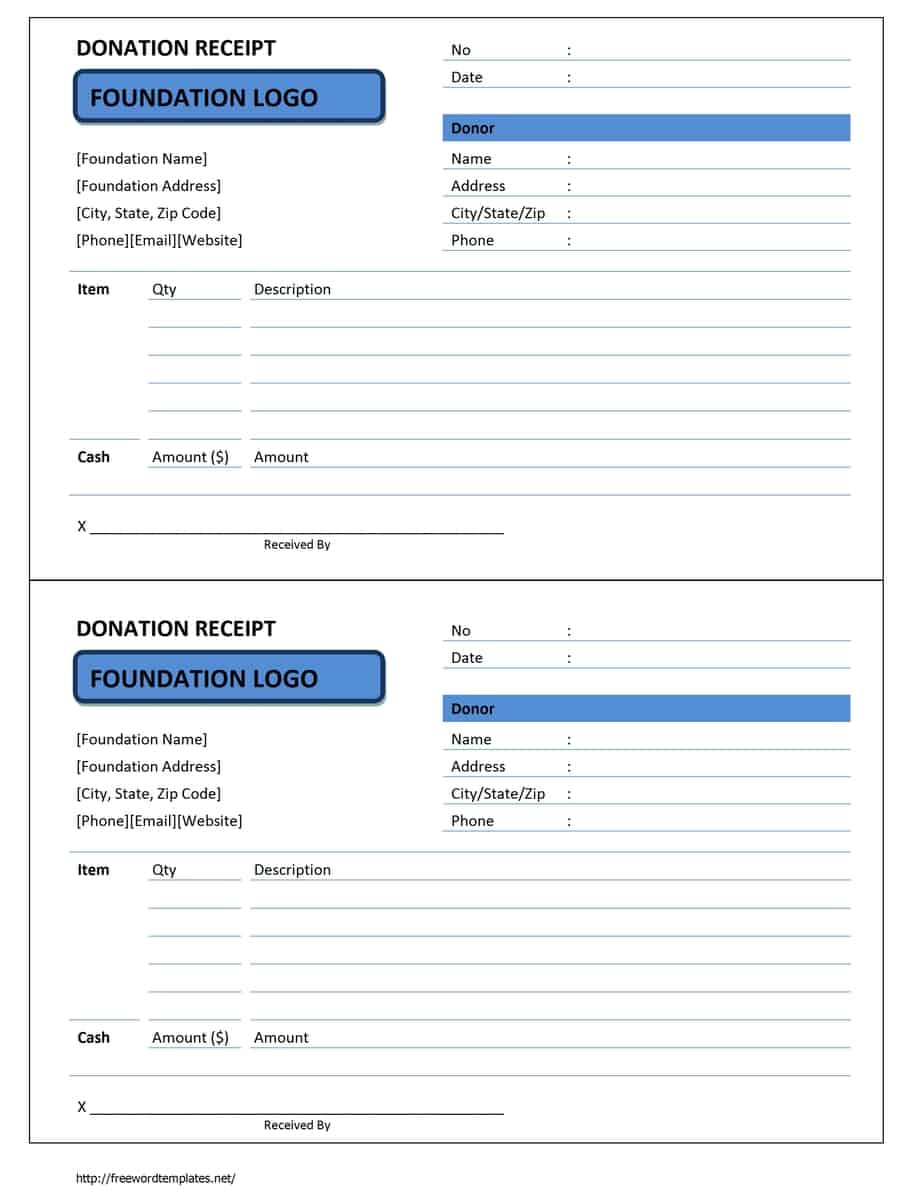
Choose an acknowledgment or claim format that reflects the real transaction. A receipt, pledge, reimbursement request, approval, and payment record have different meanings. Identify the receiving or reviewing organization and its requirements before editing the sample. Do not add tax, eligibility, or payment assurances that the underlying transaction and applicable rules do not support.
Important details to prepare
Organization
Use the organization’s correct legal name, address, and relevant registration details where applicable. Confirm eligibility separately rather than implying it from a logo. Confirm the responsible organization and the correct reporting period. A useful record identifies who received, claimed, reviewed, or paid the amount without merging those roles.
Donor and reference
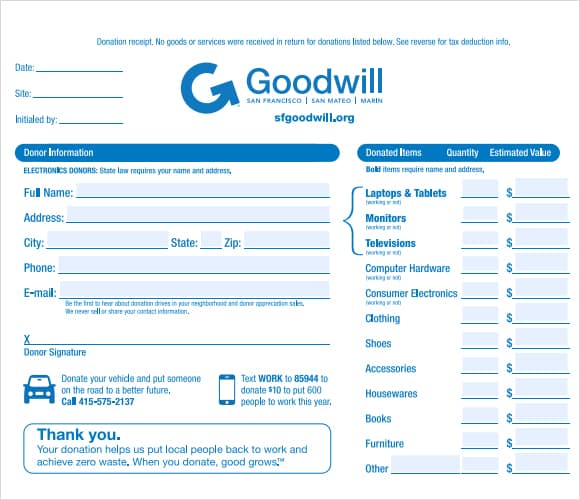
Identify the donor accurately and assign a unique receipt reference. Limit personal information to what the acknowledgment and recordkeeping process require. Use only the personal details needed for the process. Contact information can support clarification without becoming unnecessary public recognition or shared financial data.
Date and contribution
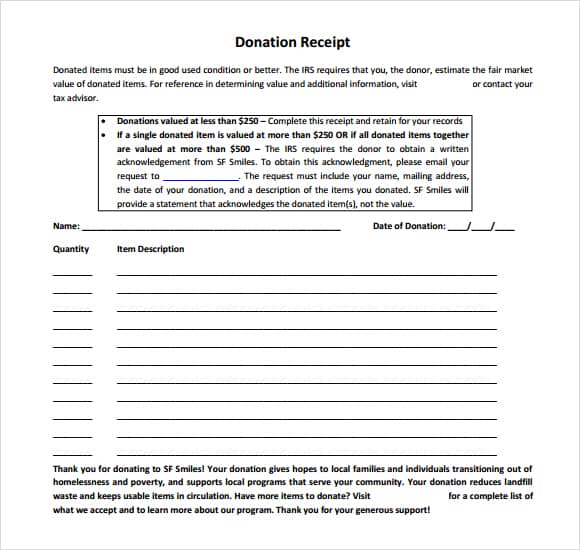
Record when the contribution was received, the cash amount and currency, or a factual description of donated property. Record the transaction as it actually occurred and preserve its evidence reference. Do not convert an estimate, promise, or unsupported value into a confirmed receipt.
Goods and services
Record whether the donor received goods or services in exchange and provide the required description or estimate under applicable rules. Keep the reference unique and connected to the register. This makes duplicate checks and later corrections much easier when several similar entries are processed together.
Property valuation
Separate the organization’s description of property from a donor’s valuation or appraisal responsibilities. Do not invent a deductible value merely to complete the layout. Explain any calculation or exchange treatment that affects the total. A reviewer should be able to understand the amount without reconstructing an informal conversation.
Issuance and correction
Identify the authorized issuer and retain a copy. Mark corrected or replacement receipts clearly so records do not suggest duplicate contributions. Retain the reviewed version and record what happened next. A submitted claim, issued receipt, approval, and completed payment may each need their own dated status.
How to complete the template
Build each entry from the actual transaction and supporting evidence. Record dates, amounts, currencies, references, and the relevant purpose. Keep separate transactions distinguishable even when they occur on the same day. Identify replacements or corrections clearly. For a claim, separate amounts paid by the claimant from amounts paid directly by another party and account for advances before calculating what remains payable.
Worked example
A charity receives a monetary gift and issues an acknowledgment naming the organization, donor, date, amount, and receipt reference. It states the relevant facts about whether anything was provided in exchange. When the donor later corrects a misspelled name, the charity issues a marked replacement tied to the original reference instead of recording a second donation.
Check accuracy before use
Trace the total back to the supporting lines and evidence. Check duplicates, missing currency labels, arithmetic, and the distinction between expected and received amounts. Make sure an acknowledgment does not imply a tax outcome or an approval does not masquerade as settlement. Review any jurisdiction-specific wording against current authoritative requirements rather than copying it from an old design.
Check the final layout
Leave enough space for long names and descriptions, use readable text for essential instructions, and label statuses in words as well as color. Check the printed or exported copy at its intended size. On continuation pages, repeat the document reference and page number.
Keep the record up to date
Use unique references and keep the issued or submitted version with the relevant register. Store personal, donor, and financial details securely, with access limited to the process. Record decisions and actual settlement separately where appropriate. If an error is found after issue, produce a clearly linked correction rather than creating an apparently unrelated second transaction.
Related resources for the next step
Use payment record templates to reconcile received monetary donations.
Use accounting templates to maintain supporting donation records.
Use raffle ticket templates to keep fundraising transactions classified by their actual nature.
Browse the template previews
Compare the previews for layout, writing space, and useful fields. Where a resource link is provided, check its file format and usage terms before editing. Some previews are images or examples rather than editable downloads.
Authoritative guidance
For U.S. donations, consult IRS substantiation and disclosure guidance. Other jurisdictions may require different wording and evidence; a template alone does not confirm deductibility. See IRS acknowledgment requirements.
Get Tax Donation Receipt Templates Below
Blank Tax Donation Receipt

Sample Donation Receipt
Tax Donation Receipt Example Free
Donation Receipt Free Template

You must be logged in to post a comment.