
Winning new software development work often comes down to how clearly you can communicate scope, timeline, and cost before a single line of code is written, and a software project proposal template makes that process far more professional and efficient. Instead of formatting a proposal document from scratch for every prospective client, a ready-made template gives you a structured layout you can customize quickly with your specific project details. Below you’ll find 12 downloadable software project proposal templates in PDF and Word formats, suitable for freelance developers, software companies, and IT consultants alike.
Turn a software proposal into a concrete deliverable plan
A software project proposal needs a clear business problem, proposed features, platform assumptions, schedule, cost, and acceptance approach. Separate the initial project scope from possible extensions to avoid ambiguity.
- Saves preparation time: A ready-made structure means you can focus on project-specific details instead of formatting a document from scratch.
- Presents a professional image: A polished, well-organized proposal builds client confidence in your ability to deliver the project.
- Clarifies project scope: A structured template ensures nothing important gets left out when defining what the project includes.
- Reduces miscommunication: Clearly outlined deliverables and costs help prevent disputes or scope creep later in the project.
- Works for various project types: Templates are available for web development, game development, and general software projects alike.
- Free and reusable: Download once and reuse the same template structure for every new client proposal.
Worked example: For an appointment-booking app, describe account registration, appointment slots, reminder notifications and an admin dashboard as specific deliverables. Identify required integrations and state whether ongoing hosting is included.
Check before use: Confirm constraints such as accessibility, data protection, maintenance and intellectual-property ownership. Quotes are estimates unless supported by an agreed contract and change-control process.
For related resources, see 16+ Editable Statement of Work (SOW) Templates and 9 FREE Project Timeline Templates [EXCEL & PPTX].
What’s Included in the Software Project Proposal Template
- Project overview: A summary section describing the client’s needs and the proposed software solution.
- Scope of work: A detailed breakdown of what the project will and will not include.
- Technical approach: Space to outline the technologies, platforms, and methodologies that will be used.
- Timeline and milestones: A schedule showing key project phases and estimated completion dates.
- Cost estimate: A breakdown of pricing, whether fixed-fee, hourly, or milestone-based.
- Terms and signature section: Space for both parties to review and formally agree to the proposal.
Who Should Use These Templates?
- Freelance software developers pitching projects to individual clients or small businesses.
- Software development agencies submitting formal proposals to prospective corporate clients.
- IT consultants proposing custom software solutions to solve specific business problems.
- Game developers pitching game development projects to publishers or investors.
- Startup founders seeking development partners or technical co-founders for a software idea.
- Project managers formalizing internal software project proposals for stakeholder approval.
How to Start Using the Template in 3 Simple Steps
- Step 1 — Choose a template style: Browse the 12 options below and select the format, PDF or Word, that best fits your project type.
- Step 2 — Add your project details: Fill in the scope, technical approach, timeline, and cost estimate specific to your client’s needs.
- Step 3 — Review and send: Proofread the completed proposal, then send it to your prospective client for review and approval.
Software Project Proposal vs. Statement of Work
While closely related, a software project proposal and a statement of work serve slightly different purposes in the client relationship. A proposal is typically the initial pitch document used to win the project, focusing on persuading the client that you’re the right choice while outlining the general scope and cost. A statement of work, by contrast, is usually created after the proposal is accepted and goes into much greater technical detail about deliverables, responsibilities, and acceptance criteria, serving as a binding reference document once the project begins.
Customizing the Template for Your Business
These templates are designed to be a flexible starting point rather than a fixed format. You can add your company branding and logo for a more professional appearance, adjust the pricing structure to match how you typically bill clients, or expand the technical approach section for more complex projects. Since the templates are provided in editable Word and PDF format, most adjustments take only a few minutes and let you tailor the proposal to fit your specific business and the client’s project.
Choosing the Right Format
With 12 different templates available in PDF and Word, choosing the right one depends on the type of software project and client you’re proposing to. Detailed templates work well for larger enterprise clients who expect thorough technical documentation, while simpler templates are often better suited for smaller businesses or individual clients who want a quicker, more digestible proposal. Reviewing what each template includes before downloading can help you find one that requires minimal restructuring for your specific project.
Common Mistakes to Avoid
- Vague scope definitions: Be specific about what’s included and excluded to prevent scope disputes later in the project.
- Unrealistic timelines: Build in reasonable buffer time rather than promising unrealistically fast delivery dates.
- Missing cost breakdowns: Provide a clear, itemized cost estimate rather than a single lump-sum figure.
- Overly technical language: Balance technical detail with language a non-technical client can still understand.
- Forgetting a call to action: Clearly state the next steps needed for the client to approve and move forward with the project.
Tips to Get the Most Out of Your Software Project Proposal Template
- Research the client’s business before writing so your proposal directly addresses their specific needs.
- Include past project examples or a portfolio section to demonstrate relevant experience.
- Keep the language client-focused rather than overly technical, especially for non-technical decision-makers.
- Follow up promptly after sending the proposal to answer questions and move the process forward.
- Save successful proposals as reference templates for similar future projects.
Fixed-Price vs. Time-and-Materials Proposals
Software project proposals typically follow one of two general pricing models, each suited to different project types. A fixed-price proposal quotes a single total cost for the entire project based on a clearly defined scope, which works well for projects with well-understood requirements and limited expected changes. A time-and-materials proposal, on the other hand, bills based on actual hours worked and resources used, which is often better suited to projects with evolving requirements or significant uncertainty about the final scope. Choosing the right model, and explaining it clearly in the proposal, helps set accurate client expectations from the start.
Writing a Compelling Executive Summary
The executive summary at the beginning of a software project proposal is often the section that determines whether a busy decision-maker reads further, making it one of the most important parts of the entire document. A strong executive summary briefly states the client’s core problem, summarizes your proposed solution, and highlights the key benefit of working with you, all in just a few concise sentences before the reader dives into technical or pricing details. Spending extra time refining this section, even after the rest of the proposal is complete, often pays off more than polishing any other single part of the document.
Addressing Risk and Assumptions
Experienced proposal writers often include a section addressing project risks and key assumptions, since software projects frequently encounter unexpected complications that can affect timeline or cost. Listing assumptions explicitly, such as the client providing timely feedback at each milestone or existing systems being compatible with the proposed integration, protects both parties by setting clear expectations upfront. Addressing potential risks directly, along with how they’ll be managed if they materialize, also signals to the client that you’ve thought carefully about the project rather than presenting an overly optimistic best-case scenario.
Following Up After Submitting a Proposal
Sending a well-crafted proposal is only half the battle, since many potential clients need a nudge or a chance to ask clarifying questions before they’re ready to commit. Following up within a few days of submission, rather than waiting indefinitely for a response, shows genuine interest in the project without coming across as pushy. Preparing a short list of anticipated questions in advance, such as clarifications about the timeline or payment schedule, also allows you to respond quickly and confidently when the client does reach out, which can make the difference in a competitive bidding situation.
Proposals for Web vs. Mobile vs. Enterprise Software Projects
Different categories of software projects tend to emphasize different sections of a proposal, so tailoring the document to the specific type of work can make it noticeably more persuasive. A web development proposal often benefits from emphasizing design mockups, browser compatibility, and hosting details, while a mobile app proposal should address platform choices, such as iOS and Android, along with app store submission timelines. Enterprise software proposals, by contrast, typically need a much stronger focus on integration with existing systems, security compliance, and a more detailed multi-phase rollout plan, since these projects usually involve larger teams, longer timelines, and greater organizational risk than a standalone web or mobile app.
Reviewing and Refining Your Proposal Before Sending
A final review pass before sending a proposal catches errors that undermine an otherwise strong pitch, from typos and inconsistent formatting to pricing figures that don’t add up correctly across different sections of the document. Reading the proposal from the client’s perspective, rather than your own, often reveals sections that assume too much prior knowledge or that fail to clearly explain why your approach is the right one for their specific situation. Having a colleague review the proposal before it goes out, even a quick five-minute read-through, frequently catches issues that are easy to miss after staring at the same document for hours.
Sample Software Project Proposal Templates are Here:
Sample Software Project Proposal Template

Detailed Software Project Proposal Template

Software Development Project Proposal Template

Sample Game Project Proposal Template

Software Engineering Project Proposal Template

Professional Software Project Proposal Template WORD

Practical Software Project Proposal Template
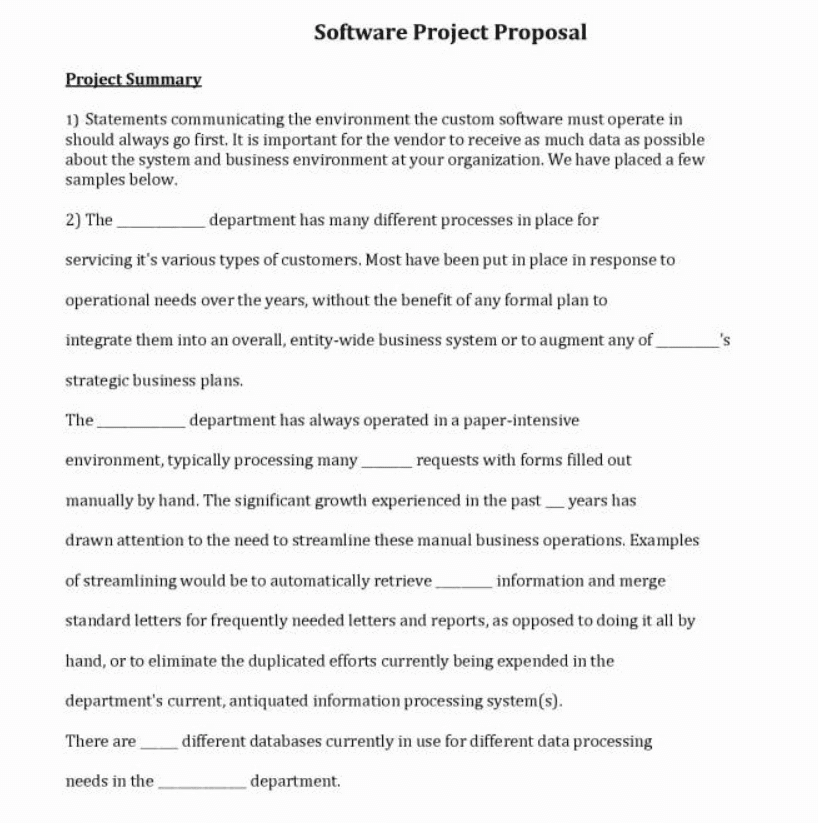
Request for Software Project Proposal Template

Website/Software Development Project Proposal Template

Software Project Proposal Template Writing Guidelines

Educational Software Development Project Proposal Template

Example Software Proposal Document Template

Frequently Asked Questions
Are these software project proposal templates free to download?
Yes, all 12 software project proposal templates on this page are free to download and use.
Which file formats are these templates available in?
The templates are available in PDF and Word formats.
Can I use these templates for game development proposals?
Yes, several templates, including the sample game project proposal option, are suited for game development pitches.
Can I customize the templates with my company branding?
Yes, the Word versions are fully editable, letting you add your company logo, colors, and contact information.
Are these templates suitable for freelance developers?
Yes, these templates work well for both freelance developers and larger software development agencies.
Do these templates include a section for cost estimates?
Yes, most templates include a dedicated section for outlining project pricing and payment terms.
Can I use these templates for website development proposals?
Yes, the website and software development project proposal template is specifically suited for this purpose.


You must be logged in to post a comment.