
Use credit application templates for Excel to collect proportionate information for a business credit review without confusing application with approval. This page contains layout examples and links to original sources, rather than a hosted editable Word or Excel file.
Layout examples and source links
These are layout previews and links to original sources, rather than hosted editable downloads. Check each source’s current availability, format and terms.
Template previews and source links
Credit Application Sample
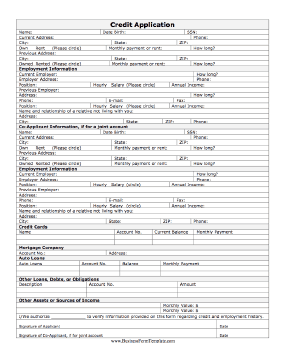 View original source for Credit Application Sample
Credit Application For Business
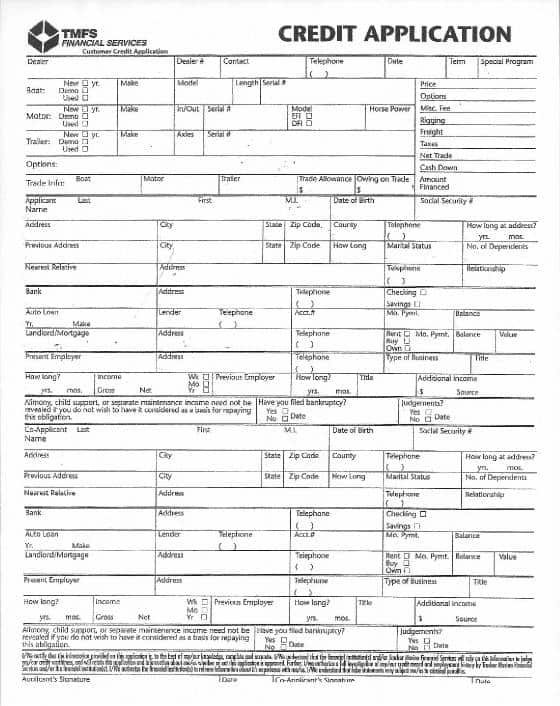 View original source for Credit Application For Business
Company Credit Application Example
 View original source for Company Credit Application Example
Blank Credit Application For Business Account
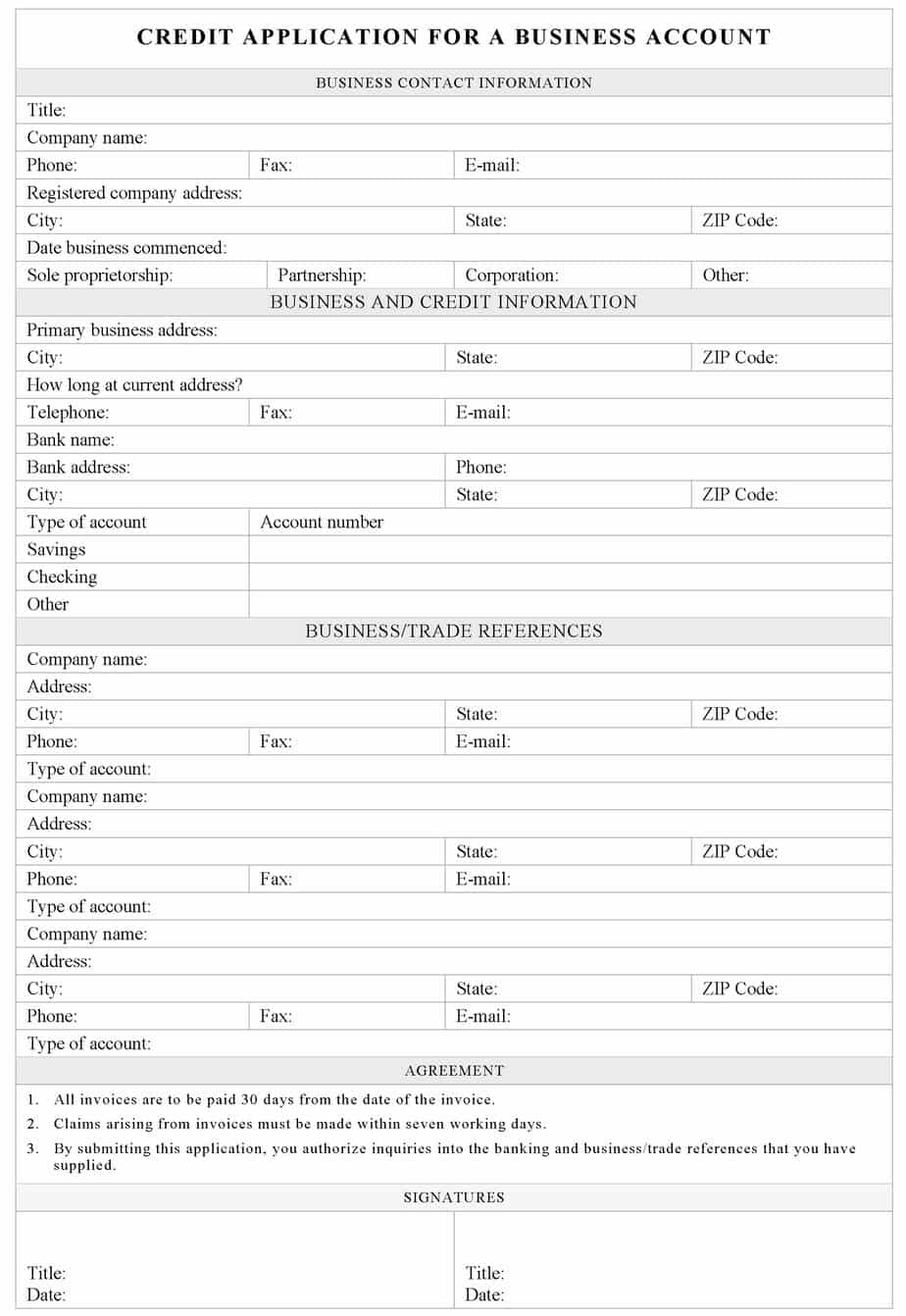 View original source for Blank Credit Application For Business Account
A credit application initiates a review of proposed credit terms. It is not a promise to lend or extend trade credit. Collect only information justified by the process, protect sensitive records, and have the actual terms and authorization reviewed under applicable law before use.
Choose a suitable template
Start with the decision or action the form needs to support. Identify who fills it in, who reviews it, and what happens after submission. Remove fields that do not serve that process and add any genuinely necessary details missing from the sample. A form should make a request or transaction clear without pretending that submission alone completes approval, payment, delivery, or a legal requirement.
Important details to prepare
Applicant
Identify the legal business or individual applying and the authorized contact. Distinguish trading names from the entity responsible for payment. Collect the detail from the appropriate person or record and make its purpose clear. Avoid using a field merely because it appeared on another organization’s sample.
Credit requested
State the requested limit, payment terms, and intended purchasing relationship. Keep requested terms separate from approved terms. Use wording that the requester and reviewer interpret consistently. If a term has a special meaning within the process, explain it near the field rather than relying on informal knowledge.
Business information
Collect relevant registration and operating details through an appropriate channel. Do not ask for unrelated sensitive information simply because a template has space. Include the unit, scope, or reference needed to understand the entry. A number or short phrase can be ambiguous when separated from the conversation that produced it.
References
Request suitable references with permission where needed. Record the source and date of any response rather than treating a name as a verified recommendation. Distinguish requested information from confirmed information. Dates, quantities, or terms proposed by one party may still need review before another person can act on them.
Authorization
Use appropriate, reviewed consent and disclosure wording for the checks actually performed. A generic signature line does not authorize every possible investigation. Keep supporting evidence traceable without exposing it unnecessarily. A reference to a controlled attachment can be more appropriate than copying private details into every circulated form.
Decision
Record the review outcome, approved limit, conditions, and authorized reviewer. Keep supporting assessment notes private and distinguish approval from account activation. Record the status through the actual workflow. A completed text box or copied signature image should not bypass the responsible person’s review or the required follow-up action.
How to complete the template
Arrange the fields in the order the user naturally knows the information: identity, requested action or transaction, supporting detail, timing, and decision. Mark genuinely required fields and explain unfamiliar terms briefly. Use suitable choices where they reduce ambiguity, with space for an accurate explanation when a standard choice does not fit. Keep private attachments separate from copies used for general coordination.
Worked example
A supplier receives an application for 5,000 of trade credit on thirty-day terms. The review verifies the applicant entity and relevant references. The supplier approves a smaller initial limit under its documented policy and communicates the approved terms separately. The spreadsheet does not automatically convert the requested amount into an approved facility.
Check accuracy before use
Complete a realistic example before adopting the form. Ask whether the reviewer can identify the requested action, relevant dates, quantities or amounts, supporting information, and appropriate next step. Look for conflicting selections and missing units. Check that a pending form cannot be mistaken for an approved one. A signature field should have an explained purpose and should not imply broader authority than the actual process provides.
Related resources for the next step
Use client database templates to maintain approved customer contact records.
Use payment record templates to monitor subsequent payment history.
Use contact information templates to organize verified review contacts.
