
Use household budget spreadsheet templates to coordinate household income, recurring bills, variable spending, and future costs with a realistic cash timetable. This page contains layout examples and links to original sources, rather than a hosted editable Word or Excel file.
Layout examples and source links
These are layout previews and links to original sources, rather than hosted editable downloads. Check each source’s current availability, format and terms.
Template previews and source links
Monthly Household Budget Spreadsheet
 View original source for Monthly Household Budget Spreadsheet
Family Budget Planner Spreadsheet

Personal Budget Template Excel
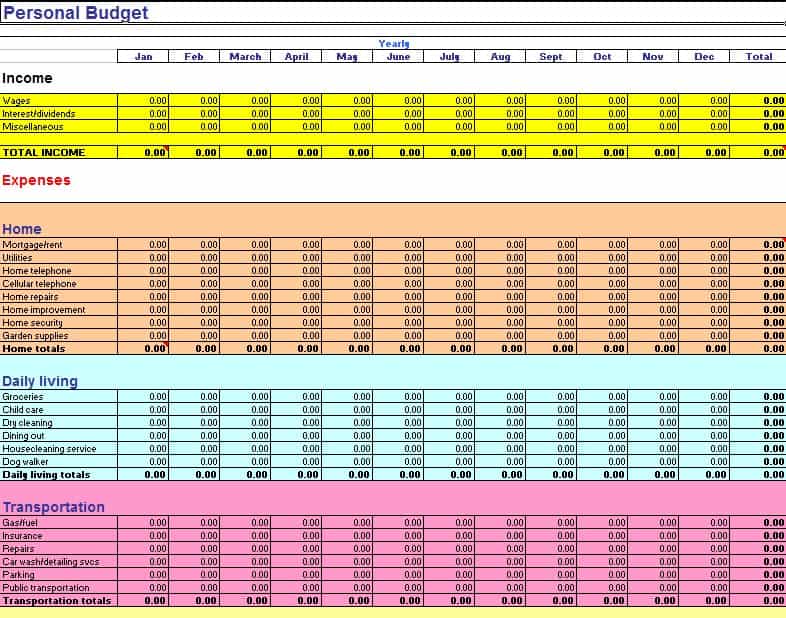 View original source for Personal Budget Template Excel
A household budget works best when its scope and responsibilities are agreed. Include irregular expenses and variable income rather than assuming every month is identical. A planned budget shows intentions; actual transactions show what happened. Keep both visible without counting transfers between household accounts twice.
Choose a suitable template
Choose a budget layout by the decisions you need to make and the timing of your income. A daily plan, monthly household view, and annual forecast answer different questions. Keep actual spending and planned amounts separate. Use categories detailed enough to explain decisions but simple enough that the people responsible will maintain them consistently.
Important details to prepare
Household scope
Agree which people, accounts, and expenses the budget covers. Shared and personal spending can remain separate while shared obligations are clear. Use a dated, supported starting point and define what is included. Available money, restricted savings, and borrowing capacity should not be presented as interchangeable balances.
Income timing
Record expected and actual receipt dates, with cautious assumptions for variable earnings. Gross income and available take-home cash are not interchangeable. Separate expectations from actual receipts. When the amount or date changes, update the forecast while preserving what was actually received.
Fixed commitments
List recurring bills, due dates, and responsible payer. Annual renewals need a plan even when they are absent from this month’s transactions. Record the detail promptly and use consistent categories. A small omission repeated often can distort the remaining allowance more than a single obvious large purchase.
Variable categories
Choose useful categories for food, transport, utilities, and other spending. Keep detail manageable enough that household members will update it. Look ahead to the relevant due date instead of considering only today’s balance. Money still in the account may already be committed to a known obligation.
Reserves and goals
Plan for irregular expenses and agreed savings goals. Moving money into an included savings account is a transfer, not new income. Keep transfers and allocations explicit so the same money is not counted twice. A reserve for a future cost should have a clear purpose and review point.
Review and changes
Compare actual amounts with the plan and agree adjustments. Focus on specific decisions rather than using the worksheet to assign blame. Use the comparison to make a concrete decision. Explain the change to the plan rather than treating every difference as either a failure or an automatic reason to spend more.
How to complete the template
Start with supported available balances, known income dates, and unavoidable commitments. Add variable spending and irregular future costs with explicit assumptions. Distinguish money moved between included accounts from new income or spending. Keep uncertain income visible as a forecast rather than treating it as cash already available. Review the dates as well as the totals; affordability over a month does not eliminate a shortfall before a bill is due.
Worked example
A household receives income twice a month but rent is due before the second payment. Its monthly totals look affordable, yet the date-based plan reveals a shortfall early in the month. The household reserves part of the previous payment for rent and sets aside a monthly amount for an annual insurance bill. The revised plan addresses timing as well as totals.
Check accuracy before use
Reconcile actual entries with relevant account records and receipts. Look for duplicated transfers, omitted small purchases, annual bills missing from the plan, and categories that conceal several unrelated costs. Check that formulas extend to new rows. A budget should explain the remaining amount and upcoming commitments, not merely produce a positive-looking final balance.
Related resources for the next step
Use cash flow templates to map income and bill dates.
Use expense tracker templates to capture actual household spending.
Use financial planning worksheets to organize longer-term goals.
