
Use travel itinerary templates to organize confirmed travel arrangements in a dated sequence with clear local times and practical transfer information. This page currently provides layout examples and source references rather than an editable download.
Layout examples and source links
Use the file links where provided. Links labeled “View original source” open another website; check its current format, availability and terms. A preview image alone is not an editable document.
Template previews and source links
Sample Travel Itinerary Template
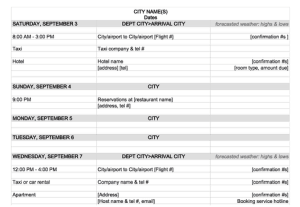
Travel Itinerary Template PDF
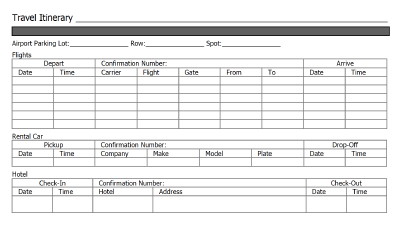 The older external file is unavailable. Its preview is retained for reference.
Printable Travel Itinerary Template
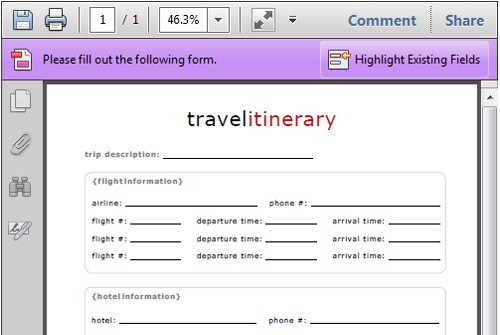 View original source for Printable Travel Itinerary Template
Free Travel Itinerary Template Printable
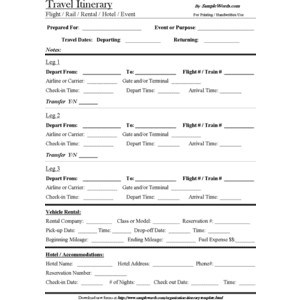 View original source for Free Travel Itinerary Template Printable
An itinerary is a usable sequence of travel, accommodation, and activities. It should prioritize the details needed during the trip rather than every research note. Confirm schedules and booking details with providers, and keep sensitive identity and payment documents outside broadly shared copies.
Choose a suitable template
Choose the layout according to whether you are planning, following confirmed arrangements, or recording actual travel. Keep those stages distinguishable. A provider’s current confirmation is stronger evidence than an old sample schedule. Use the planner to organize verified details and responsibilities, not as an independent source of current prices, entry rules, or transport availability.
Important details to prepare
Dates and time zones
Show dates and local times explicitly. Overnight journeys may arrive on a different date, so avoid relying on a single day heading. Define the trip or period clearly and avoid mixing unrelated journeys. A consistent reference helps connect preparations, bookings, and actual records without repeating sensitive details.
Transport
Record the provider, route, departure and arrival points, and confirmation reference. Recheck current schedules before travel. Check the date, place, and time convention against the responsible provider or actual record. Small ambiguities become more serious when travel crosses midnight or a time zone.
Transfers
Allow realistic time between transport, accommodation, and activities. Distinguish an estimated journey time from a guaranteed connection. State whether the entry is an idea, a request, a confirmed arrangement, or something that actually occurred. Those statuses support different decisions.
Accommodation
Record the correct address, check-in arrangements, and booking contact. Keep access instructions available securely where needed. Allow practical time for transfers and preparation where relevant. A published departure time does not describe every step needed to reach the correct place ready to travel.
Activities
Separate confirmed bookings from optional ideas. Note the practical meeting point and any provider instructions that affect attendance. Keep costs and evidence references clear and use explicit currencies. A total should not combine unlike currencies or reimburse an amount already paid by another party.
Contingencies
Keep verified contacts and a practical alternative for disruptions. Share an appropriate version with a trusted person when useful. Record changes where travelers or reviewers can find them. A useful revision explains the new arrangement without making the previous booking or actual journey disappear.
How to complete the template
Start with the agreed travelers, dates, and purpose, then add the relevant bookings or actual journey details. Use local dates and clearly labeled time zones. Keep currencies explicit and distinguish estimates from paid amounts. Put sensitive identity, payment, and access information in a suitable secure location rather than repeating it in every shared itinerary or log.
Worked example
A traveler takes an evening flight arriving after midnight. The itinerary places arrival and accommodation check-in on the correct next date and uses local times. A transfer estimate includes time to reach the pickup point rather than only driving time. Optional sightseeing remains labeled optional so it cannot be mistaken for a paid reservation.
Check accuracy before use
Walk through the journey chronologically and look for date changes, unrealistic connections, conflicting bookings, and missing addresses or contacts. Confirm time-sensitive details with the provider or relevant authority close to use. Check that the shared version gives travelers enough practical information while withholding unnecessary private records. A neat table cannot guarantee that a connection or booking remains unchanged.
Related resources for the next step
Use itinerary templates to compare daily sequence layouts.
Use travel planner templates to handle preparation before departure.
Use expense report templates to record costs separately from the itinerary.
