
A petty cash log template helps a business record small cash payments without losing the connection between the money, its purpose, and its supporting receipt. A useful log shows who paid or received cash, what the transaction was for, and how the remaining balance was checked. The collection below provides several layouts to compare; this guide explains the process the layout needs to support.
Editable downloads and previews
Use the file links where provided. Links labeled “View original source” open another website; check its current format, availability and terms. A preview image alone is not an editable document.
Get Petty Cash Log Templates Here
Department’s Petty Cash Log Template
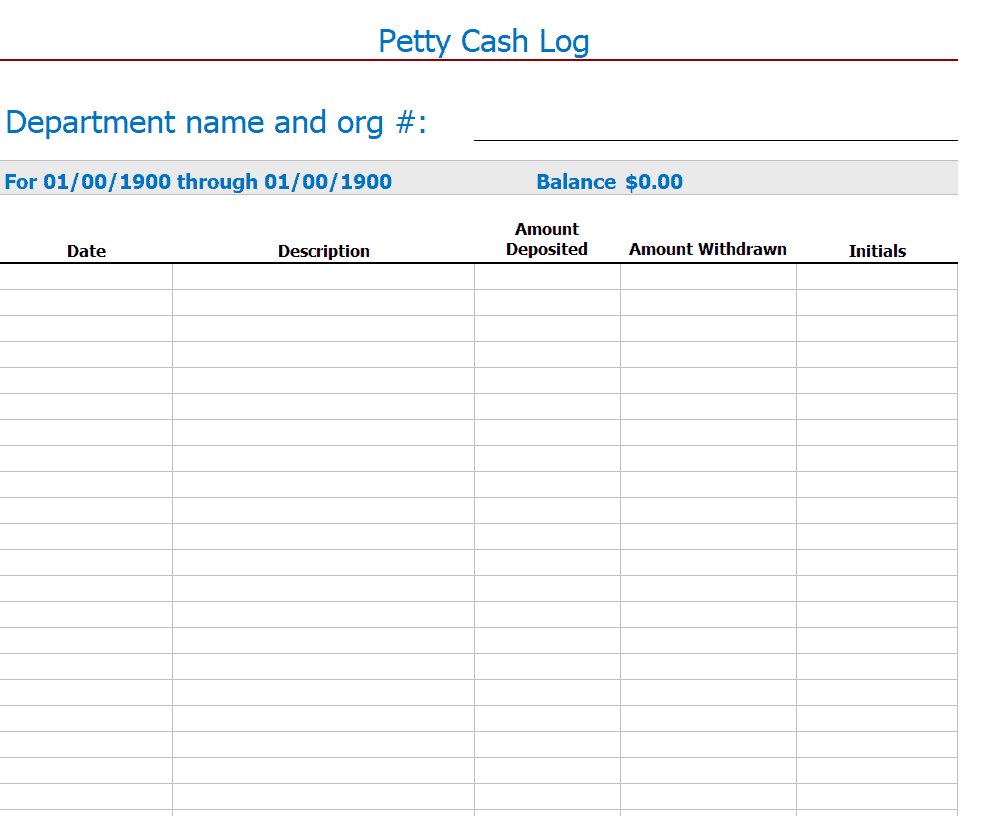
Fillable Petty Cash Log Template
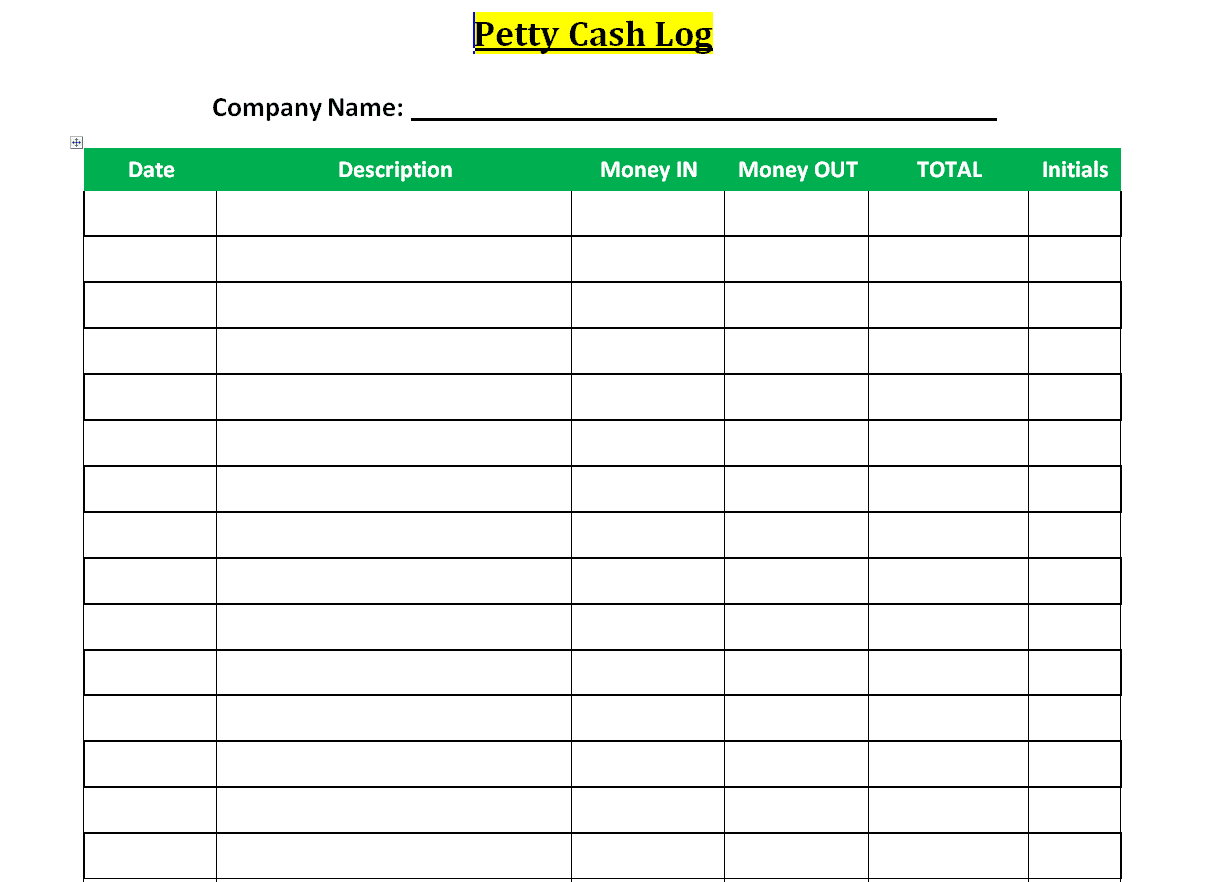
Company’s Petty Cash Log Template
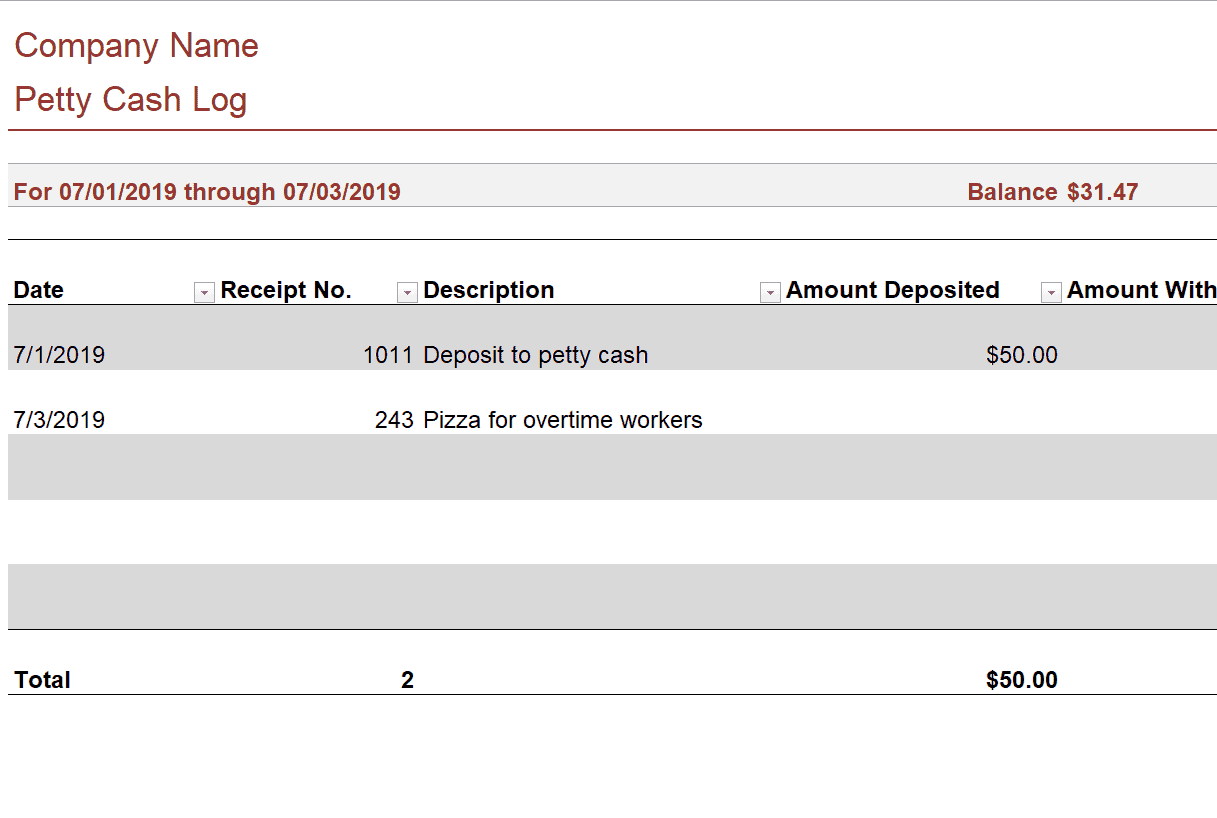
Sample Petty Cash Log Template
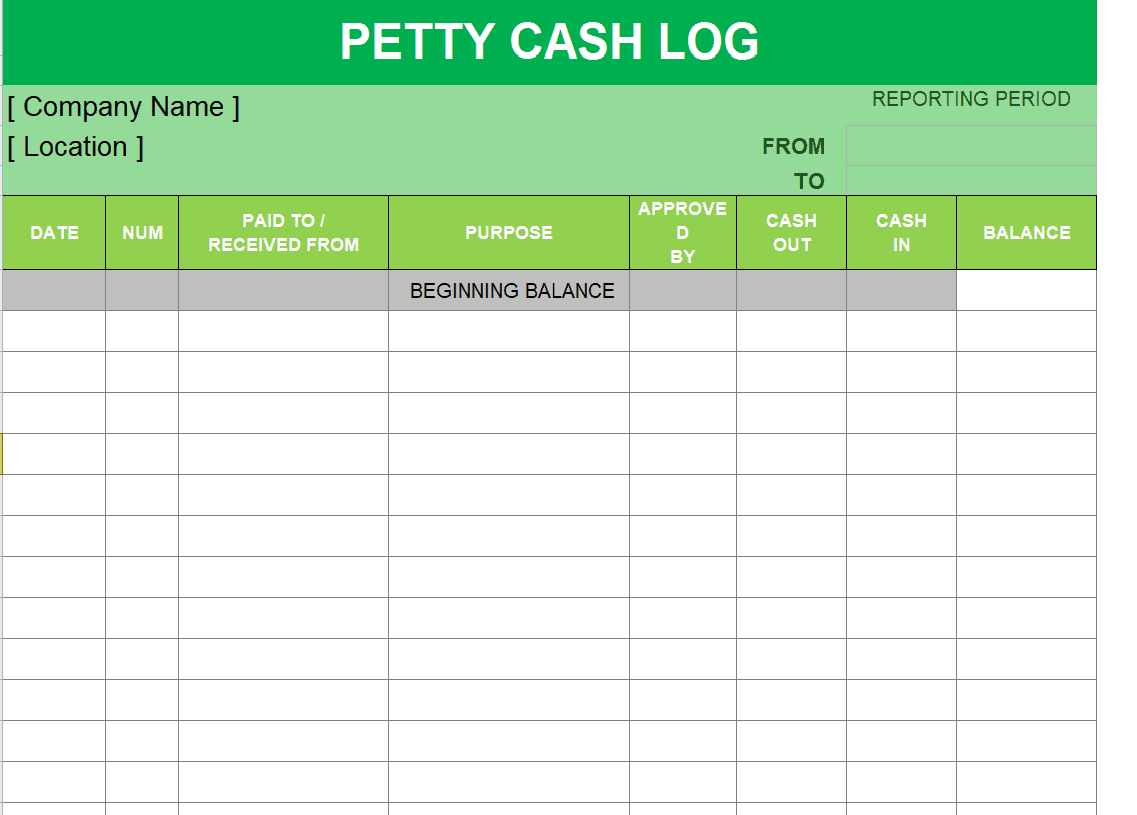
Science Department Petty Cash Log Template
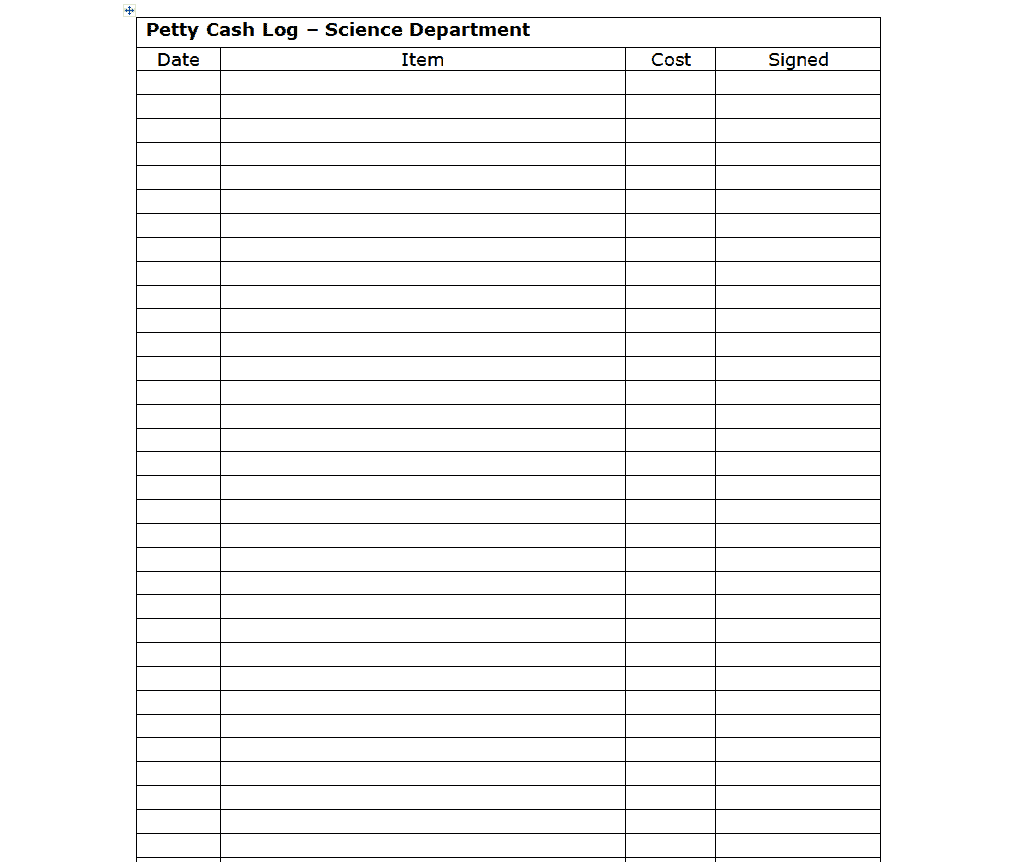
University’s Petty Cash Log Template
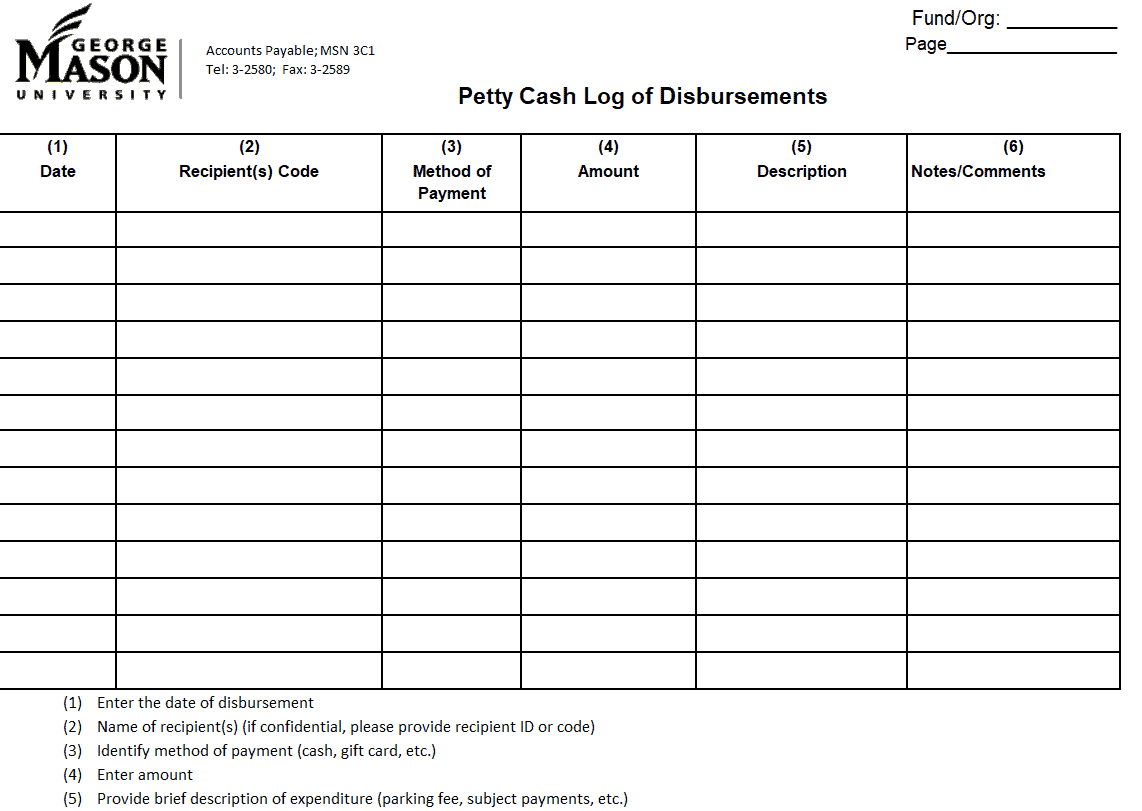
Example Petty Cash Log Template
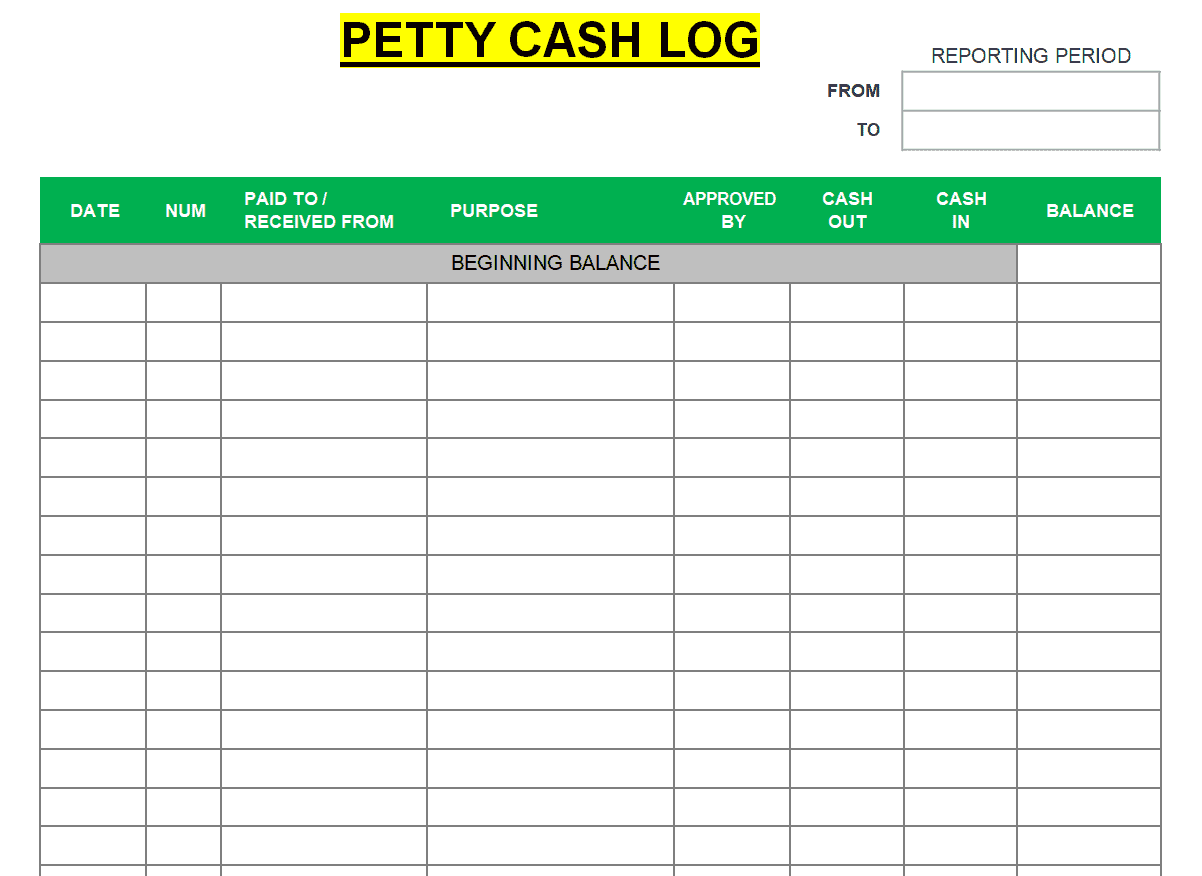
Organization’s Petty Cash Book Template
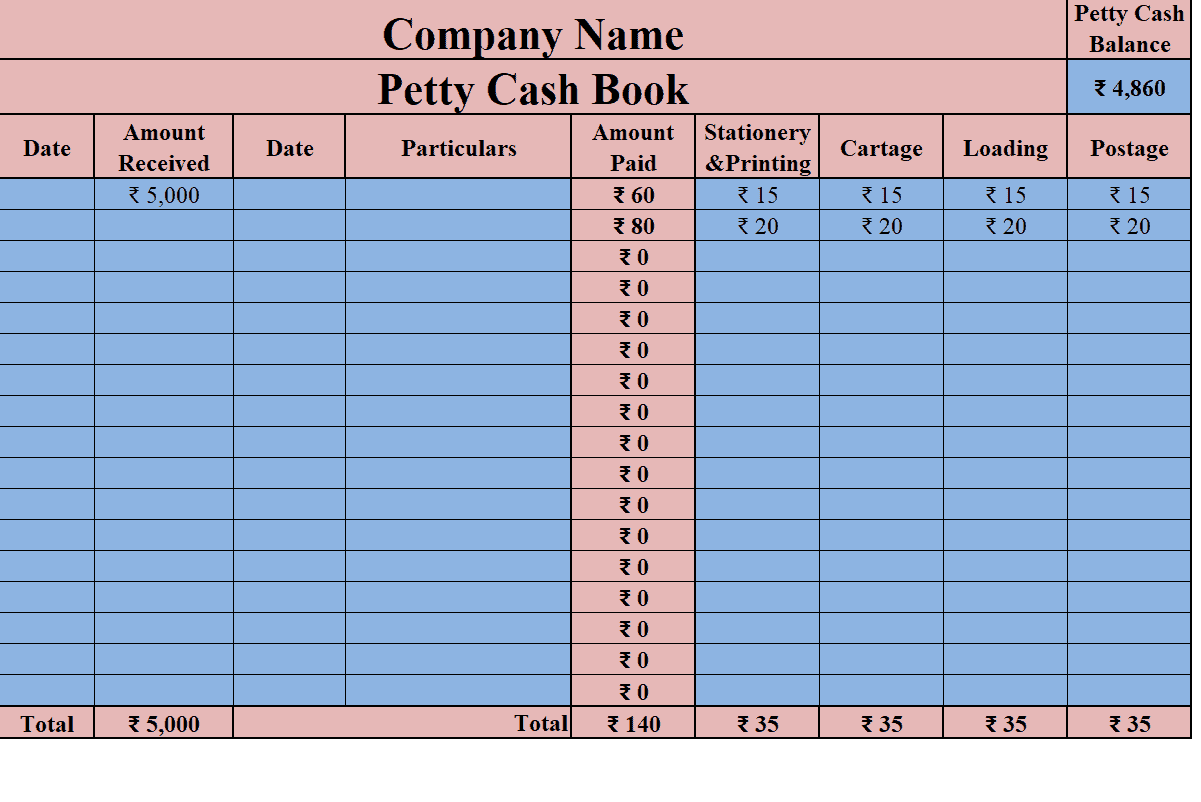
Official Petty Cash Log Template
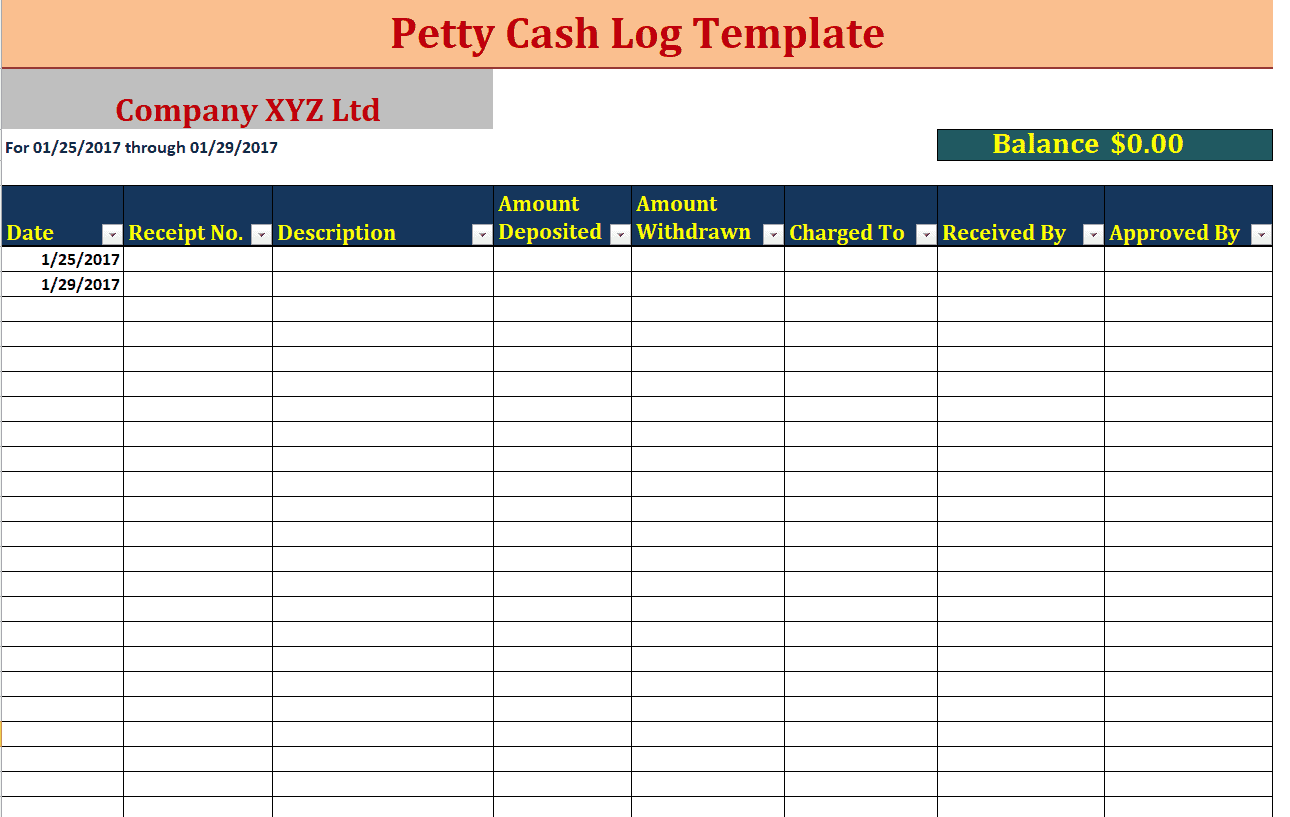
Business Petty Cash Log Template
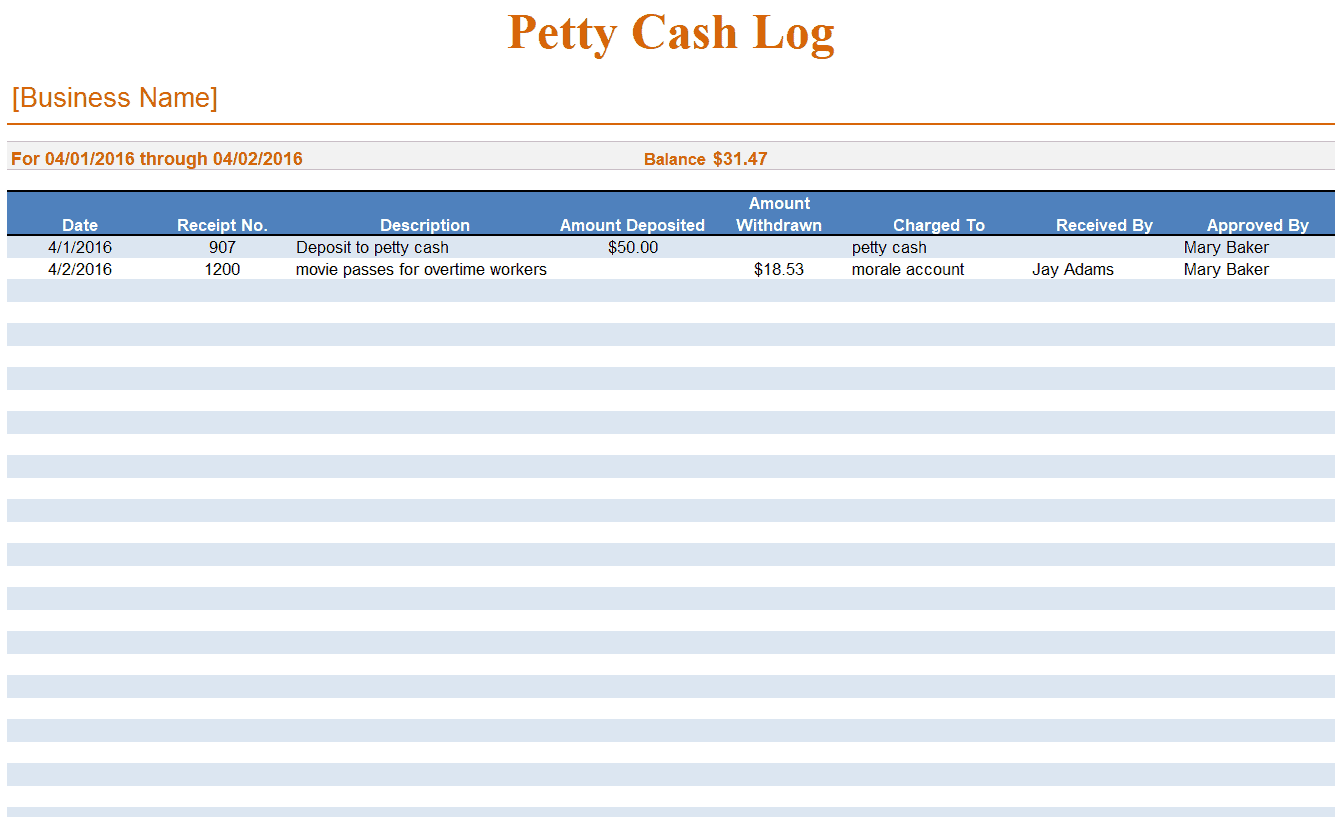
Formal Petty Cash Log Template
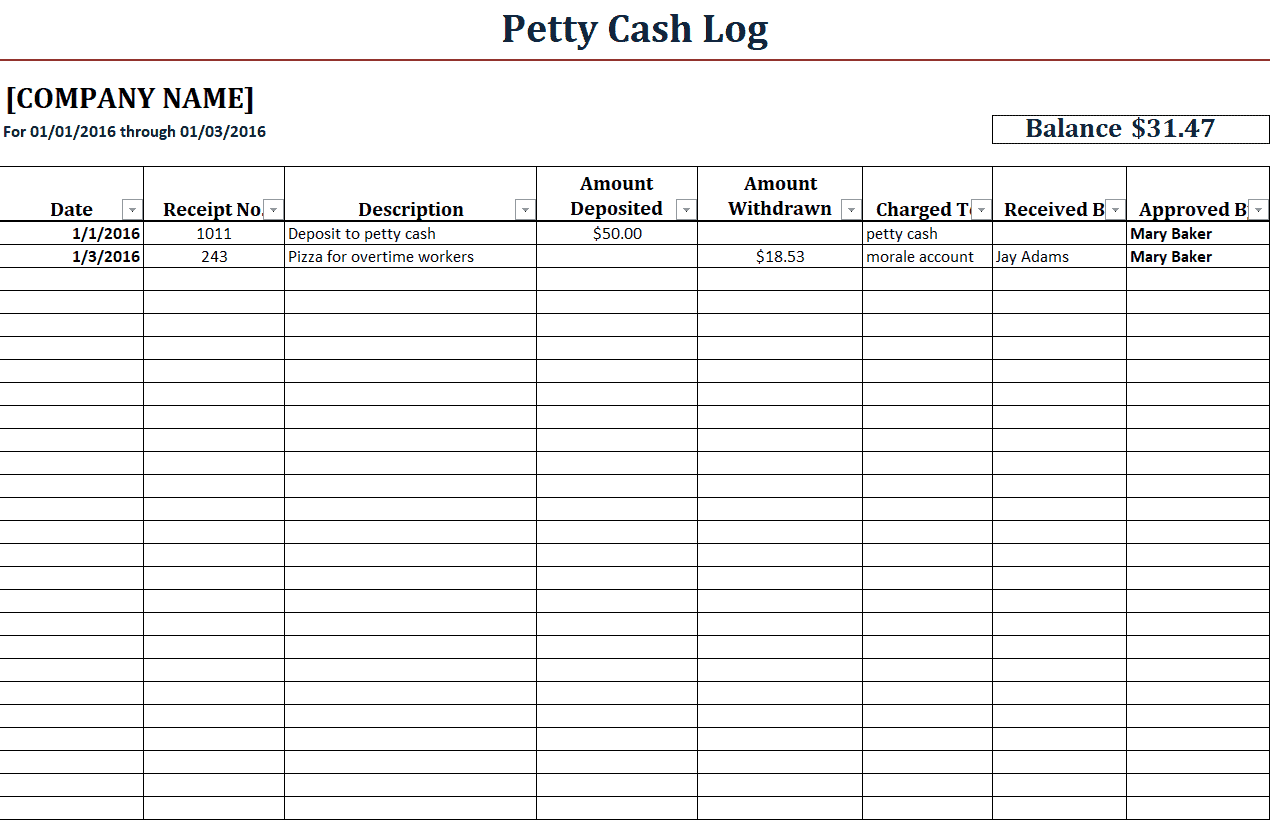
Office Petty Cash Log Template
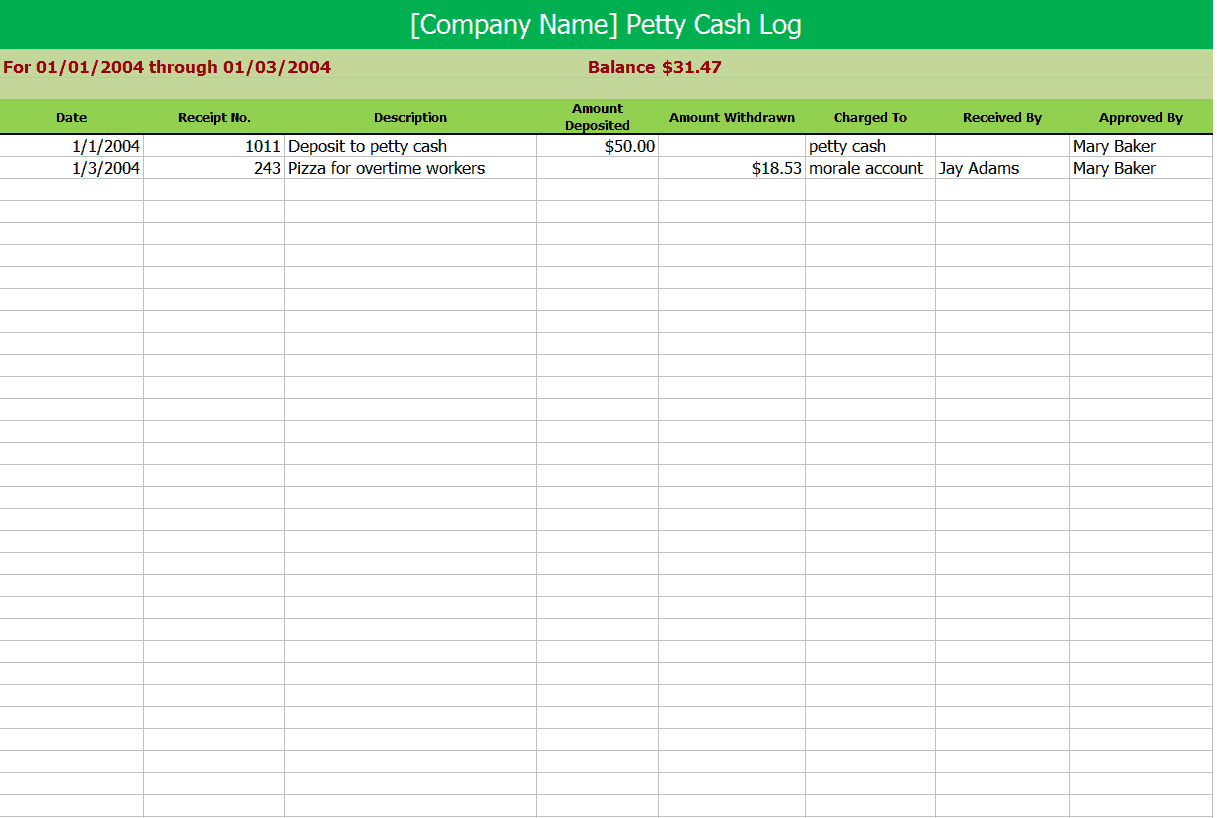
Petty Cash Record Sheet Template
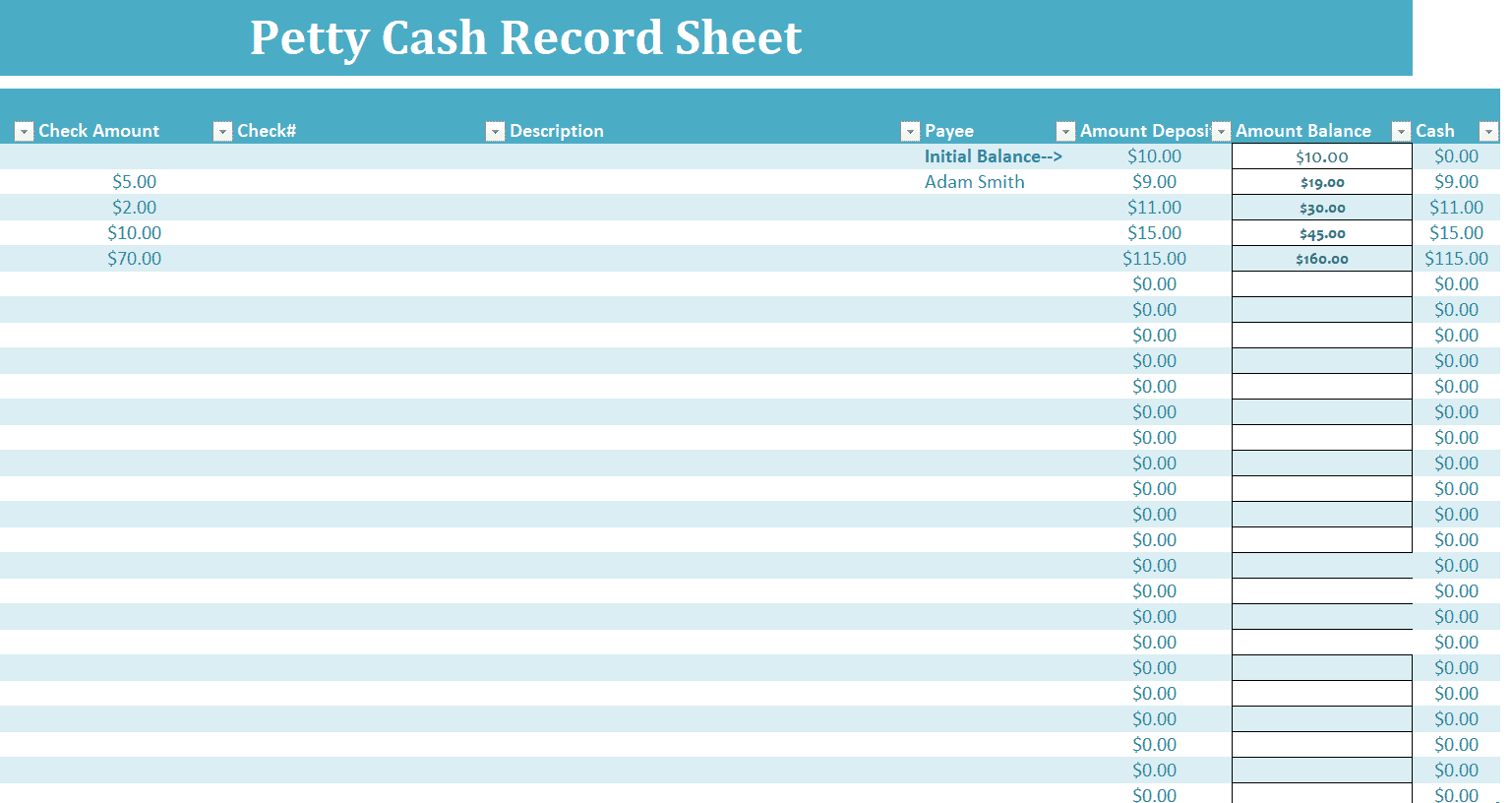
Simple Petty Cash Log Template
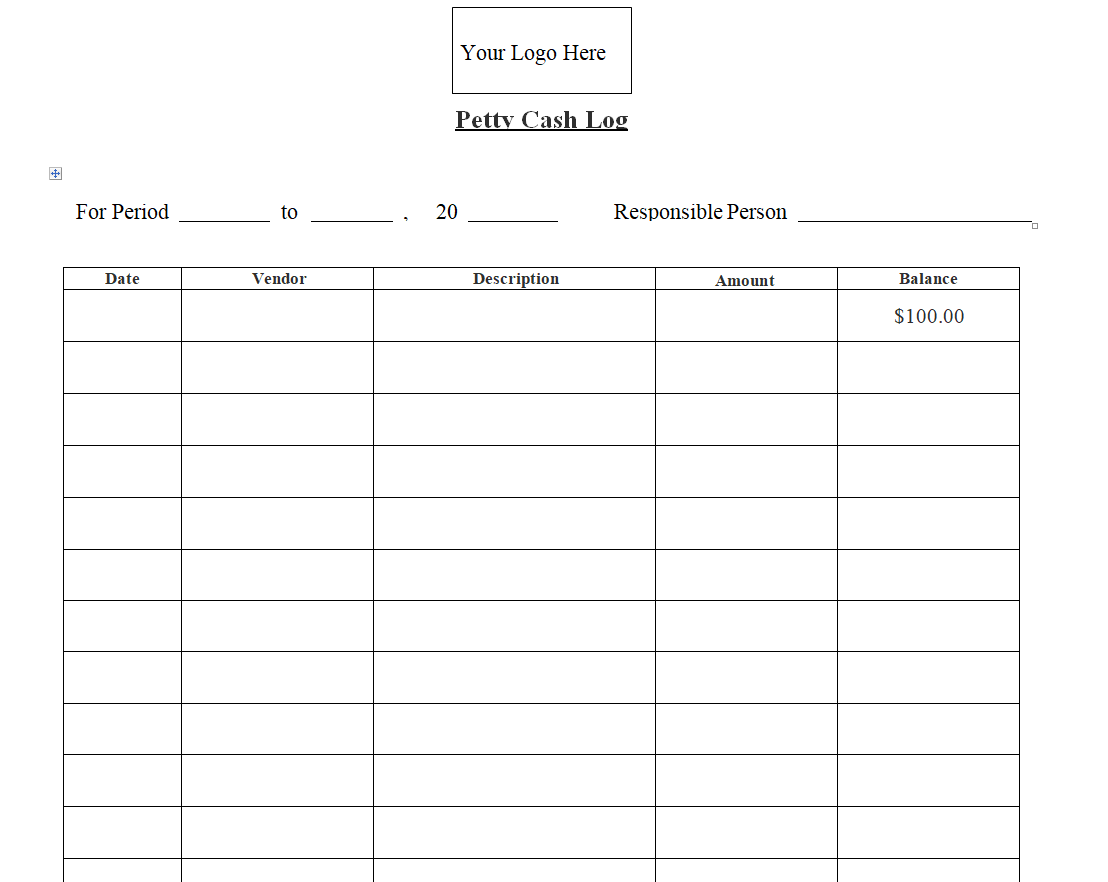
Petty Cash & Expenses Log Template
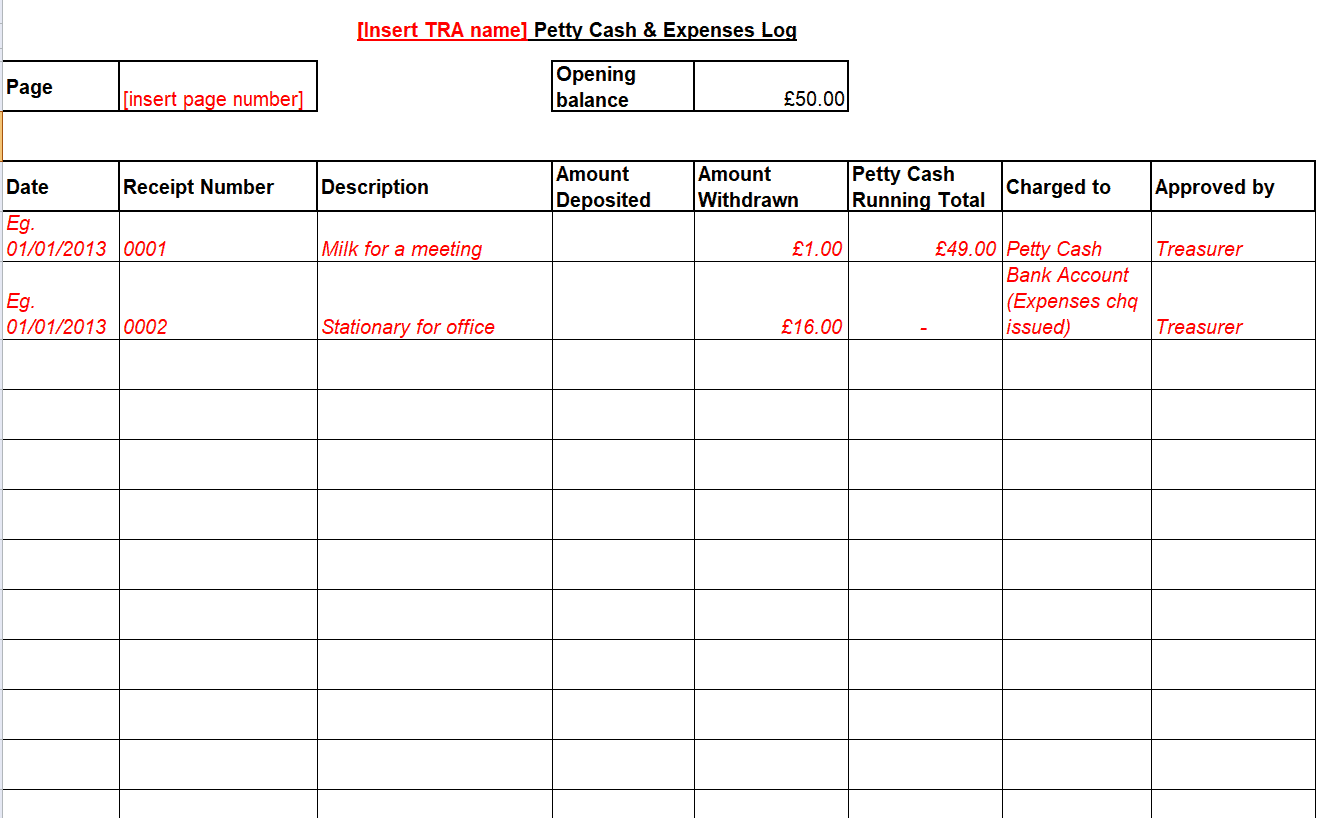
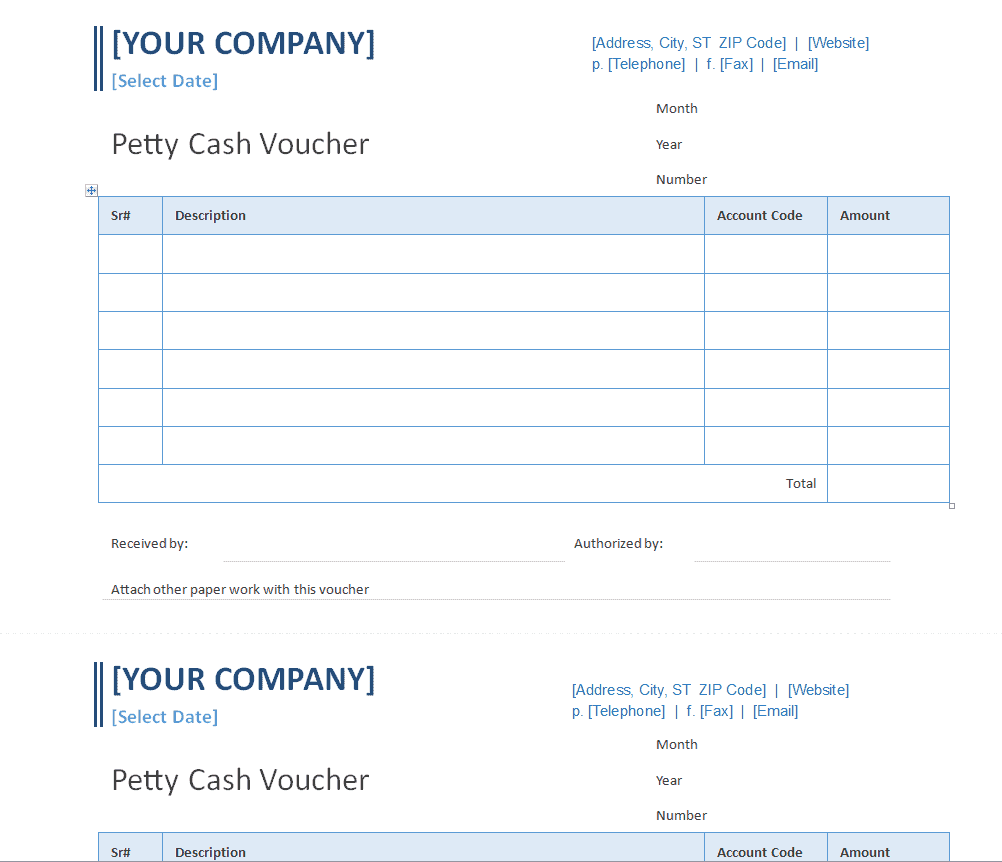
Sample Petty Cash Voucher Template
Petty Cash Log of Disbursements Template
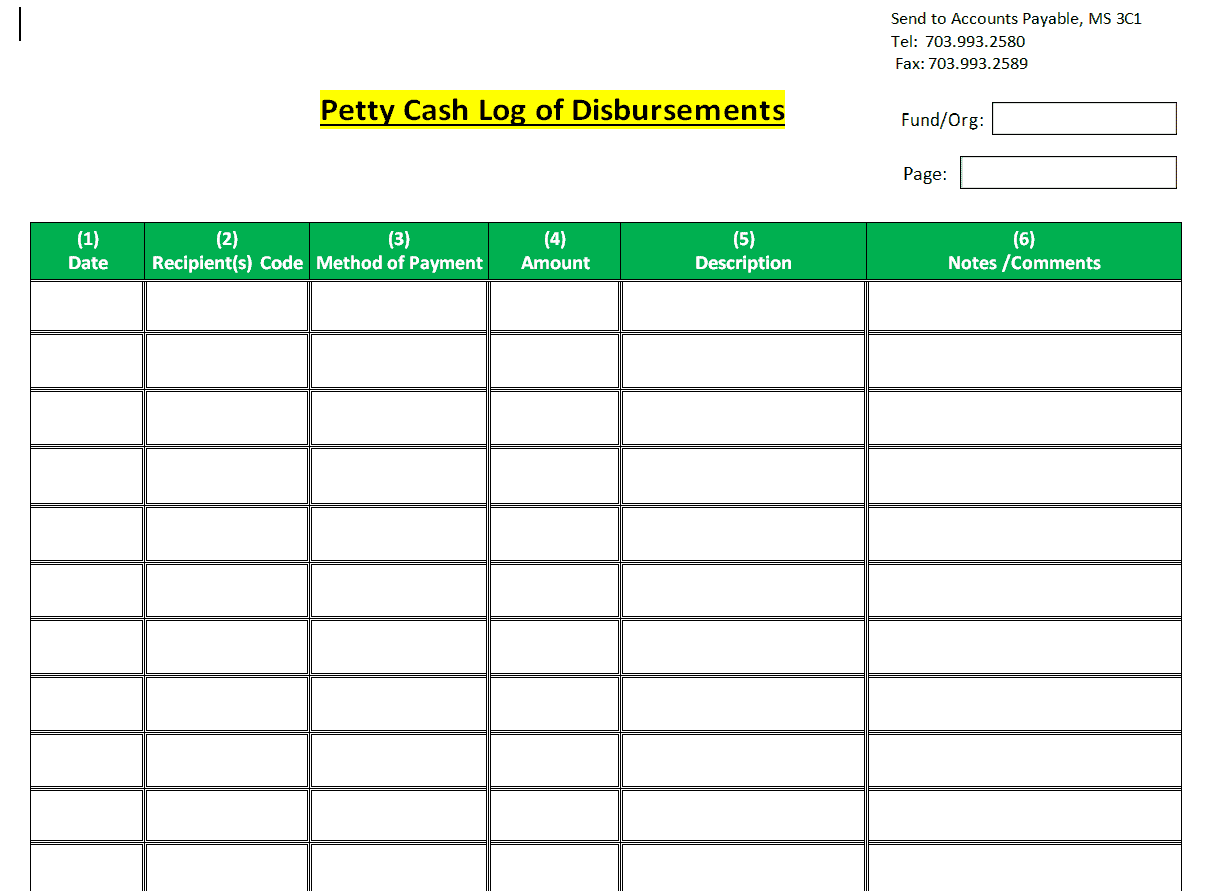
Basic Petty Cash Log Template
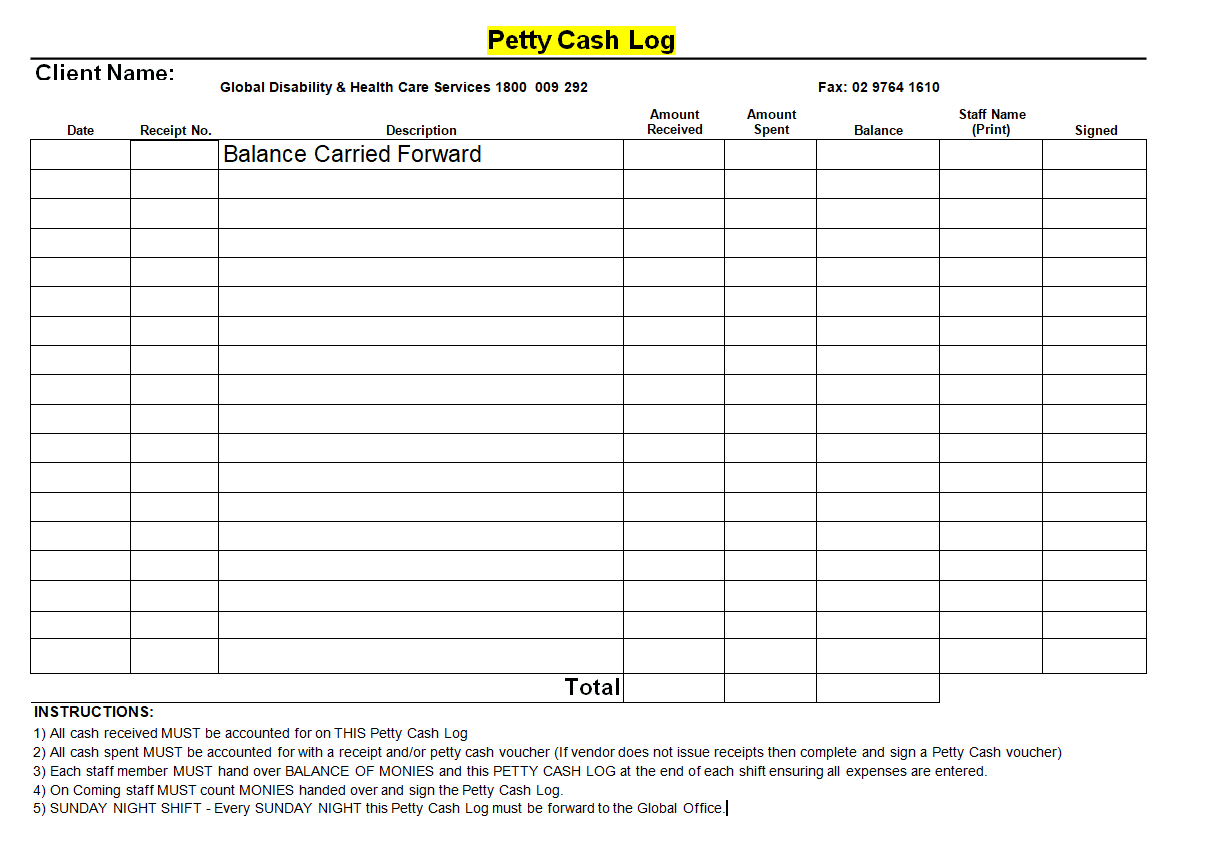
Petty Cash Fund Log Template
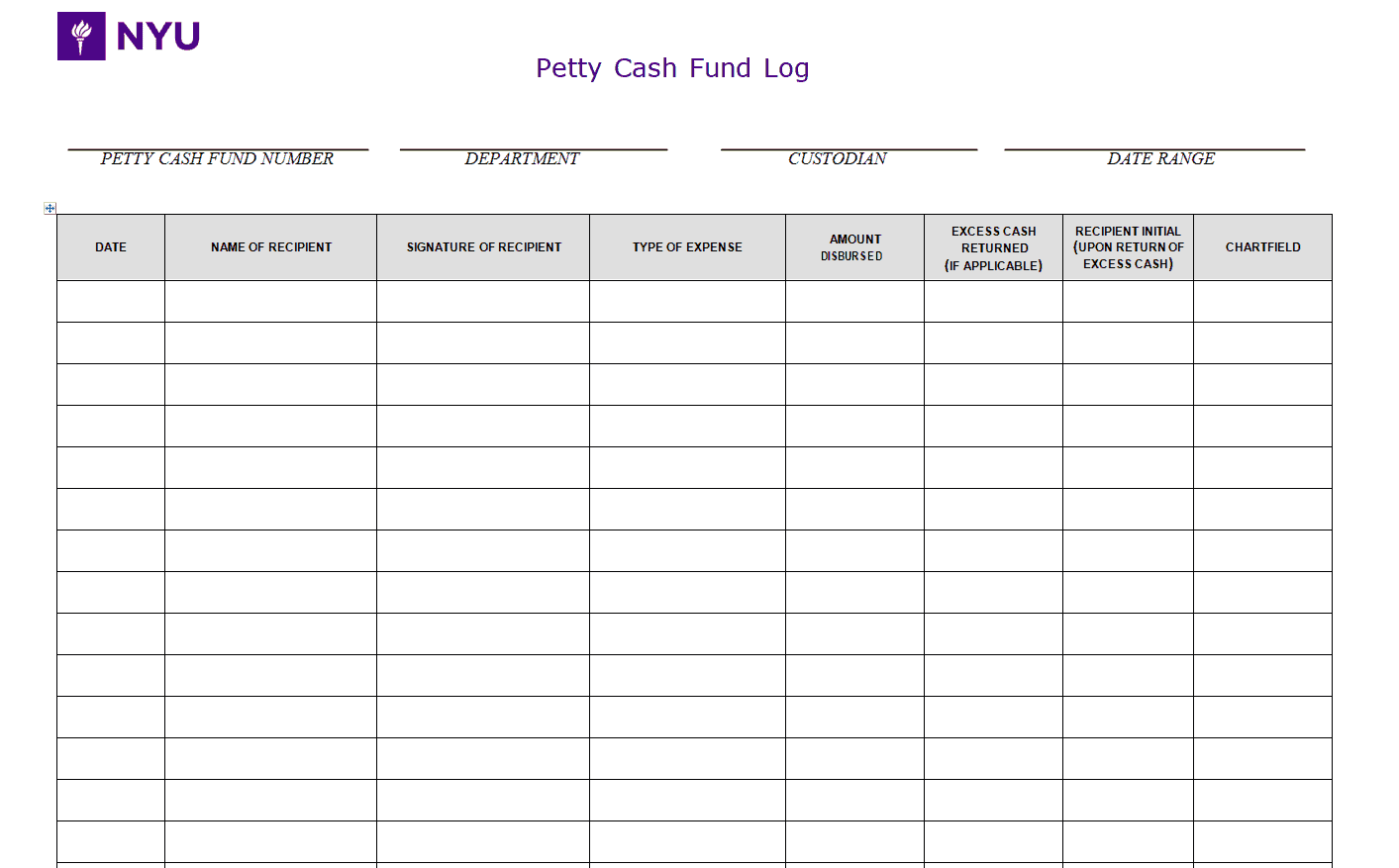
Petty cash is suitable only for purchases permitted by the organization’s policy. It should not become an informal substitute for normal purchasing, payroll, or expense approval. Define the fund’s purpose, custodian, transaction limits, and review arrangements before the first entry. A spreadsheet organizes the record, while the responsible people remain accountable for the cash and decisions.
Choose a layout that matches your fund
Choose between a transaction register, an expense summary, and a reconciliation sheet according to the task. A register records individual movements; a summary groups them; a reconciliation explains how cash and supporting documents relate to the authorized fund. Some resources combine these views, but a single attractive page may not provide all three.
Check the preview for enough space to record dates, references, explanations, amounts, and review details. For Excel resources, inspect the formulas in the actual file. For Word resources, decide how totals will be calculated and independently checked. Keep the original resource as a reference and create a working copy for the fund.
Establish the opening balance and responsibility
Record the fund name, reporting period, currency, authorized amount, and custodian. Start with a physical cash count and the supporting establishment or handover record. Do not use an unexplained opening figure merely because it makes the final balance look right.
Where an imprest arrangement is used, the fund has an authorized amount that is restored through replenishment. That amount differs from the cash physically remaining after purchases. Increasing the authorized fund is a separate decision from replacing money already spent. The log should make both movements understandable.
Record each payment with a reference
Use one line per cash movement. Include the date, voucher or receipt reference, payee, business purpose, category, amount, and appropriate authorization. A description such as postage for customer returns is more informative than miscellaneous. Keep enough detail to locate the evidence without copying unnecessary personal information into a shared sheet.
For supporting payment documentation, use payment voucher templates to organize the request and authorization. A voucher records the approved purpose; the log records the cash movement. Keep the references connected so a reviewer can follow the transaction without assuming that a signature alone proves settlement.
Keep cash in and cash out separate
Use separate receipt and payment columns, or a clearly explained sign convention. Replenishment, returned advances, purchases, and approved adjustments have different meanings. Label them so they can be reviewed correctly.
A running cash balance normally starts with the previous balance, adds cash received, and subtracts cash paid out. It represents the expected cash on hand based on recorded movements. Count the actual notes and coins separately. The two values should be compared, not forced to agree by overwriting the formula.
Handle advances and missing receipts explicitly
If policy permits a cash advance, record the person responsible, amount, purpose, date, and expected settlement. Keep it distinguishable from a completed purchase. When the recipient returns evidence and unused cash, connect the settlement to the original advance so neither the expense nor the returned money is counted twice.
For a missing receipt, follow the organization’s exception process. Record the issue and the review outcome rather than inventing a supplier document. Unsettled advances and unsupported spending should remain visible until resolved. They are not automatically equivalent to reviewed expense receipts.
Reconcile cash before requesting replenishment
Perform a physical count with a denomination breakdown where useful. Compare actual cash with the register’s expected balance, then connect the count to reviewed receipts and any separately identified unresolved items. Record who counted, who reviewed, and the date.
For a straightforward imprest fund with no unresolved advances or differences, remaining cash plus supported spending should equal the authorized fund. A discrepancy requires investigation. Check omitted transactions, duplicate entries, incorrect change, misplaced receipts, and arithmetic. Record the conclusion through the approved process instead of hiding the difference in a convenient expense category.
Worked example: a balanced fund
Suppose the authorized fund is 300 in one currency. During the period, approved purchases are 42 for office supplies, 18 for postage, and 25 for local delivery. Supported expenses total 85. A count finds 215 remaining, and 215 plus 85 equals 300.
If the approved replenishment is 85, receiving that amount restores physical cash to 300. The log records the replenishment separately from the purchases; it does not describe replenishment as new sales income. The supporting accounting treatment follows the organization’s system. If the count had found 213, the two-unit difference would require documented investigation.
Summarize expenses without double counting
Use categories that match the bookkeeping process and retain the underlying transaction detail. Grouping postage, supplies, and delivery can help reviewers understand the fund’s use. A category total should always be traceable to its individual entries.
Use accounting Excel templates for the wider bookkeeping record, with the petty cash summary as support. Agree how and when information is posted so the same purchase is not recorded once from a receipt and again from replenishment. Keep applicable accounting and tax treatment separate from the log’s simple cash arithmetic.
Review formulas and unusual entries
Check that a new row extends the running balance and summary formulas. Use a small hand-calculated example before relying on totals. Do not paste values over calculated cells, and avoid sorting only one column of a transaction table because it can disconnect amounts from their descriptions.
Investigate negative expected cash, repeated references, unusually large payments, and entries outside the reporting period. These are review signals, not automatic proof of wrongdoing. Ask for clarification and retain a record of the correction. Mark cancelled vouchers clearly so a gap in numbering remains explainable.
Protect the cash and record
Store the cash securely and limit access according to the organization’s process. Keep the custodian’s role clear and arrange review appropriate to the size and risk of the fund. A good spreadsheet cannot compensate for uncontrolled physical access or an undefined handover.
Protect receipts and personal details in the record. Share the information needed by the reviewer rather than circulating the entire workbook unnecessarily. Keep a backup and a dated reviewed copy. If several people edit the file, establish how changes are recorded and how conflicting versions are avoided.
Plan handovers and replenishment timing
At a custodian handover, count cash, list outstanding documents or advances, and record the agreed position. Both the outgoing and incoming responsible people should understand unresolved items. Do not transfer responsibility using only a verbal statement that the box is probably correct.
Review the fund before cash runs too low to meet permitted needs. Replenish through the authorized route and retain the reference. Use payment record templates to track the replenishment actually received, particularly when approval and payment occur on different dates. Approval alone should not increase the log’s cash-on-hand figure.
Use the previews and resources below
Compare the existing resources for register space, reconciliation fields, and the way they separate cash receipts from payments. Check the linked file’s actual format and permitted use before editing. A preview is useful for selecting a layout, but it does not confirm that every displayed field or formula suits your organization.
Adapt the chosen resource to your approved process and keep the petty cash reconciliation readable. Remove sample figures, identify the fund and period, and use clear units and currency. Print or export one completed example to check that references and review details remain legible.
Accounting reference
OpenStax explains the imprest approach, the relationship between cash and receipts, and replenishment entries in its petty cash accounting chapter. Use the underlying concepts with the accounting policies and review requirements applicable to your organization.
Importance of Petty Cash Log Template in Business
Petty cash is a dedicated amount of money to deal with small expenses such as stationery, delivery charges, posting fees, meeting meals and office cleaning expenses, etc. petty cash managers note down all transactions and details in petty cash log to make a professional-looking petty cash report in order to get reimbursement of petty cash expenses or more funds for the petty cash account. Business of all types uses petty cash logs in order to keep proper track of their tiny expenses. It keeps a company or business organization away from nonproductive costs.
Petty cash logs are also used in an imprest system where an employee of the business or company can get reimbursement of all petty expenses made during a particular period of time. If you also want to create a petty cash log for your business, company, or office, we recommend you to get assistance from this petty cash log template because it is loaded with all fundamental fields and forms to make and print petty cash logs on a personal computer. Go to the bottom of the page if you want to download the petty cash log template for free.
Frequently asked questions
What should a petty cash log contain?
Include the fund and period, currency, opening balance, dated movements, references, payees, purposes, amounts, and the information needed for review. Keep a separate physical count and reconciliation. The exact approval and evidence fields should follow the organization’s policy rather than an unrelated sample.
Is replenishment the same as an expense?
Replenishment restores cash that has already been used under the fund’s process. The underlying purchases explain the spending. Keep the replenishment movement and purchase records connected, and follow the accounting system’s posting procedure so the same cost is not recorded twice.
What if cash and receipts do not reconcile?
Investigate the difference before treating the record as complete. Check missing or duplicate movements, unsettled advances, arithmetic, and the physical count. Record the issue and approved resolution. Do not alter a receipt or invent an expense simply to make the total agree.
Can I use Word instead of Excel?
Yes, if the document supports the required entries and review. Word can provide a printable register, while Excel can calculate balances and category totals. Either format needs accurate evidence, a physical count, and a controlled update process; automatic formulas do not establish correctness.
How should a missing receipt be handled?
Use the organization’s exception procedure and keep the unsupported item visible for review. Identify the transaction and available evidence without fabricating a replacement supplier receipt. Record who reviewed it and how it was resolved, including any adjustment or follow-up required.
How often should the fund be reviewed?
Use the organization’s review schedule and review sooner when cash is low, responsibility changes, or a discrepancy appears. Choose a frequency appropriate to the fund’s use and controls. Retain the dated count, supporting records, and replenishment decision so the period can be explained later.
