
Keeping track of assignments, due dates, and study time becomes far easier with a homework schedule template already designed and ready to use. Instead of building a tracking system from scratch, a ready-made template gives you a clear, organized layout you can fill in with each assignment’s details in minutes. Below you’ll find 9 free, downloadable homework schedule templates in Word, PDF, and Excel formats, suitable for students of all ages and their parents.
What Is a Homework Schedule Template?
A homework schedule template is a pre-designed document used to organize and track assignments, due dates, and study time across a student’s academic workload. Rather than creating a tracking system from scratch, a ready-made template gives you a structured layout already built with fields for subjects, assignment details, and deadlines. These templates are used by students, parents, and teachers who need a clear, consistent way to keep homework organized and prevent missed deadlines.
Why You Need a Homework Schedule Template: Key Benefits
- Saves planning time: A ready-made layout means you can focus on completing homework instead of designing a tracker from scratch.
- Reduces missed deadlines: A clear visual layout makes it easy to spot upcoming due dates before they’re missed.
- Improves grades: Consistent homework tracking helps students stay on top of their academic responsibilities.
- Builds time management skills: Planning homework in advance helps students develop habits that carry into other areas of life.
- Easy to customize: Editable fields let you quickly adapt the schedule to a new week or changing course load.
- Free and reusable: Download once and reuse the same structure for every week or term.
What’s Included in the Homework Schedule Template
- Subject and assignment fields: Space to enter each homework task and the subject it belongs to.
- Due date column: A field for recording when each assignment is due.
- Estimated time column: Space to note how long each task is expected to take.
- Priority or status field: A field for marking urgency or completion status.
- Day or week layout: A grid structure for organizing homework by day or week.
- Notes section: An area for additional details or reminders about specific assignments.
Who Should Use These Templates?
- Elementary and middle school students building early homework organization habits.
- High school students juggling multiple subjects and extracurricular commitments.
- College students managing coursework across several classes.
- Parents helping younger children stay on top of assignments.
- Teachers providing students with a structured tool for homework planning.
- Homeschool educators organizing daily or weekly assignments for their students.
How to Start Using the Template in 3 Simple Steps
- Step 1 — Choose a template style: Browse the 9 options below and select the format that best fits your needs.
- Step 2 — Fill in your assignments: Add subjects, due dates, and estimated completion times.
- Step 3 — Review and update regularly: Check off completed tasks and add new assignments as they’re given.
Homework Schedule vs. Study Schedule
While both documents help students stay organized academically, a homework schedule and a study schedule serve somewhat different purposes. A homework schedule tracks specific assignments and their due dates, helping a student manage what needs to be turned in and when. A study schedule, by contrast, focuses on dedicated review and preparation time, often for exams or ongoing coursework, independent of specific assignment deadlines. Many students use both together: a homework schedule to manage assignments and a study schedule to build consistent review habits over time.
Customizing the Template for Your Needs
These templates are designed to be a flexible starting point rather than a fixed format. You can add subject-specific color coding, adjust the time slots to match your daily routine, or include additional fields for tracking materials needed for each assignment. Since the templates are provided in editable Word, PDF, and Excel formats, most adjustments take only a few minutes and let you tailor the schedule to fit your particular academic workload.
Choosing the Right Format
With 9 different templates available in Word, PDF, and Excel formats, choosing the right one depends on your needs and how you plan to use the schedule. Word templates work well for quick text edits, Excel templates are great for schedules that benefit from sorting or calculations, and PDF templates are ideal for a simple, print-ready format. Reviewing each option before committing to one can help you find the layout that best fits your planning style.
Common Mistakes to Avoid
- Underestimating time needed: Be realistic about how long each assignment will actually take.
- Not updating regularly: A schedule only helps if it’s kept current with new assignments.
- Overloading a single day: Spread out assignments when possible rather than saving everything for the last minute.
- Skipping priority ranking: Mark which assignments are most urgent so nothing important gets missed.
- Forgetting long-term projects: Break larger assignments into smaller tasks with their own deadlines.
Tips to Get the Most Out of Your Homework Schedule Template
- Fill in the schedule as soon as assignments are given rather than waiting until later.
- Color-code by subject to make the schedule easier to scan at a glance.
- Set aside a consistent homework time each day to build a routine.
- Check off completed tasks to stay motivated and track progress.
- Review the schedule with a parent or teacher if extra support is needed.
Helping Younger Students Build Homework Habits
For younger students who are just learning to manage homework independently, a simple, visual schedule can make a significant difference in building consistent habits early on. Parents who sit down with their child to fill out the schedule together, rather than simply handing over a blank form, help reinforce the process of breaking down assignments and estimating time needed. Over time, as students become more comfortable with the routine, they can gradually take on more responsibility for updating and following the schedule on their own.
Balancing Homework With Extracurricular Activities
Many students juggle homework alongside sports, clubs, and other extracurricular commitments, making a clear schedule especially valuable for avoiding last-minute scrambling. Blocking out extracurricular time on the same schedule as homework assignments gives a fuller picture of the day and helps identify realistic windows for getting work done. Students who plan around their full schedule, rather than treating homework and activities as separate, unrelated demands, tend to experience less stress balancing both.
Using the Schedule to Manage Long-Term Projects
Long-term projects and papers present a different challenge than daily homework, since their due dates are often weeks away, making it easy to underestimate the work involved. Breaking a large project into smaller milestones, each with its own entry on the homework schedule, helps prevent the common trap of leaving everything until the final days before the deadline. Students who build in buffer time before the actual due date also give themselves room to handle unexpected setbacks without falling behind.
Digital vs. Printed Homework Schedules
Whether a homework schedule works best in digital or printed form often comes down to personal preference and how a student tends to interact with their work. A printed schedule posted somewhere visible, like a bedroom wall or desk, offers a constant visual reminder that some students find more effective than a file they need to open on a device. Digital schedules, on the other hand, offer easier editing and the ability to set reminders, which can work well for students who are already comfortable managing tasks electronically.
Using the Schedule for Remote or Hybrid Learning
Remote and hybrid learning setups often blur the line between class time and homework time, making a dedicated schedule especially useful for keeping the two clearly separated. Without the natural structure of a full school day, it’s easy for assignments to pile up unnoticed until a deadline is suddenly close. Recording each assignment on the schedule as soon as it’s assigned, along with the platform or app it needs to be submitted through, helps prevent tasks from getting lost across multiple online classrooms. Students learning from home also benefit from blocking out specific homework windows on the schedule, which helps recreate some of the built-in structure a traditional school day would otherwise provide.
Involving Teachers in the Homework Planning Process
Sharing a completed homework schedule with a teacher, especially for students who struggle with organization or time management, can open the door to helpful feedback and early intervention. A teacher who sees a student consistently underestimating how long assignments take, or repeatedly leaving certain subjects until the last minute, is often in a good position to suggest adjustments before those patterns affect grades. Some teachers are also willing to clarify due dates or expectations directly on a shared schedule, reducing the chance of confusion about what’s actually required. Building this kind of communication into the homework planning process turns the schedule into more than a personal tool, making it a point of connection between home and classroom expectations.
Adjusting the Schedule During Exam Periods
Exam periods typically shift the balance of a student’s workload away from daily homework and toward review and test preparation, which usually calls for a temporary adjustment to the regular schedule. Blocking out extra review sessions in the days leading up to a major test, while still tracking any remaining daily assignments, keeps both priorities visible in one place rather than letting exam prep crowd out other responsibilities entirely. Many students find it useful to color-code or flag exam-related entries differently from regular homework, making it easier to see at a glance how much dedicated study time remains before test day. Returning to the standard schedule format once exams are finished helps re-establish the normal homework routine without much disruption.
Download Homework Schedule Templates for Free
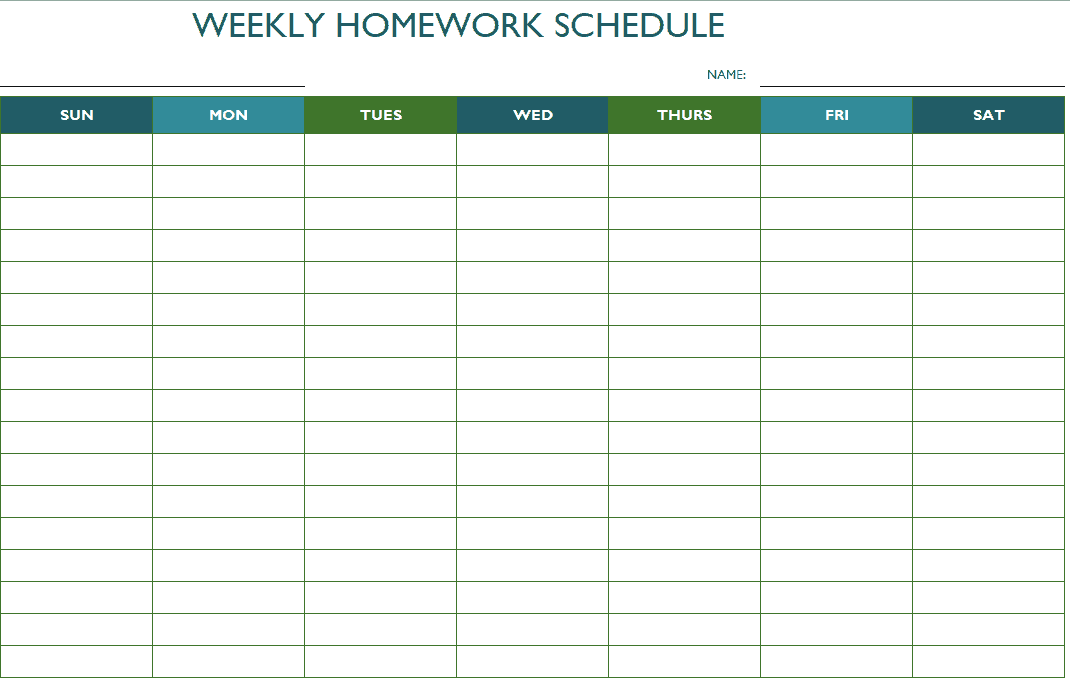
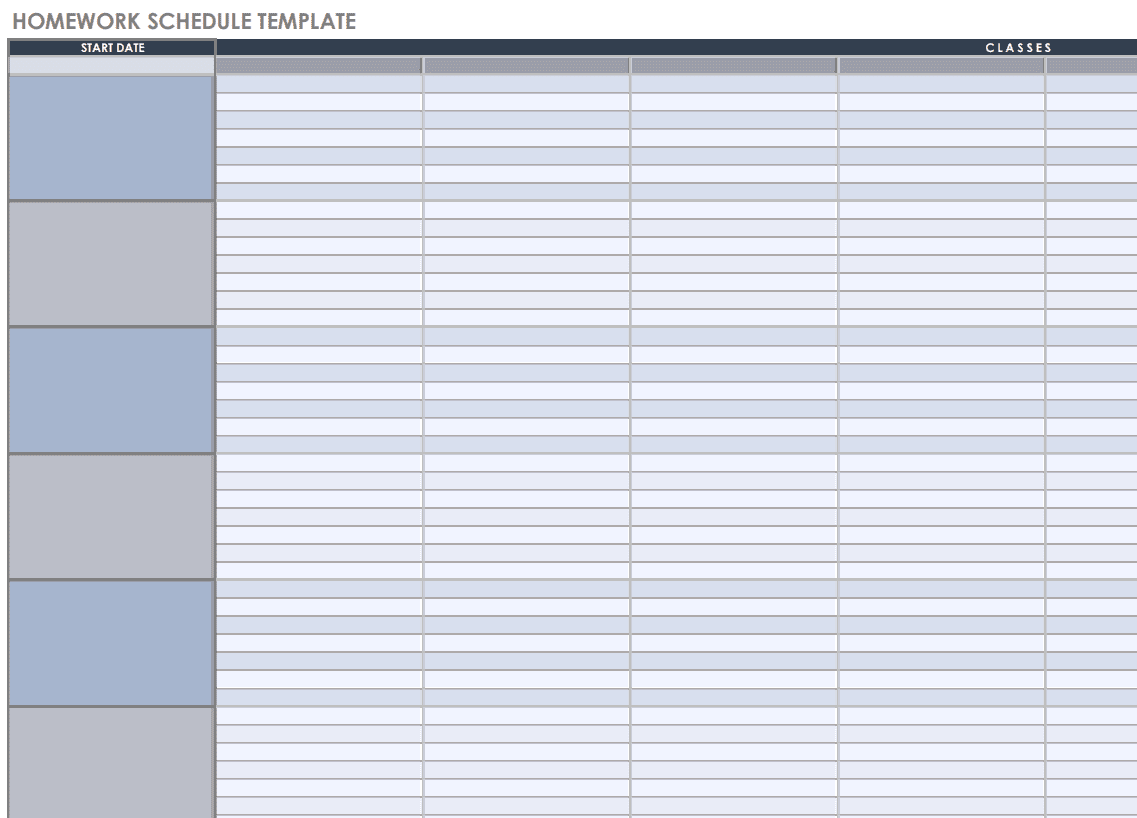
Blank Weekly Homework Schedule Template Excel
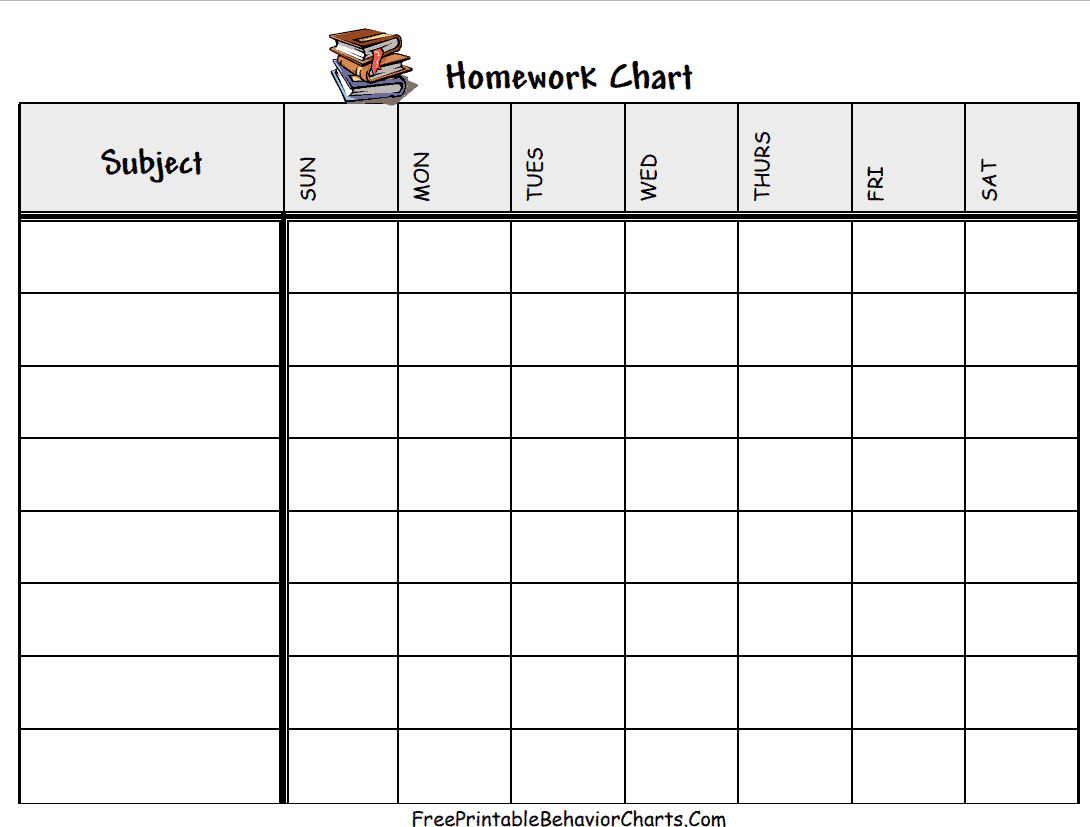
Simple Homework Chart Template PDF
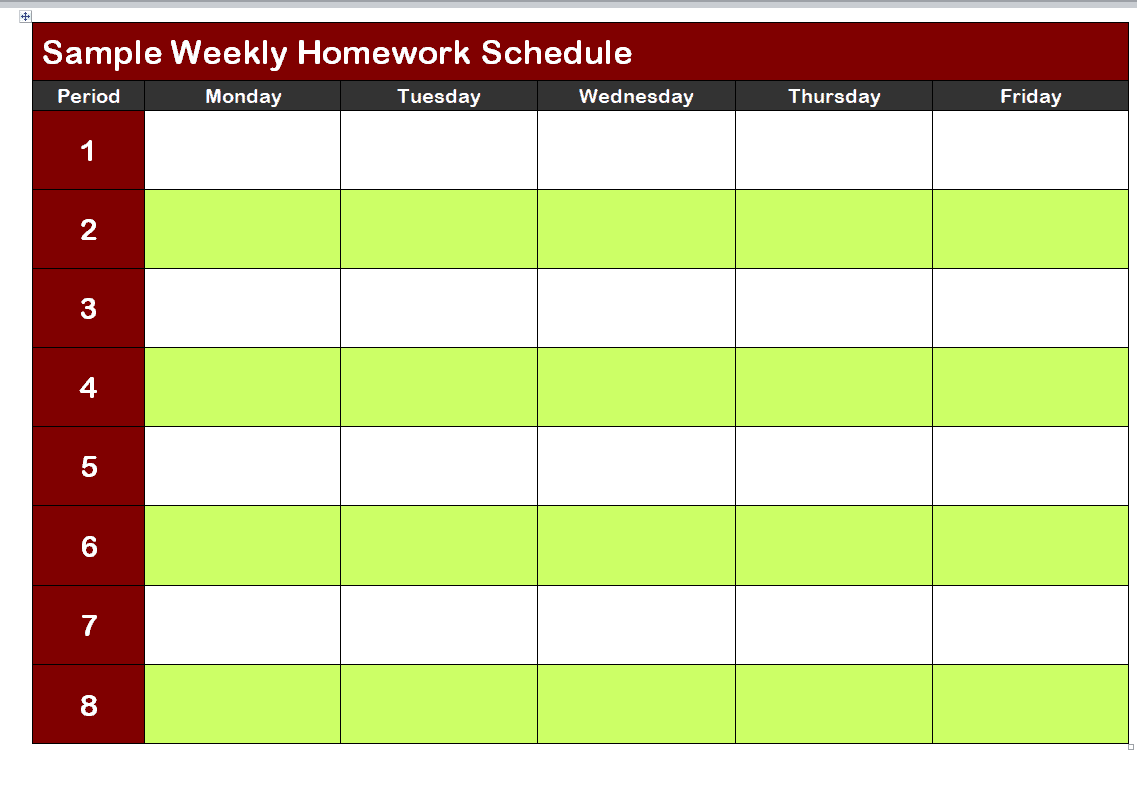
Sample Weekly Homework Schedule Template Word
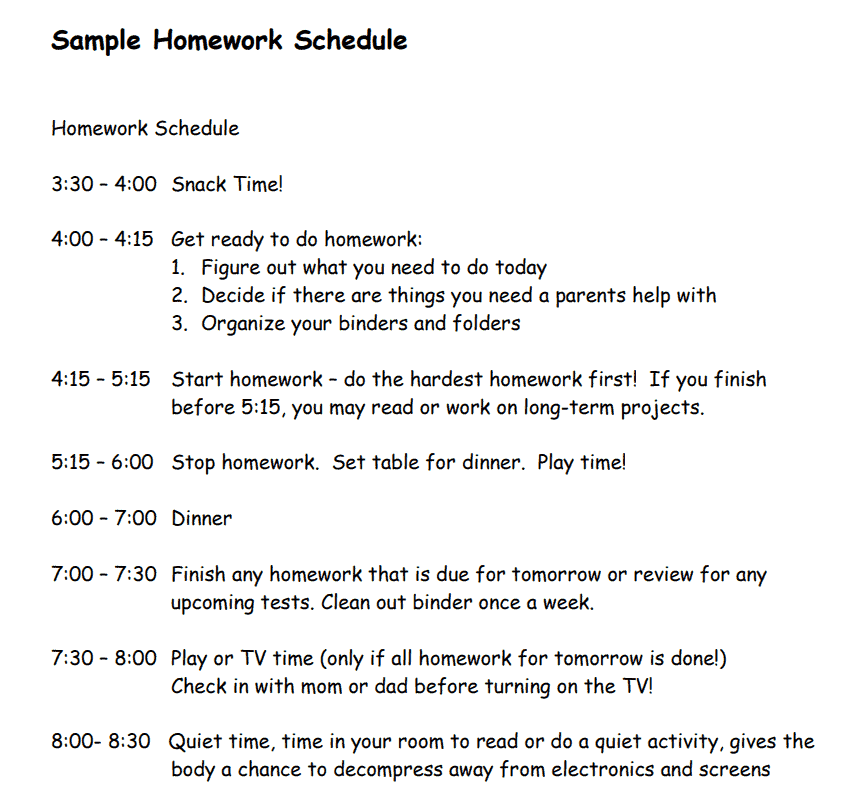
Printable Homework Schedule Template
Detailed Homework Schedule Excel Template
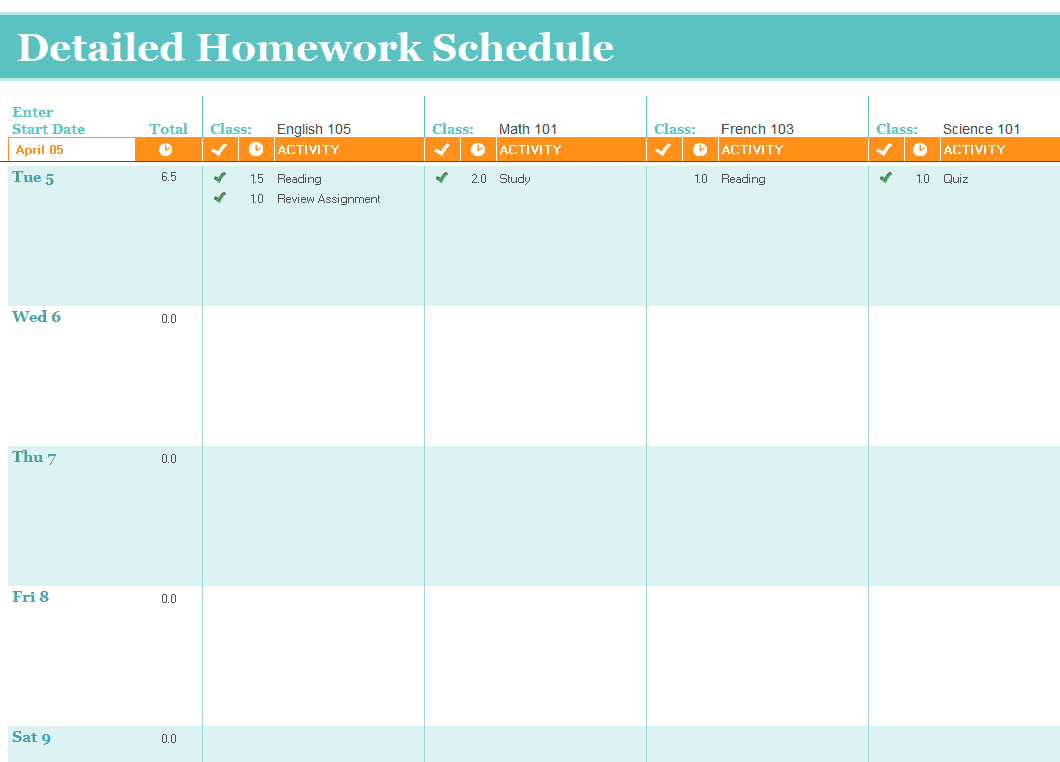
Standard Homework Schedule Word Template
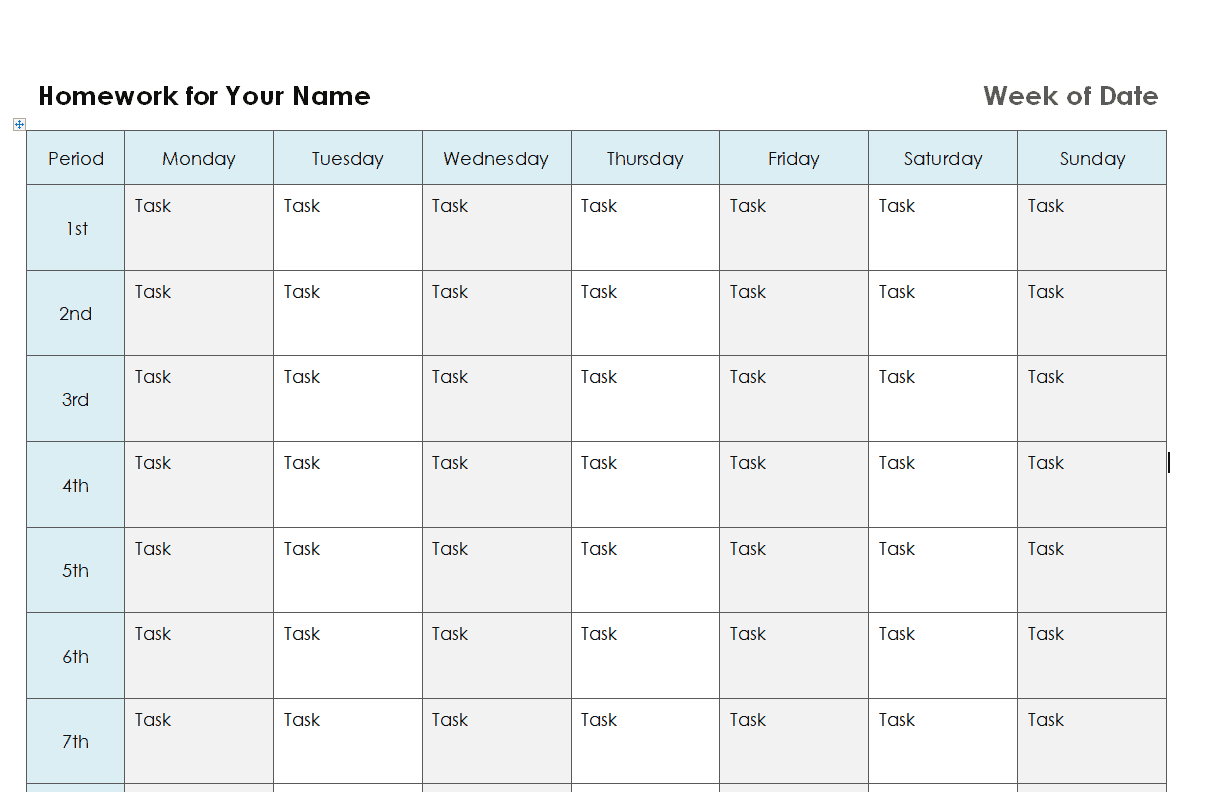
Personal Homework Chart PDF Template
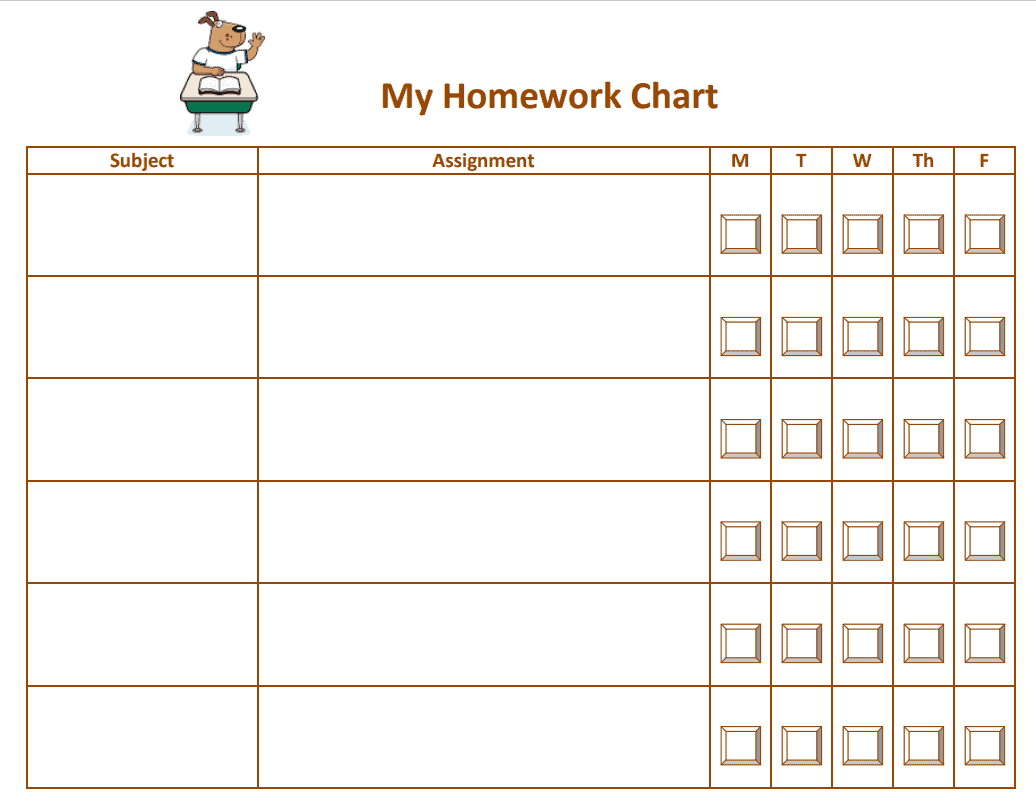
Example Homework Schedule Template DOC Format
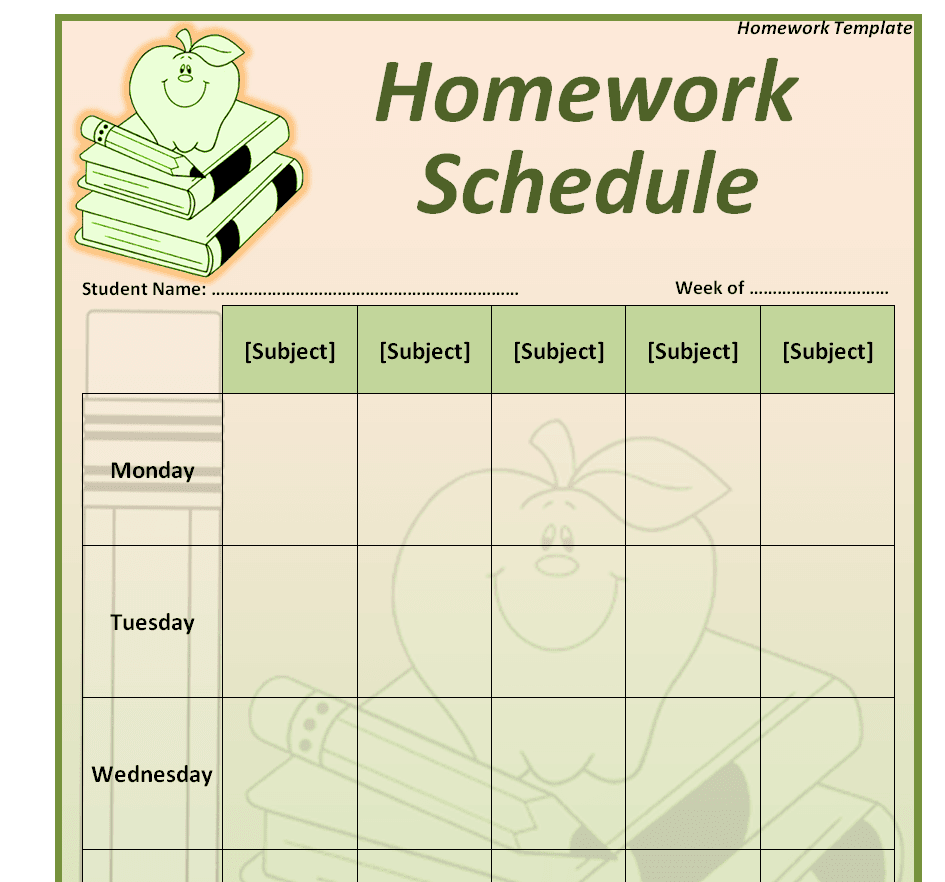
Online Homework Schedule Maker Template
Frequently Asked Questions
Are these homework schedule templates free to download?
Yes, all 9 homework schedule templates on this page are free to download and use.
What file formats are these templates available in?
These templates are available in Word, PDF, and Excel formats, so you can choose whichever is easiest to edit.
Can I customize the fields on these templates?
Yes, since the templates are fully editable, you can add subjects, adjust time slots, and include extra notes fields as needed.
What’s the difference between a homework schedule and a study schedule?
A homework schedule tracks specific assignments and due dates, while a study schedule focuses on dedicated review time for exams or ongoing coursework.
Are these templates suitable for younger students?
Yes, the templates work well for elementary through college-level students, and parents can help younger children fill them in.
Can teachers use these templates in the classroom?
Yes, teachers can distribute these templates to students as a structured tool for homework planning and organization.
How often should I update the homework schedule?
It’s best to update the schedule as soon as new assignments are given, rather than waiting until the end of the week.

You must be logged in to post a comment.