
Planning any event, whether it’s a wedding, corporate conference, birthday party, or community fundraiser, comes with one universal challenge: keeping spending under control. An event budget template takes the guesswork out of financial planning by giving you a structured, pre-formatted document to track every expense category from venue rental to decorations. Below you’ll find fifteen free, downloadable event budget templates in Excel, PDF, and Word formats, ranging from simple one-page trackers to detailed workbooks with built-in graphs, so you can find the right fit for any event size or budget.
Budget an event with committed and estimated costs separated
An event budget needs a clear distinction between quoted, contracted and actual spending. Group venue, catering, equipment, labour, promotion and contingency separately so changes in attendance can be assessed.
- Prevents overspending: A clear breakdown of costs helps you catch potential overruns before they happen.
- Saves planning time: A ready-made structure means you don’t have to build a tracking system from scratch.
- Improves organization: Every expense category is accounted for in one place, reducing the chance of forgotten costs.
- Supports better decision-making: Seeing your numbers clearly makes it easier to prioritize where to spend and where to cut back.
- Useful for any event size: From intimate gatherings to large corporate functions, these templates scale to fit the occasion.
- Provides a record for future events: A completed budget serves as a helpful reference when planning similar events later.
Worked example: For 120 guests at $35 per meal, catering alone is $4,200 before service fees and tax. If the guest count rises to 140, the comparable meal estimate becomes $4,900, leaving less contingency.
Check before use: Enter deposit due dates and cancellation terms alongside costs. Avoid double-counting inclusive service fees, and check whether automatic totals in the spreadsheet include every category.
For related resources, see 15+ Customizable Event Program Templates WORD and Download 13 BEST Expense Report Templates for FREE [EXCEL & WORD].
What’s Included in the Event Budget Template
- Expense category list: Pre-built rows for common costs like venue, catering, decor, and entertainment.
- Estimated vs. actual columns: Space to compare planned spending against what you actually spend.
- Total budget summary: An overview section showing total planned costs versus available funds.
- Vendor and payment tracking: Fields to note vendor names, contact details, and payment status.
- Notes section: Room to jot down details about specific line items or reminders.
- Editable formatting: A layout you can adjust to match your specific event’s needs.
Who Should Use These Templates?
- Event planners managing budgets for clients across weddings, parties, and corporate functions.
- Individuals organizing a personal celebration like a birthday, anniversary, or graduation party.
- Small business owners planning product launches, open houses, or promotional events.
- Nonprofit organizations tracking spending for fundraisers and community events.
- Corporate teams organizing conferences, meetings, or company celebrations.
- Wedding planners and couples managing one of the most expense-heavy events most people ever plan.
How to Start Using the Template in 3 Simple Steps
- Step 1 — Choose a template style: Browse the fifteen options below and pick the one that fits your event and preferred file format.
- Step 2 — List your expense categories: Fill in the anticipated costs for each area of your event, from venue to favors.
- Step 3 — Track and adjust: Update the actual spending as you go and compare it against your estimates to stay on target.
Event Budget vs. General Project Budget
While an event budget and a general project budget share the same basic goal of tracking planned spending against actual costs, they differ in structure and focus. A project budget often spans months or years and includes categories like labor hours, materials, and overhead tied to long-term deliverables. An event budget, by contrast, is typically time-boxed to a single date and centers on categories unique to gatherings, such as catering, venue rental, entertainment, and decor. Because event costs tend to be finalized closer to the event date, an event budget template usually includes more detailed vendor and payment tracking than a typical project budget would.
Customizing the Template for Your Event
These templates are designed as a flexible starting point rather than a rigid form. You might add or remove expense categories based on your event type, insert a column for a second currency if you’re working with international vendors, or add a tab for tracking guest count against per-person costs like catering. Since most templates are provided in editable Excel or Word format, these kinds of adjustments take just a few minutes and let you tailor the document to match exactly how you plan and track your event.
Choosing the Right Format
With fifteen different templates available in Excel, Word, and PDF, choosing the right one depends on how you plan to use it. Excel templates are ideal if you want built-in formulas that automatically calculate totals and differences between estimated and actual costs, making them the best choice for larger or more complex events. Word templates work well for a simpler, more visual layout that’s easy to print and reference during planning meetings. PDF versions are useful when you need a fixed, non-editable format for sharing final budget figures with clients, stakeholders, or event committees.
Common Mistakes to Avoid
- Underestimating costs: Always build in a buffer for unexpected expenses, which are common in event planning.
- Forgetting hidden fees: Service charges, taxes, and gratuities can add up quickly if not accounted for upfront.
- Not tracking actual spending: A budget is only useful if you update it regularly as expenses are paid.
- Ignoring vendor deposits: Failing to track deposit deadlines can lead to lost bookings or late fees.
- Skipping a final review: Always compare your final actual spending to your original estimate to learn for next time.
Tips to Get the Most Out of Your Event Budget Template
- Set a realistic total budget first before allocating funds to individual categories.
- Prioritize your must-have expenses so you know where to cut back if needed.
- Update the template regularly rather than waiting until after the event to record actual costs.
- Keep vendor contracts and receipts alongside your budget for easy reference and reconciliation.
- Review past event budgets before planning a similar event to spot patterns in overspending.
Breaking Down Common Event Expense Categories
Most events share a similar set of core expense categories, even though the specific amounts vary widely by event type and scale. Venue rental is often the single largest expense, followed by catering and beverages, which can vary dramatically depending on guest count and menu choices. Entertainment, whether a DJ, live band, or speaker fees, typically comes next, along with decor and floral arrangements. Don’t overlook smaller but easily forgotten categories like signage, photography, staffing, insurance, and permits, all of which can add up significantly if left out of the initial budget.
Budgeting for Corporate Events vs. Personal Celebrations
Corporate events and personal celebrations often call for different budgeting priorities. A corporate event, such as a conference or product launch, typically needs line items for things like AV equipment, branded materials, speaker fees, and staffing, and often requires more formal expense approval and reporting for accounting purposes. A personal celebration, like a birthday or anniversary party, usually focuses more heavily on food, decor, and entertainment, with a more flexible approach to tracking since there’s typically no need for formal financial reporting. Understanding which category your event falls into helps you choose a template structure that matches your actual planning needs.
Using Your Budget to Negotiate with Vendors
A well-organized event budget isn’t just useful for tracking spending, it can also be a powerful tool when negotiating with vendors. Walking into a conversation with a caterer or venue manager knowing exactly what you can afford for that category puts you in a stronger position to ask for package deals, discounts, or alternative options that fit your budget. Some planners find it helpful to set a target price slightly below their actual maximum for each category, giving themselves negotiating room while still staying within their overall budget once contracts are finalized.
Planning for the Unexpected: Building a Contingency Fund
Even the most carefully planned events can run into unexpected costs, from last-minute vendor changes to weather-related adjustments for outdoor events. Experienced event planners typically recommend setting aside 10 to 15 percent of your total budget as a contingency fund specifically for these surprises. Building this buffer into your event budget template from the start, rather than treating it as an afterthought, helps ensure that an unplanned expense doesn’t derail your entire event or force you to make last-minute cuts to categories that matter most to you.
Tracking Payments and Deposits Over Time
Event expenses rarely all come due at once. Many vendors require a deposit to secure a booking months in advance, with the remaining balance due closer to the event date or even on the day itself. A good event budget template should let you track not just the total cost per category but also payment status, including deposit amounts paid, remaining balances, and due dates. This kind of detailed payment tracking helps you avoid the stress of multiple bills arriving at once and gives you a clearer picture of your cash flow leading up to the event, rather than just a single lump-sum total.
Using Past Budgets to Improve Future Planning
One of the most underused benefits of a completed event budget is what it can teach you for next time. After the event wraps up, take time to compare your final actual spending against your original estimates for each category. Categories where you consistently overspend, such as catering or decor, might need a larger allocation in future budgets, while areas where you underspend could allow for reallocation elsewhere. Keeping a simple archive of past event budgets, whether for annual company events or recurring personal celebrations, turns each event into a learning opportunity that makes your next budget more accurate and realistic from the start.
Get Event Budget Templates Here
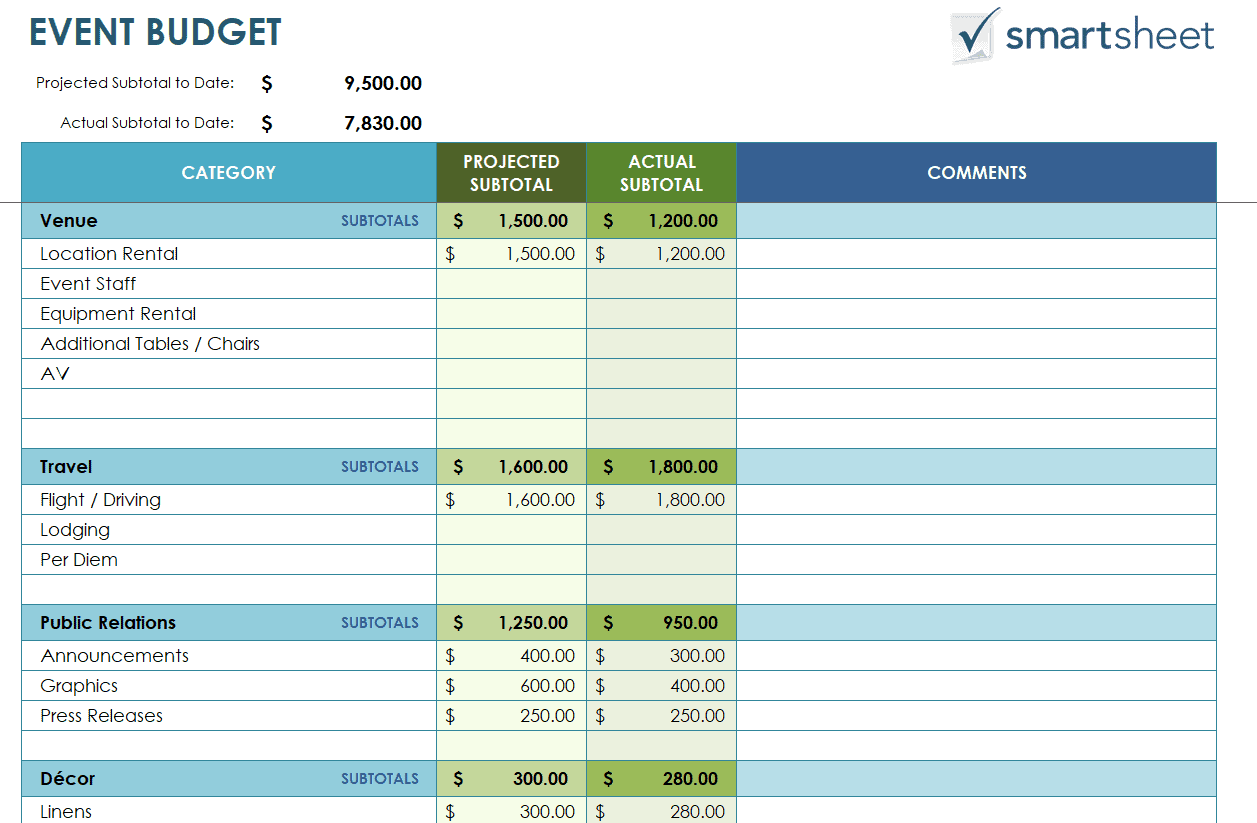
Sample Event Budget Template
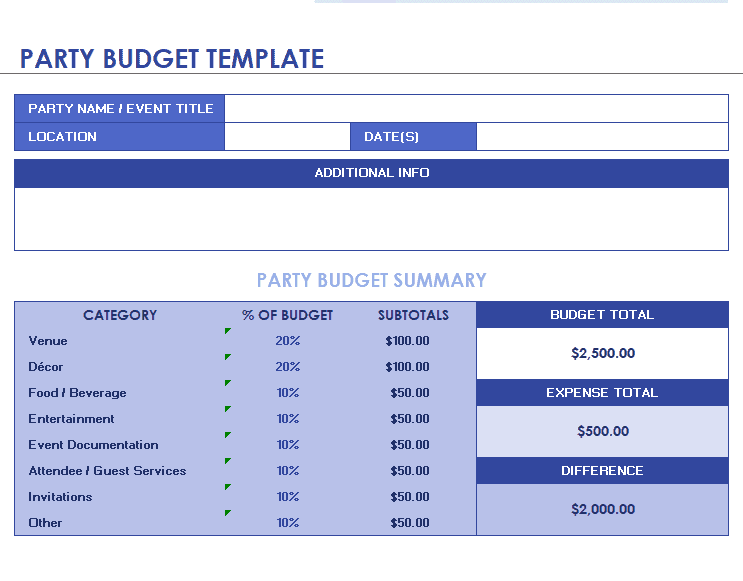
Party Budget Template
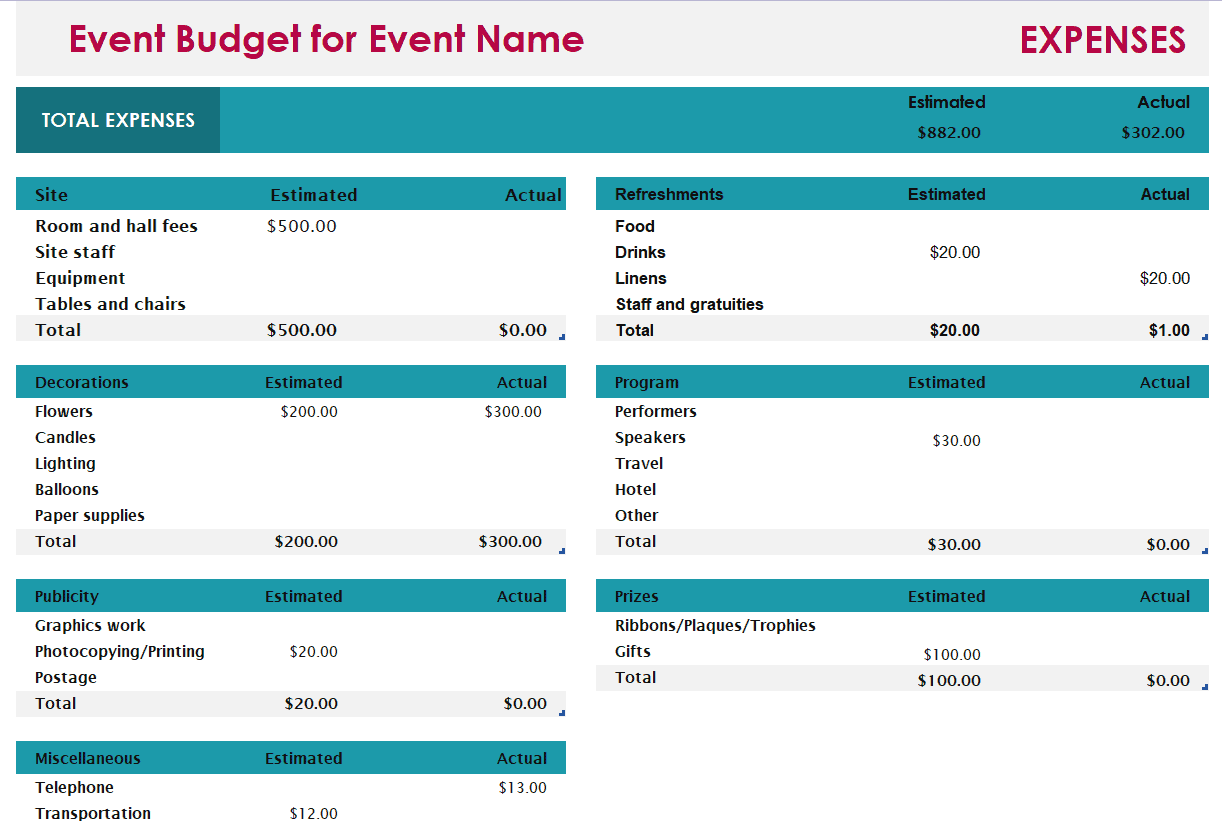
Detailed Event Budget Template
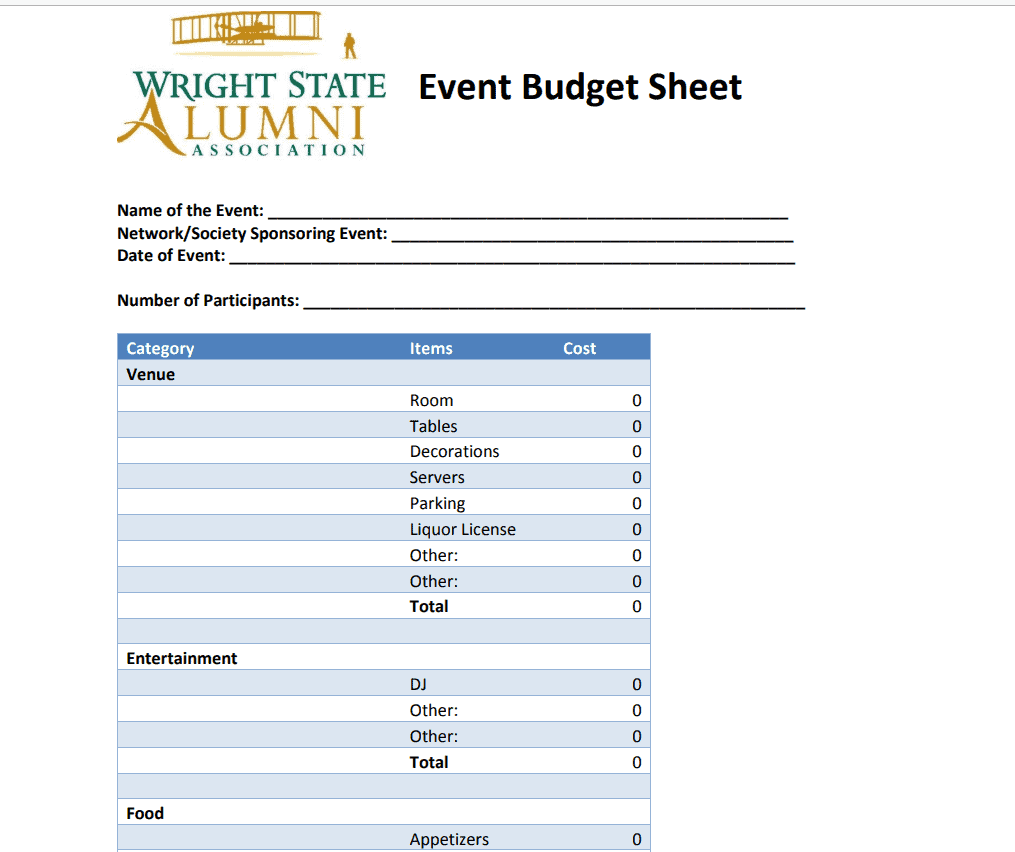
Event Budget Sheet Template PDF
Event Budget Report Template
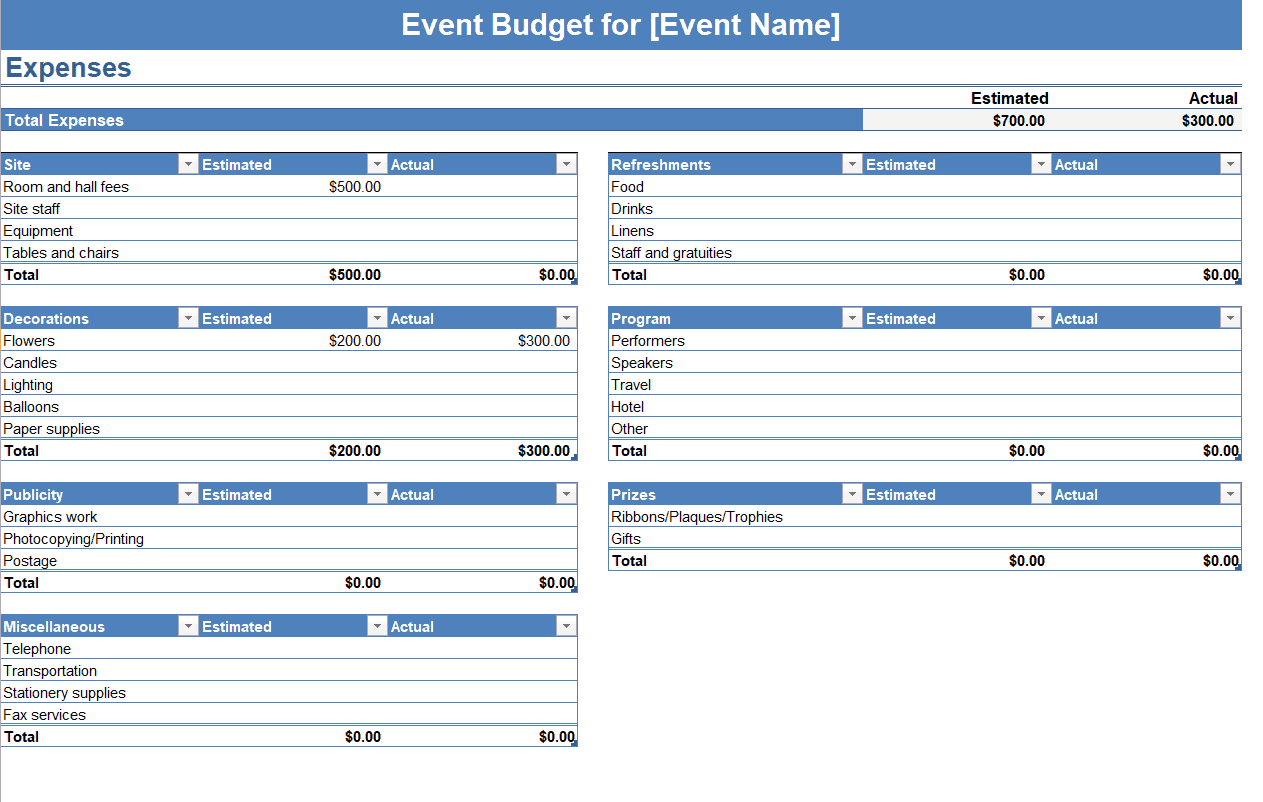
Event Budget Workbook Template
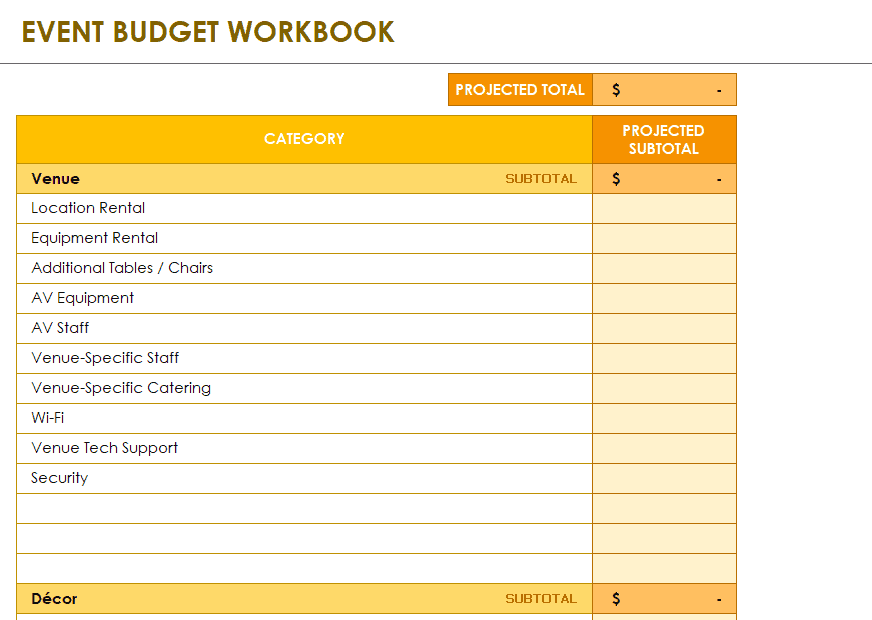
Sample Business Event Budget Template
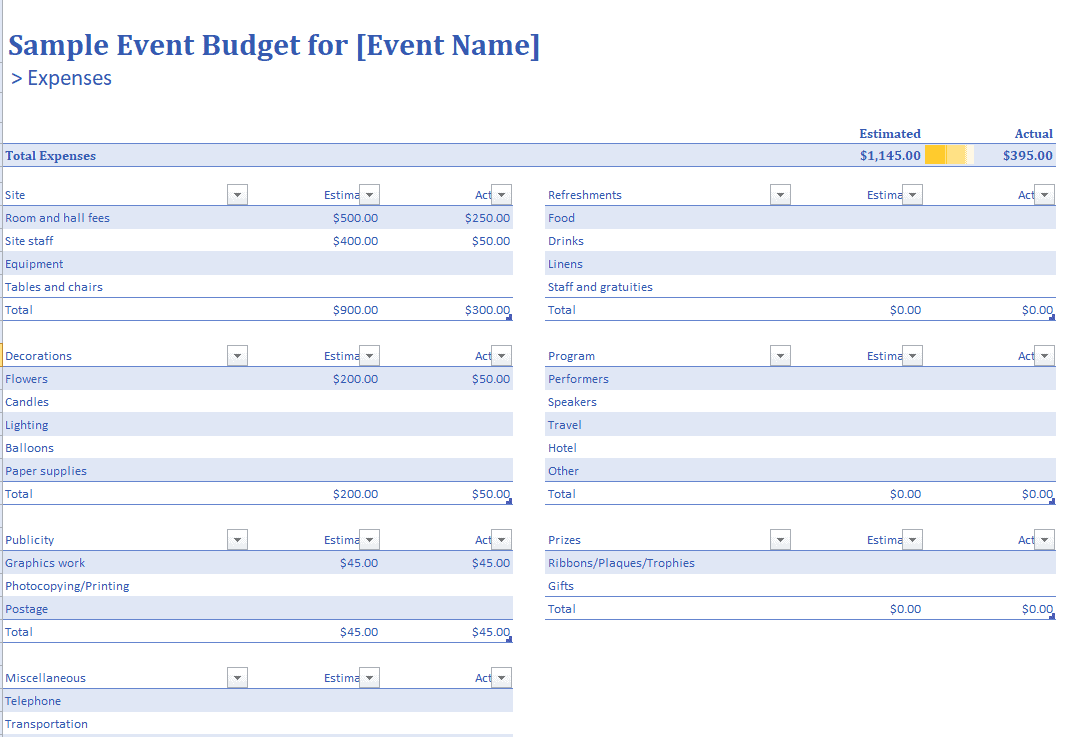
Example Event Budget Template MS WORD
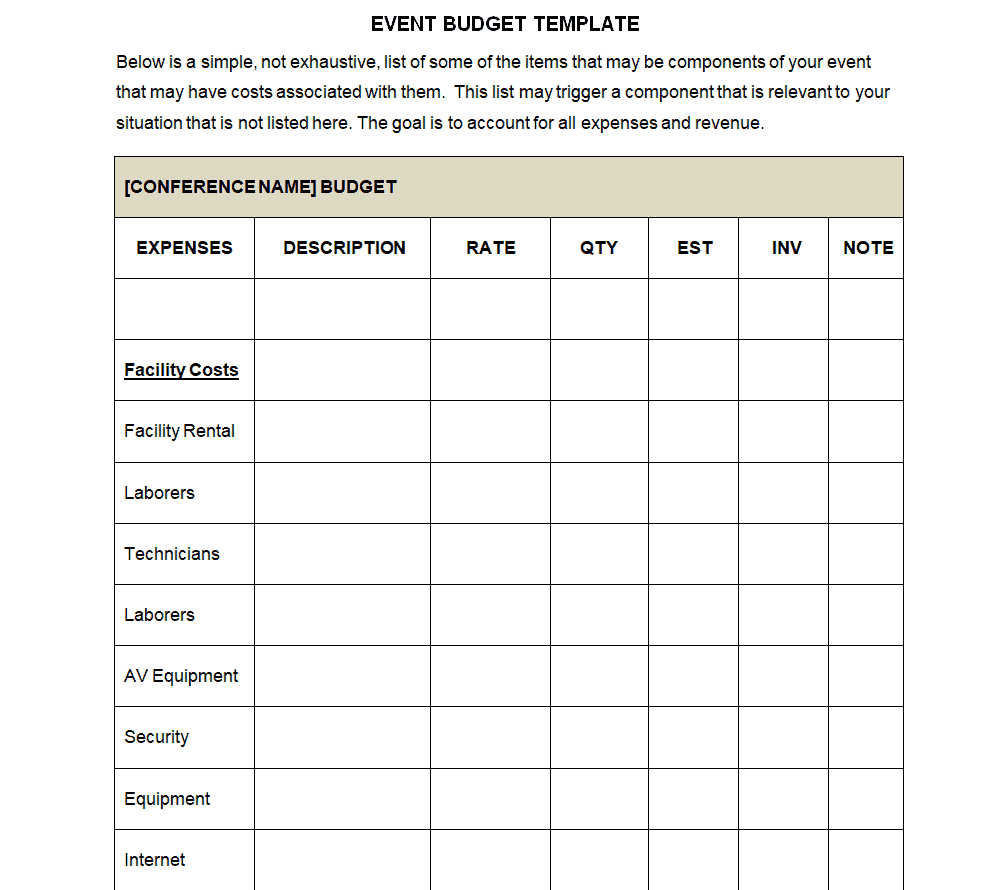
Blank Printable Event Budget Workbook Template
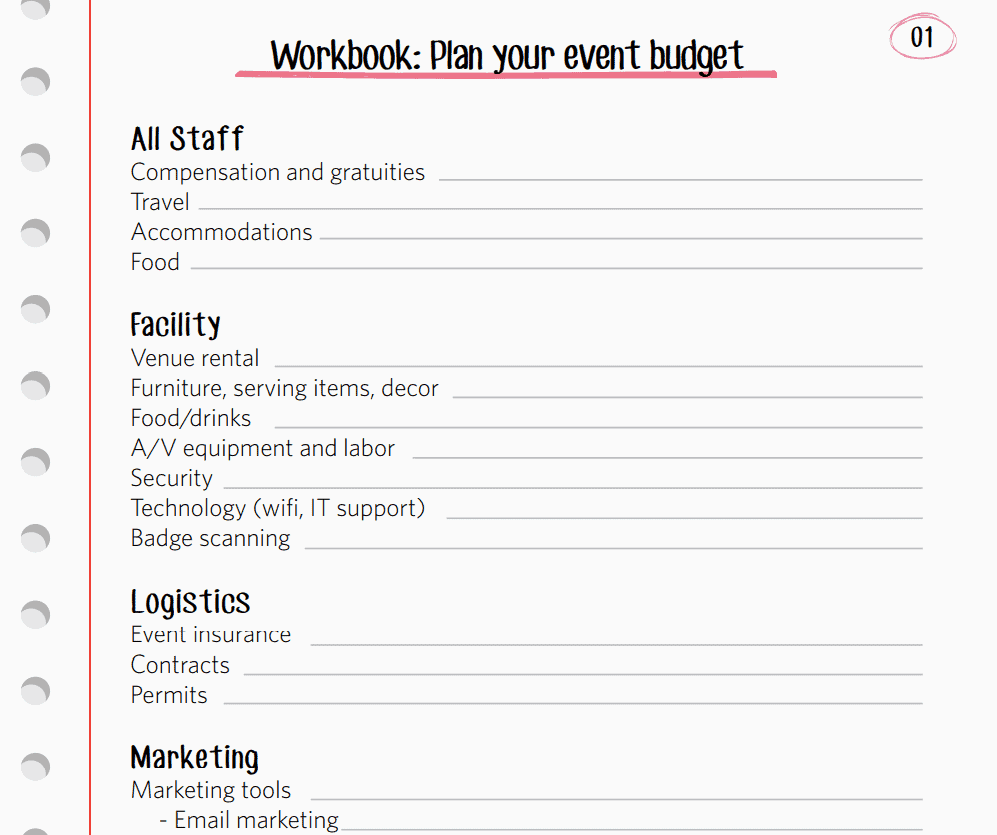
Sample Event Budget Overview Template
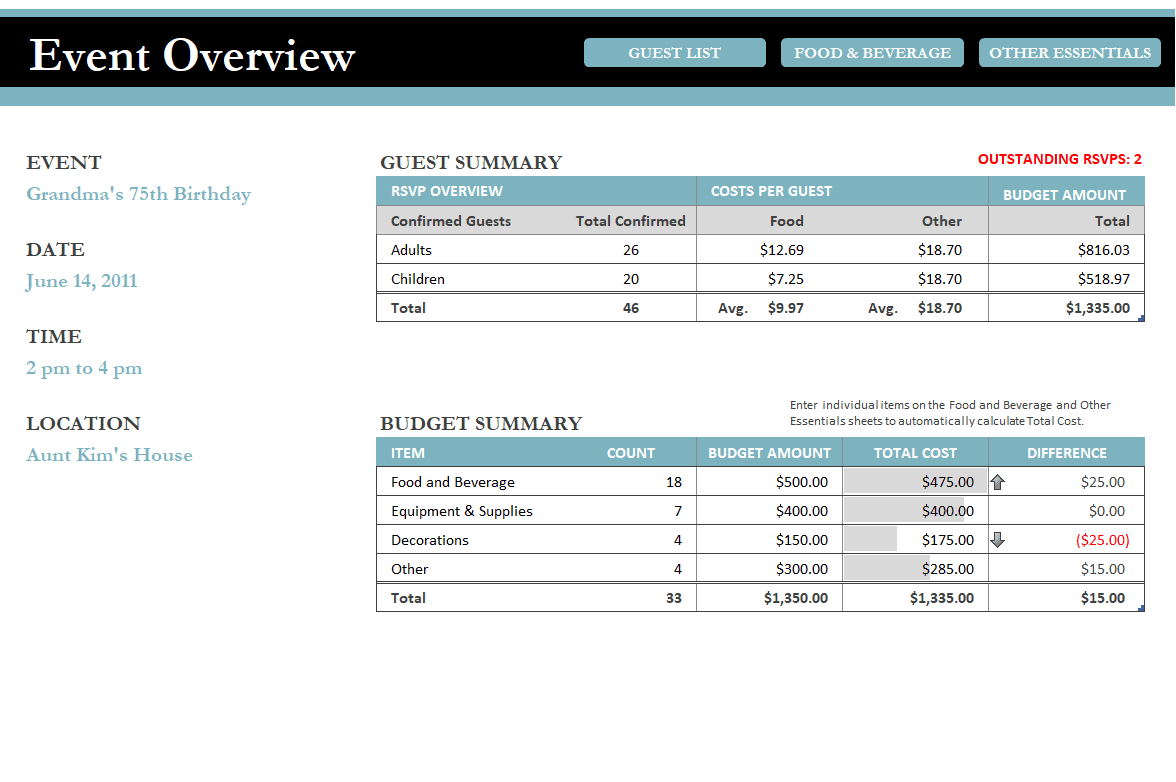
Professional Event Budget Template Excel
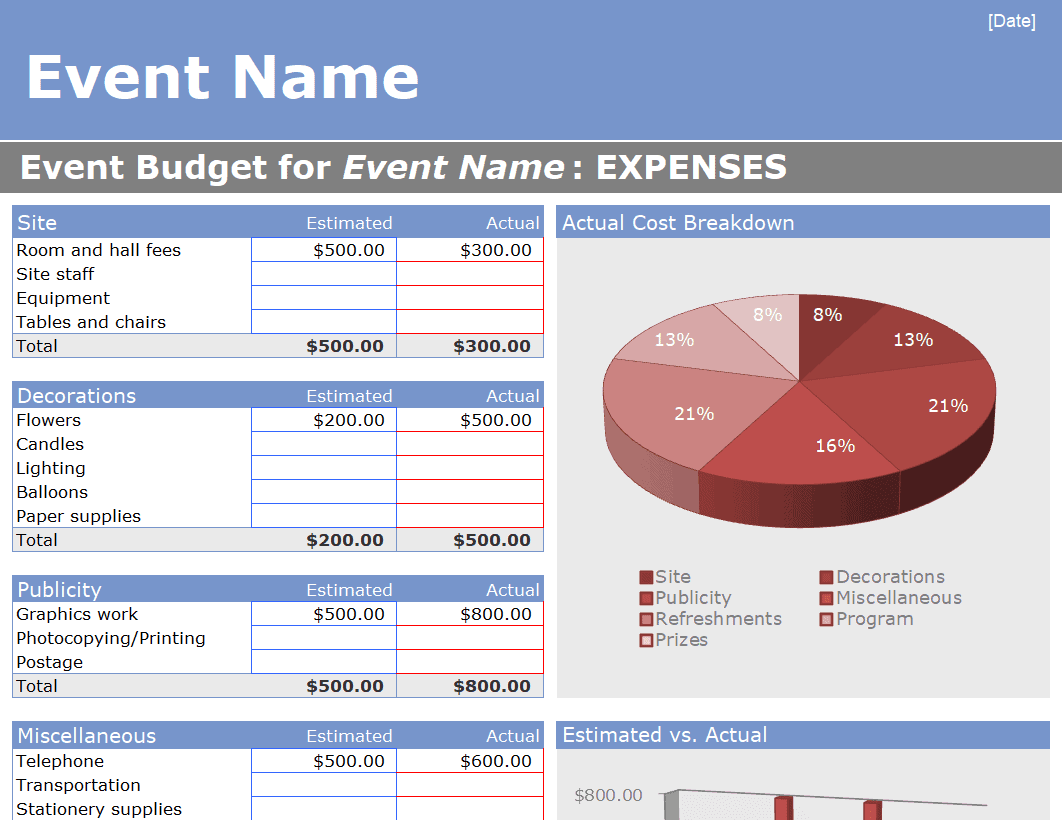
Event Budget Worksheet PDF Template
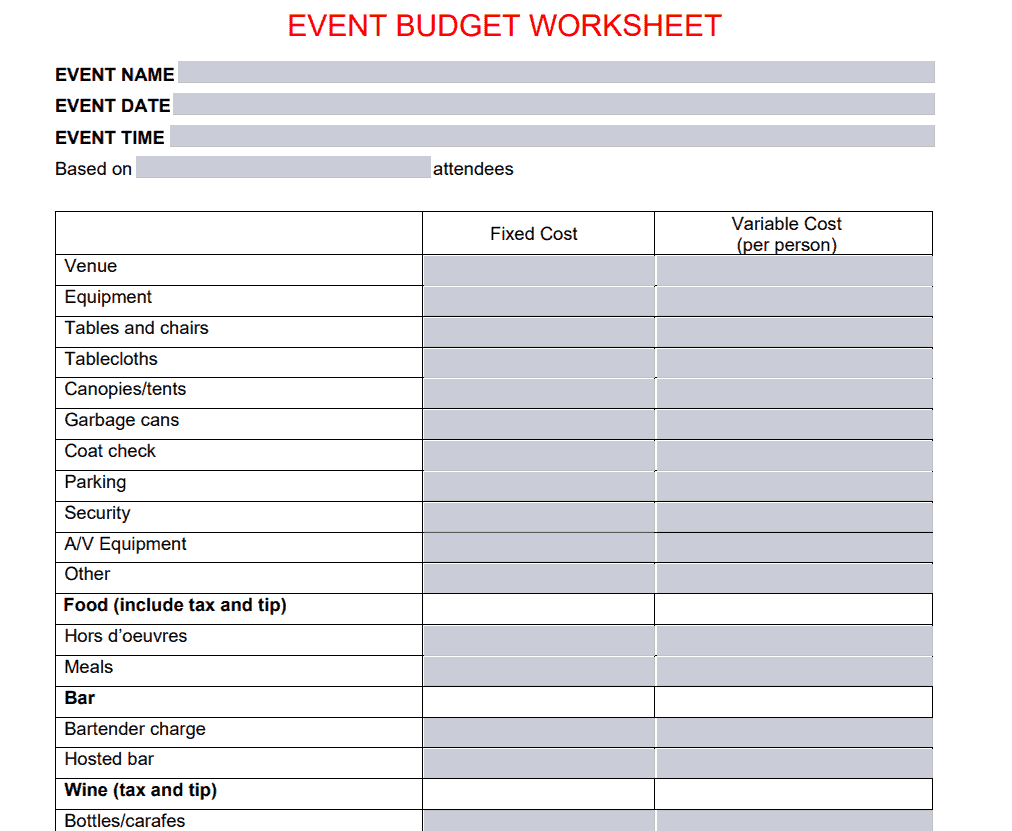
Formal Event Budget Template
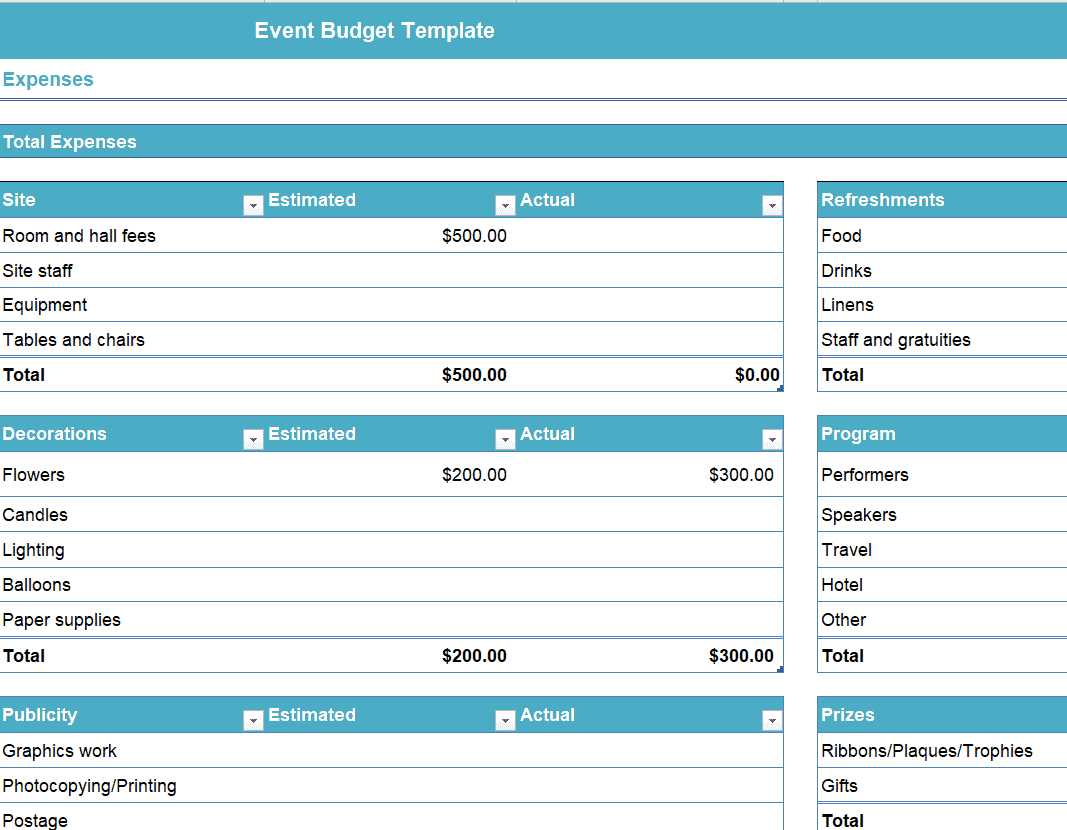
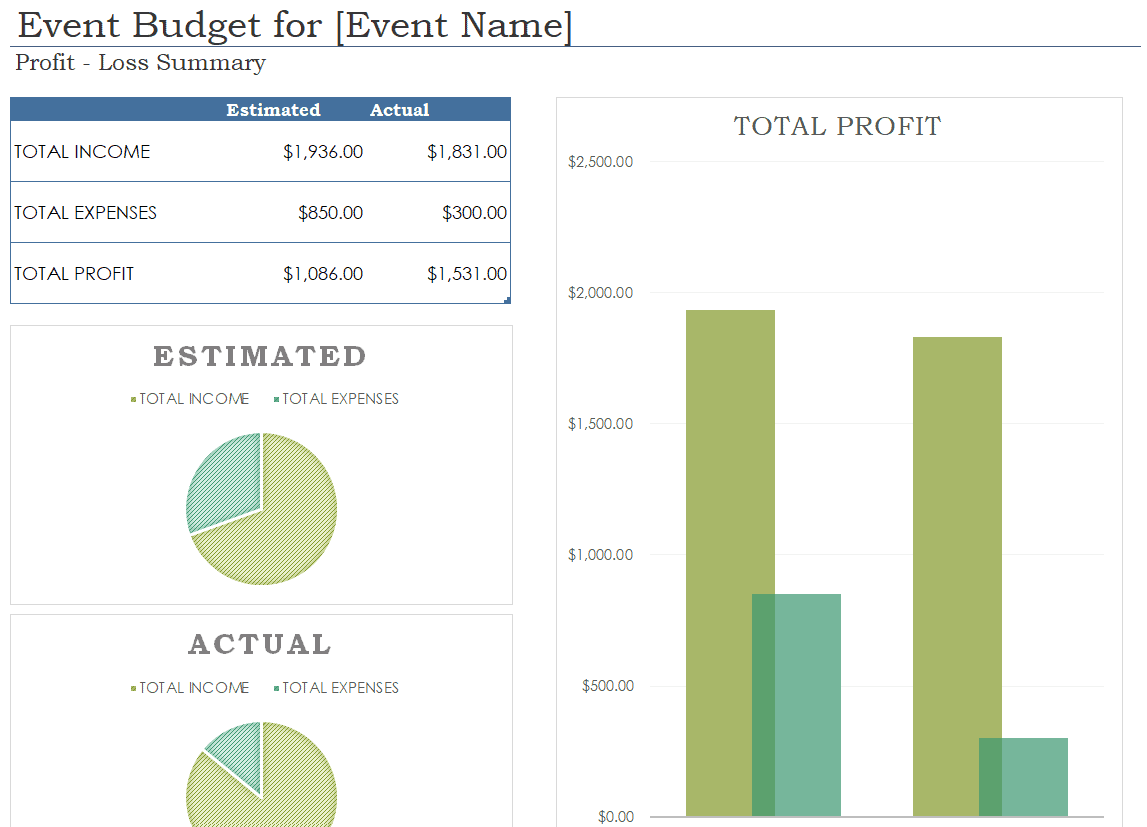
Event Budget Template with Graphs
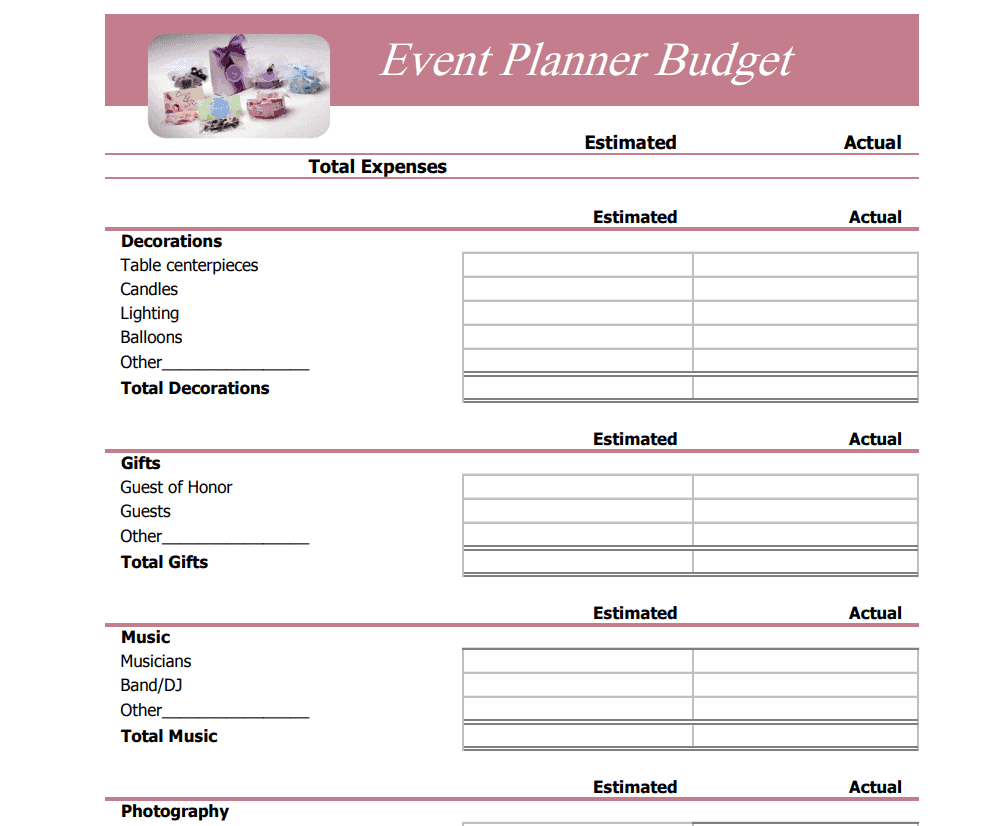
Event Planner Budget Template in PDF Format
Frequently Asked Questions
Are these event budget templates free to download?
Yes, all fifteen event budget templates on this page are free to download and use.
Which file formats are these templates available in?
The templates are available in a mix of Excel, Word, and PDF formats to suit different planning needs.
Can I customize the expense categories in these templates?
Yes, the Excel and Word versions are fully editable, letting you add, remove, or rename categories to fit your event.
Are these templates suitable for both personal and corporate events?
Yes, the templates work well for weddings, parties, corporate functions, fundraisers, and other event types.
Do the Excel templates include automatic calculations?
Many of the Excel versions include built-in formulas that calculate totals and the difference between estimated and actual costs.
How much should I set aside for unexpected expenses?
Most planners recommend budgeting an additional 10 to 15 percent of your total budget as a contingency for surprises.
Can I use these templates to track vendor payments?
Yes, most templates include space to note vendor details, deposit amounts, and payment status.

You must be logged in to post a comment.