
Use expense report form templates to submit actual business expenses with clear purpose, evidence, and reimbursement calculations.
Editable downloads and previews
Use the file links where provided. Links labeled “View original source” open another website; check its current format, availability and terms. A preview image alone is not an editable document.
Template previews and source links
Expense Report Form Example
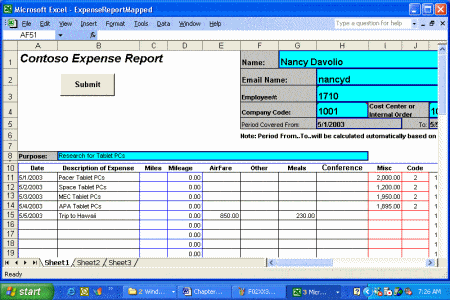 Download Expense Report Form Example (XLS)
Travel Expense Report Form
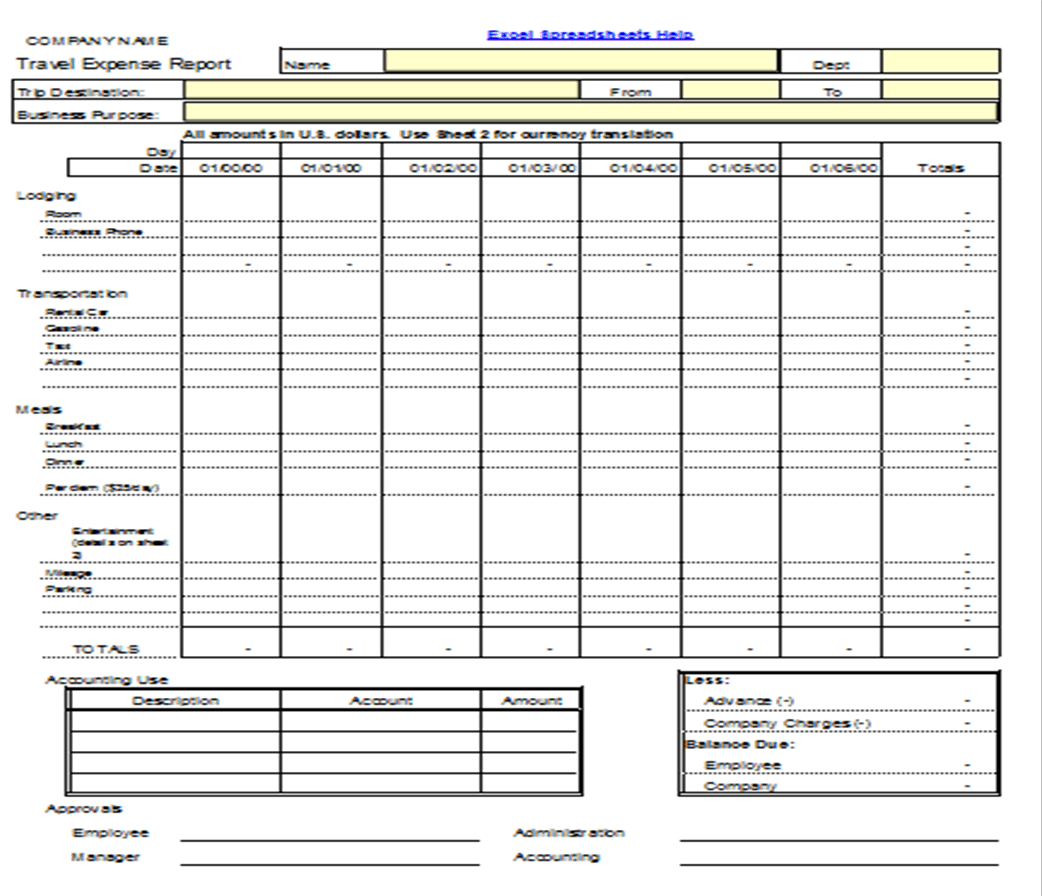 Download Travel Expense Report Form (XLS)
Expense Report Template
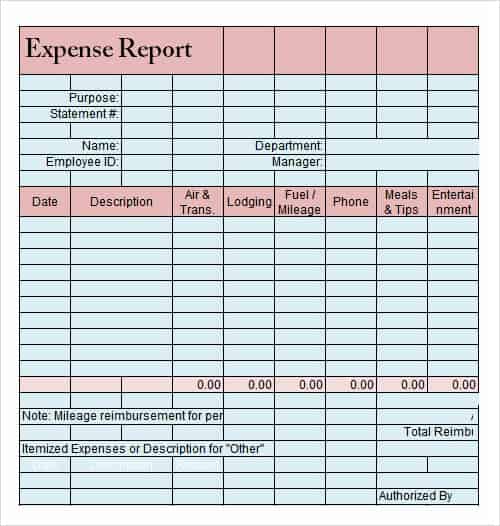 Download Expense Report Template (XLS)
Expense Report Excel Template
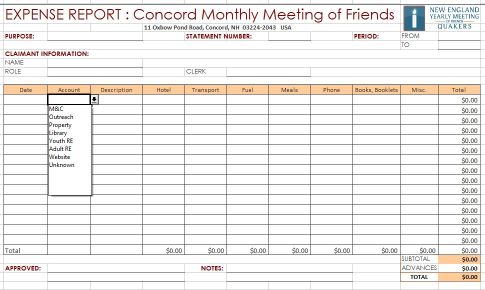 Download Expense Report Excel Template (XLS)
Expense Report Form Template in Excel
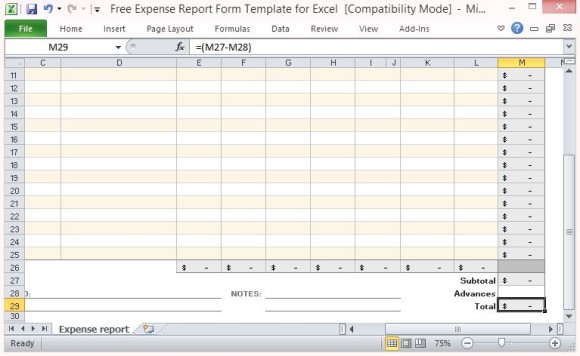 The older external file is unavailable. Its preview is retained for reference.
An expense report requests review and reimbursement; it does not establish that every entry is eligible. Follow the organization’s policy and applicable rules. Separate personal spending, company-paid costs, advances, and employee-paid reimbursable amounts to prevent duplicate payment.
Choose a suitable template
Choose an acknowledgment or claim format that reflects the real transaction. A receipt, pledge, reimbursement request, approval, and payment record have different meanings. Identify the receiving or reviewing organization and its requirements before editing the sample. Do not add tax, eligibility, or payment assurances that the underlying transaction and applicable rules do not support.
Important details to prepare
Claimant and period
Identify the employee or claimant and the reporting dates. Use a unique report reference for tracking. Confirm the responsible organization and the correct reporting period. A useful record identifies who received, claimed, reviewed, or paid the amount without merging those roles.
Business purpose
Describe the trip, project, or activity that explains the claim. A category alone may not show why an expense was incurred. Use only the personal details needed for the process. Contact information can support clarification without becoming unnecessary public recognition or shared financial data.
Expense lines
Record date, merchant, category, amount, and currency. Keep separate items traceable to their supporting evidence. Record the transaction as it actually occurred and preserve its evidence reference. Do not convert an estimate, promise, or unsupported value into a confirmed receipt.
Currency conversion
Record the approved conversion method and rate source where needed. Do not add unlike currencies into one unlabeled total. Keep the reference unique and connected to the register. This makes duplicate checks and later corrections much easier when several similar entries are processed together.
Payments and advances
Identify company-card items and advances separately from employee-paid costs. Reconcile them so the claim does not reimburse the same expense twice. Explain any calculation or exchange treatment that affects the total. A reviewer should be able to understand the amount without reconstructing an informal conversation.
Review and settlement
Record approval, exceptions, and the amount actually reimbursed. Keep private payment details in the appropriate secure process. Retain the reviewed version and record what happened next. A submitted claim, issued receipt, approval, and completed payment may each need their own dated status.
How to complete the template
Build each entry from the actual transaction and supporting evidence. Record dates, amounts, currencies, references, and the relevant purpose. Keep separate transactions distinguishable even when they occur on the same day. Identify replacements or corrections clearly. For a claim, separate amounts paid by the claimant from amounts paid directly by another party and account for advances before calculating what remains payable.
Worked example
An employee reports 180 of eligible employee-paid expenses and 90 charged to a company card. A 50 advance has already been received. Under the stated simplified policy assumptions, the remaining reimbursement is 130, while the company-card amount is reported but not paid again to the employee. The reviewer checks evidence and eligibility before approval.
Check accuracy before use
Trace the total back to the supporting lines and evidence. Check duplicates, missing currency labels, arithmetic, and the distinction between expected and received amounts. Make sure an acknowledgment does not imply a tax outcome or an approval does not masquerade as settlement. Review any jurisdiction-specific wording against current authoritative requirements rather than copying it from an old design.
Related resources for the next step
Use expense report templates to compare detailed claim layouts.
Use expense worksheets to organize cost categories.
Use payment record templates to record the reimbursement actually paid.
